

The Roots of The Pose
Before we learn to branch out, it is essential to understand why Tree Pose is such a cornerstone of yoga practice. More than just a balancing act, Vrikshasana is a powerful tool for cultivating focus and stillness. On a physical level, it strengthens
the thighs, calves, ankles, and spine. It also stretches the groin and inner thighs. But its benefits go deeper, training the mind to remain steady and concentrated, much like a tree stands firm against the wind. This practice of one-pointed focus, or 'drishti', where you fix your gaze on a single unmoving point, is a form of active meditation that calms the nervous system and improves concentration in daily life.
Beginner Modifications for Stability
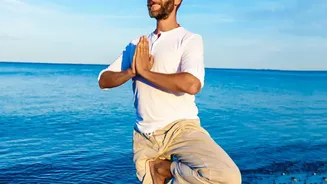
No one starts with perfect balance. The first and most important step for any beginner is to find stability. Forget trying to lift your leg high; start by building a solid base. A great way to do this is by using a wall for support. Stand with one side next to a wall and place a hand on it as needed. Another key adjustment is foot placement. Instead of aiming for the thigh, begin by placing the sole of your bent-leg foot against the opposite ankle, with your toes resting on the floor like a kickstand. This provides support while you get used to the alignment. Your hands can be in Anjali Mudra (prayer position) at your heart centre to help you find your midline.
Avoiding A Common Mistake
As you gain confidence, you will be tempted to lift the foot higher. There is one crucial rule here: never place your foot directly on the side of your knee. The knee joint is not designed to handle lateral pressure, and pushing against it can lead to injury over time. Your two safe options for foot placement are below the knee (on the calf) or above the knee (on the inner thigh). Think of your leg as having two safe zones and one 'no-go' zone. Always prioritize the health of your joints over the height of your pose. Also, be mindful not to lock the knee of your standing leg; keep a micro-bend in it to protect the joint and engage your leg muscles properly.
Finding The Classic Tree Pose
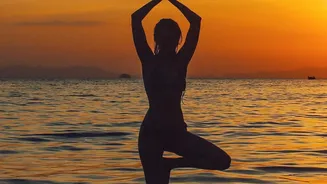
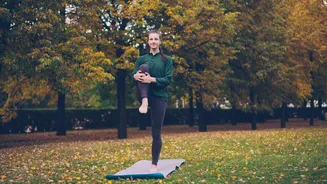
Once you feel steady with your foot on your calf, you can progress to the full expression of Vrikshasana. Engage your core and find your drishti point. Then, using your hand, guide the sole of your foot to your inner thigh. Actively press the foot into the thigh and the thigh back into the foot; this creates a stable, locked connection. Your hips should remain square and facing forward. A common tendency is to let the hip of the bent leg swing out, so consciously draw it back into alignment. Your hands can remain at your heart, or you can explore growing your branches by extending your arms overhead.
Exploring Arm Variations
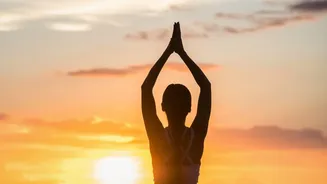
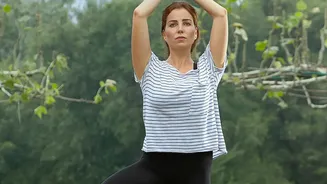
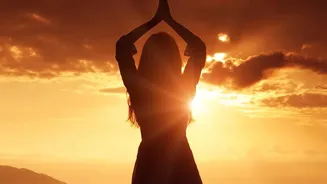
The legs may form the trunk of the tree, but the arms are its branches, and their position can change the pose significantly. The classic variation is with arms extended straight up, shoulder-width apart or with palms touching. This challenges your balance further and creates a feeling of uplift. You can also extend your arms out to the sides like the branches of a mighty banyan tree, which can help with finding balance. Another variation is to bring the hands into a reverse prayer position behind your back, which opens up the shoulders and chest. Playing with these arm variations keeps the pose fresh and allows you to explore different energetic qualities within the same foundation.
Advancing Your Practice
For the seasoned yogi, Tree Pose can evolve even further. One common advancement is the Half-Lotus Tree Pose (Ardha Padmasana in Vrikshasana), where the foot is placed at the hip crease of the standing leg. This requires significant hip flexibility and should only be attempted after mastering the classic pose. From there, some practitioners explore a forward bend or a side bend while in the pose, which dramatically challenges both balance and core strength. These variations are not the goal, but rather a continuation of the journey. They demonstrate how a seemingly simple pose contains a world of depth, offering a path for continuous growth and exploration on your yoga mat.