




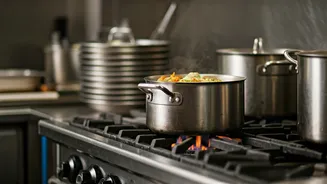


The Engine Room of Food Delivery
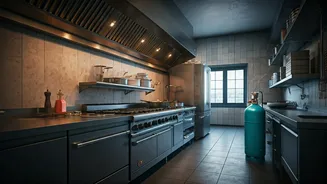
Cloud kitchens, also known as ghost kitchens or virtual restaurants, are designed for one thing: efficiency. By shedding the high costs of a dining room, prime locations, and extensive service staff, they focus solely on preparing food for delivery. This
lean model allows them to operate with lower overheads than traditional restaurants. However, their profitability hinges on a delicate balance of costs, primarily food, packaging, staff salaries, and aggregator commissions, which can be as high as 30% per order. The business is a game of volumes and razor-thin margins. While the setup cost, ranging from ₹3 lakh to ₹15 lakh, is lower than a full-fledged restaurant, the operational pressures are intense. A significant portion of these operational costs is energy, and for most, that means commercial LPG.
Why LPG is a Critical Cost
In a cloud kitchen, the burners are almost always on. Unlike a dine-in restaurant that has other revenue streams and slower periods, a cloud kitchen's entire business model revolves around continuous cooking to meet the relentless demand from online orders. This makes them incredibly dependent on a stable and affordable fuel supply. For many restaurants and cloud kitchens, LPG accounts for a significant chunk of kitchen operating costs, sometimes as high as 12-15%. Unlike domestic LPG, which is subsidized and sees infrequent price changes, commercial LPG prices are market-linked and can be revised monthly. This volatility exposes businesses directly to global energy shocks and supply chain disruptions. Smaller operators are particularly vulnerable as they lack the financial cushion and procurement power of large chains to absorb sudden price hikes.
A Rollercoaster of Price Revisions
The first half of 2026 demonstrated this volatility perfectly. Commercial LPG prices saw steep increases in the first few months, driven by geopolitical tensions and supply concerns. For instance, a 19-kg commercial cylinder in Delhi that cost ₹1,691.50 in January had climbed to ₹3,113.50 by June. These hikes put immediate and immense pressure on businesses already struggling with thin margins. However, an easing of tensions brought some relief on July 1, when the price of a commercial cylinder was slashed by ₹183.50, bringing the cost in Delhi down to ₹2,930. While this reduction was welcomed by the hospitality industry, it doesn't erase the impact of the preceding months of high costs, and prices remain significantly above pre-spike levels. This constant fluctuation forces kitchen owners into a state of perpetual uncertainty.
Searching for an Alternative Flame
The relentless pressure from volatile LPG costs is forcing a strategic shift in many kitchens. Operators are increasingly exploring alternatives to de-risk their business from fuel price shocks. The most prominent alternative is electric cooking, particularly induction stoves. Induction technology is more energy-efficient than gas, converting about 80% of its energy directly to heat compared to a gas flame's 40%. It also offers a safer kitchen environment by eliminating open flames. Recognizing this shift, some state governments, like Tamil Nadu, are even fast-tracking electricity connections for commercial establishments looking to adopt e-cooking. The high 18% GST on induction equipment remains a barrier for some, but for many, the long-term operational savings and stability are becoming too compelling to ignore as they seek to future-proof their operations.
The Knock-On Effect for Customers
Ultimately, when operational costs rise for cloud kitchens, the bill often finds its way to the consumer. Faced with shrinking profits, operators have limited options. They can either absorb the cost and risk becoming unprofitable—a dangerous game in an industry where nearly half the kitchens in major cities were already unprofitable—or they can pass the cost on. This can manifest in several ways: a direct increase in menu prices, a reduction in portion sizes, or the introduction of additional fees. Some restaurant associations have openly stated that a price rise is the only viable option to keep businesses afloat during periods of high fuel costs. Therefore, the price of that commercial gas cylinder in a distant industrial area has a direct, albeit delayed, impact on the cost of the biryani or noodles you order on a Friday night.