
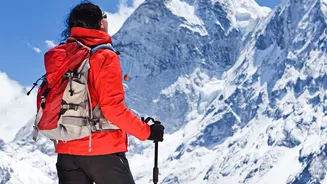
The Post-Monsoon Window: A Season of Contrasts
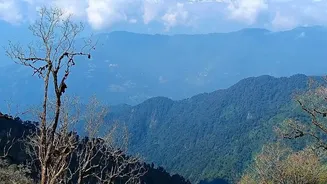
The post-monsoon period, typically from late September to November, is considered a peak trekking season for a reason. The heavy rains have washed the dust from the atmosphere, leaving behind lush green valleys and unparalleled visibility. However, this
period is also a time of transition. While the weather is generally more stable than during the monsoon, it can still be unpredictable. The remnants of the monsoon can linger, leading to unexpected rain or snow, and as winter approaches, temperatures begin to drop significantly. Recent climate patterns show that the monsoon season may be extending, making early autumn trekking riskier, with a higher chance of landslides and obscured views.
Weather: Unpredictable Rain and Snowfall
Even after the monsoon officially ends, lingering moisture can lead to afternoon showers, especially in early autumn. At higher elevations, this precipitation can easily fall as snow. Trekkers must be prepared for sudden changes; a clear morning can quickly turn into a foggy, wet afternoon. This makes waterproof gear—including a reliable rain jacket, rain pants, and a backpack cover—absolutely non-negotiable. Furthermore, heavy rainfall increases the risk of landslides, which can block trails and create dangerous conditions, particularly on unstable slopes. Always check local conditions and be prepared for potential delays.
Weather: Drastic Temperature Swings
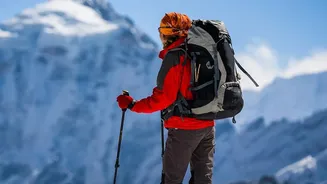
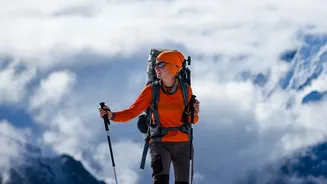
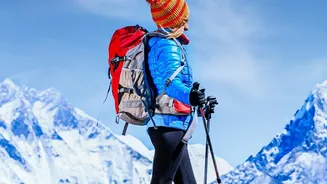
One of the most significant factors to monitor is the huge difference between daytime and nighttime temperatures. A sunny day at lower altitudes can feel warm and pleasant, with temperatures reaching up to 20°C. However, as soon as the sun sets, or as you gain elevation, the temperature can plummet, often falling well below freezing at night, especially above 4,000 meters. This incredible range means a layered clothing system is essential for staying comfortable and safe. Your clothing should include a moisture-wicking base layer, a warm insulating layer (like fleece or down), and a windproof and waterproof outer shell.
Altitude: The Invisible Challenge
Altitude sickness, or Acute Mountain Sickness (AMS), is a serious condition that can affect anyone trekking above 2,500 meters (about 8,000 feet), regardless of their fitness level. It occurs when your body doesn't have enough time to adapt to the lower oxygen levels at higher elevations. The best prevention is a slow and gradual ascent. A common rule of thumb is to avoid increasing your sleeping elevation by more than 1,000 feet (300 meters) per night once you are above 10,000 feet. Proper acclimatization, which includes rest days and the 'climb high, sleep low' principle, is the most effective strategy to prevent AMS.
Recognising the Symptoms of AMS
Knowing the symptoms of AMS is critical for every trekker. Mild symptoms often resemble a hangover and include headache, nausea, dizziness, fatigue, loss of appetite, and difficulty sleeping. These are warning signs to stop ascending immediately. Rest, hydrate, and do not go any higher until the symptoms have completely disappeared. If symptoms worsen to include persistent vomiting, a severe headache that doesn't respond to pain relief, shortness of breath even at rest, or loss of coordination (ataxia), it is a medical emergency. This may indicate severe forms of altitude sickness like High-Altitude Cerebral Edema (HACE) or High-Altitude Pulmonary Edema (HAPE), and immediate descent to a lower altitude is crucial.