







The Cycle of Willpower and Failure
Let’s be honest: traditional budgeting is a chore. It demands constant vigilance, meticulous tracking of every dollar, and the emotional fortitude to say 'no' to yourself over and over. This is what psychologists call 'decision fatigue.' Every choice
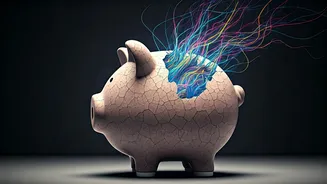
you make, from what to wear to what to eat, depletes a finite reserve of mental energy. Budgeting that relies on manually moving money or resisting impulse buys forces you to make dozens of small, draining financial decisions every day. Eventually, your willpower runs out—usually in the snack aisle or when a targeted ad finds you at a weak moment—and the whole system collapses. This failure isn't a moral one; it's a design flaw. The system is set up to fight human nature, and in that battle, human nature almost always wins.
The Habit: Pay Yourself First, Automatically
The single most effective, budget-friendly habit is deceptively simple: automate your savings. This isn't about a fancy app or a complicated formula. It's the modern, digital version of the age-old advice to 'pay yourself first.' Here’s the entire strategy: set up a recurring, automatic transfer from your checking account to a separate savings account. That’s it. That’s the habit. The magic is in the timing and the automation. By scheduling the transfer for the day after your paycheck lands, the money for your goals is whisked away before you even have a chance to see it, miss it, or spend it. It's not about restriction; it's about prioritization. You decide what your future is worth and instruct your bank to honor that commitment on your behalf, taking the weak link—your in-the-moment brain—out of the loop entirely.
Why Automation Is a Psychological Cheat Code
This method sticks because it sidesteps willpower. Habit formation experts like James Clear, author of *Atomic Habits*, emphasize the power of making good habits easy and bad habits hard. Manually saving money adds 'friction'—it requires effort. Automating your savings removes that friction entirely. The good choice becomes the default choice, requiring zero effort to maintain. You only have to use your willpower once: the day you take ten minutes to set up the transfer. After that, the system runs itself. It transforms saving from a recurring decision into a non-event. Your savings account grows in the background, fueled by consistency rather than herculean self-control. This creates a positive feedback loop; seeing your balance grow without feeling deprived motivates you to keep the system going, or even increase the amount over time.
How to Start in the Next 10 Minutes
Ready to make this happen? Don't wait for the first of the month. You can do this right now. 1. **Open a separate, high-yield savings account.** Keeping it at a different bank than your checking account adds a helpful layer of friction to prevent casual withdrawals. Name the account something motivating, like 'Europe Trip' or 'Future Freedom.' 2. **Choose a starting amount.** It doesn't have to be a huge percentage of your income. Start with something you won't even feel, like $25 or $50 per paycheck. The goal is to build the habit first; you can always increase the amount later. 3. **Set up the recurring transfer.** Log in to your checking account's online portal. Find the 'transfers' section and schedule a recurring transfer to your new savings account for the day after you typically get paid. Once you hit 'confirm,' you’re done. You have successfully outsourced your discipline to a computer, which is far better at it than any of us.