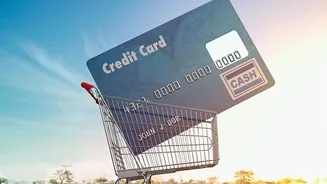







The Allure and the Risk
From online shopping to food delivery, BNPL has become a popular payment option for young Indians. It offers the thrill of a purchase without the immediate pain of payment, often splitting the cost into easy, interest-free instalments. This is especially
appealing for those without a credit card. However, the ease of use is also its biggest risk. It encourages impulse buying and can lead consumers to spend more than they can afford. With late fees, penalty interest, and multiple small debts piling up, many users find themselves in a cycle of debt that is difficult to escape. Since BNPL is now reported to credit bureaus, missed payments can also damage your CIBIL score, impacting future loans.
Rule 1: Treat It Like Your Own Money
This is the golden rule of using BNPL. Before you click 'pay later', ask yourself a simple question: "If I had to pay the full amount right now from my bank account, would I still make this purchase?" If the answer is no, then you should reconsider. Think of BNPL not as extra money, but as a payment tool for things you have already budgeted for. It should be used for convenience, not to fund a lifestyle you cannot afford. Using it for planned or necessary purchases is a key habit for responsible usage.
Rule 2: The 30% Guideline
To keep your finances healthy, your total BNPL commitments should never become a major part of your monthly budget. A good rule of thumb is to ensure that your total dues from all BNPL services do not exceed 30% of your monthly take-home income. This prevents a situation where your repayments consume too much of your salary, leaving you with little for other essential expenses and savings. Tracking this helps you stay in control and avoid over-leveraging yourself on small, frequent purchases.
Rule 3: Avoid Juggling Multiple Services
Many shoppers fall into the trap of using several BNPL apps simultaneously. While each one might seem manageable on its own, tracking multiple payment dates and outstanding balances across different platforms can become confusing. This increases the risk of missing a payment, leading to late fees and a potential hit to your credit score. Try to stick to just one or two BNPL providers. This simplifies tracking your dues and helps you maintain a clear picture of your total debt obligations at any given time.
Rule 4: Automate Repayments to Avoid Penalties
Late fees are a primary way BNPL providers make money and how users fall into debt. These fees can be steep, and the associated penalty interest can turn a small, interest-free purchase into a costly one. The simplest way to avoid this is to set up automatic payments for your BNPL dues. Link your bank account and authorise auto-debit for the due date. This ensures your bills are paid on time, every time, protecting you from unnecessary charges and helping you maintain a positive repayment history.
Rule 5: Always Read the Key Fact Statement
Thanks to RBI guidelines, all digital lenders, including BNPL providers, must provide a 'Key Fact Statement' (KFS) before you commit to a loan. This document is your friend. It clearly lays out all the terms, including the exact repayment schedule, processing fees, late payment charges, and the annual percentage rate of interest, if any. Never skip reading this. Understanding the fine print ensures there are no surprises and you are fully aware of the costs associated with the credit you are taking.