





A Digital Makeover for E-Commerce
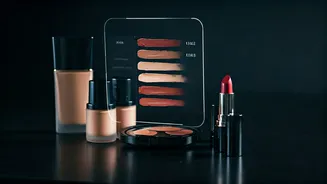
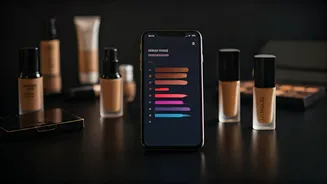
The biggest challenge of buying cosmetics online has always been the inability to test the products. Colours can look different on screen, and what suits a model may not suit you. This uncertainty often leads to hesitation, abandoned carts, and ultimately,
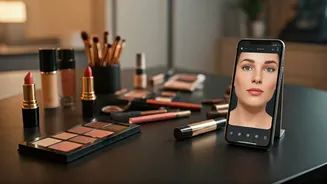
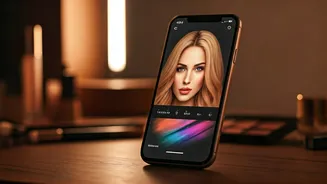
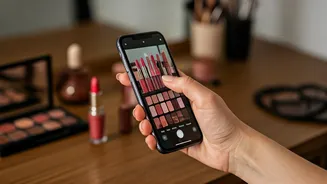
a drawer full of barely used products. Enter AI-powered virtual try-on (VTO) technology. Using just your phone’s camera, this innovation allows you to see how a lipstick, eyeshadow, or even a full face of makeup looks on you in real-time. It's like having a digital mirror that gives you access to an endless makeup counter, eliminating the guesswork and making online beauty shopping a more confident and personalised experience.
Behind the Virtual Mirror
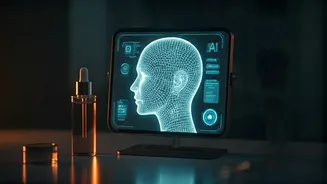
So, how does it work? It's a sophisticated blend of artificial intelligence (AI) and augmented reality (AR). When you activate the VTO feature on a shopping app or website, the software uses your camera to map your face. Advanced algorithms detect over 68 facial landmark points—like the corners of your lips, the shape of your eyes, and your cheekbones—with incredible precision. It then creates a 3D mesh of your face. This allows the AR technology to overlay a digital layer of makeup, like a lipstick colour or an eyeliner style, perfectly onto your features. The system is smart enough to track your movements, so if you smile or turn your head, the virtual makeup moves with you, creating a hyper-realistic preview.
The Benefits of Trying Before You Buy
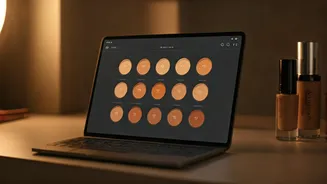
For shoppers, the advantages are clear. The first is convenience. You can experiment with hundreds of shades and products from anywhere, at any time, without the mess or hygiene concerns of using physical testers. This encourages experimentation, letting you try a bold colour you might otherwise shy away from in a store. For brands, the technology is just as transformative. Companies that have integrated VTO report significant increases in customer engagement and conversion rates—in some cases, as high as 90-200%. By giving customers the confidence to purchase, brands also see a notable reduction in product returns, which is both cost-effective and more sustainable.
Leading the Charge in India
This technology is no longer a futuristic concept; it's already being used by major beauty players in the Indian market. E-commerce giants like Nykaa, Myntra, and Flipkart have integrated VTO features into their platforms. Nykaa partnered with L'Oréal to use its ModiFace technology, allowing users to try on products from brands like L'Oréal Paris and Maybelline. Similarly, Myntra's 'Looks Virtual Try-On' lets shoppers test complete makeup looks inspired by runway trends. Brands like SUGAR Cosmetics and Lakmé have also embraced the tech, recognising its power to create a more engaging and effective shopping journey for the diverse skin tones and preferences of Indian consumers.
Not a Perfect Picture... Yet
Despite its rapid advancement, the technology still has limitations. The accuracy of the virtual makeup can be affected by factors like your device’s camera quality and the lighting in your room. What you see on screen might not perfectly match the product's texture or finish in real life, as it cannot yet replicate the feel of a product. There are also valid concerns about data privacy, as these apps require access to your camera and facial data. However, developers are continuously working to improve realism, with future advancements expected to include better lighting simulation and even integration with haptic feedback to simulate texture.