





The Textbook Definition Is Fading
For generations, the distinction between an asteroid and a comet was straightforward. Asteroids were seen as chunks of rock and metal, mostly found in the belt between Mars and Jupiter. They are remnants from our solar system's formation, orbiting silently.
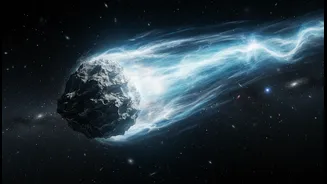
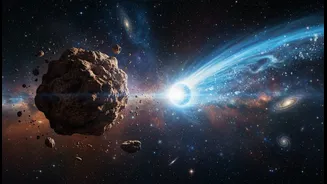
Comets, on the other hand, are the so-called "dirty snowballs" of space, composed of ice, dust, and rock. Originating from the frigid outer reaches like the Oort Cloud, they develop spectacular tails, or comas, as the Sun’s heat vaporizes their ice when their long, elliptical orbits bring them closer. This simple division—rock versus ice, inactive versus active—has been a cornerstone of astronomy. But the universe, it turns out, is a bit messier than our textbooks suggest.
Meet the Rule-Breakers
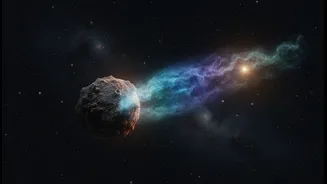
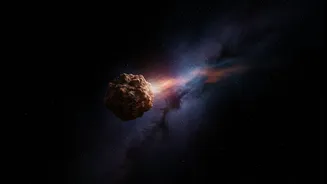
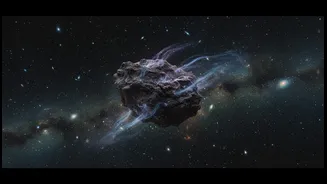
Objects that defy this easy classification are forcing a major rethink. Astronomers are now observing what they call "active asteroids" or "main-belt comets"—bodies that have the orbital characteristics of an asteroid but display comet-like activity, such as ejecting dust. One such category of cosmic rebels is known as Centaurs. Named after the mythological half-human, half-horse creatures, these objects orbit between Jupiter and Neptune and exhibit features of both asteroids and comets. The discovery of 2060 Chiron in 1977, which was later observed to have a coma, was a pivotal moment. Since then, other Centaurs and main-belt objects have been seen with unexpected activity, suggesting the line between asteroid and comet is not a solid wall but a fuzzy, transitional zone.
The Rise of 'Lazarus Comets'
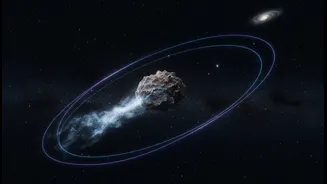
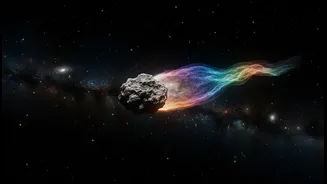
The latest discoveries add another layer of complexity. Some of these active asteroids are being called "Lazarus comets"—ancient comets that were long thought to be dormant or extinct. After exhausting the ice on their surfaces over millennia, they appear as inert as any other asteroid. However, slight changes in their orbits, often caused by the gravitational pull of a giant planet like Jupiter, can bring them marginally closer to the Sun. This small increase in solar energy can be just enough to sublimate buried pockets of ice, causing the "dead" comet to spring back to life and sprout a tail. The existence of these objects suggests the asteroid belt could be an enormous graveyard of dormant comets, waiting for the right conditions to reawaken.
A Spectrum, Not a Switch
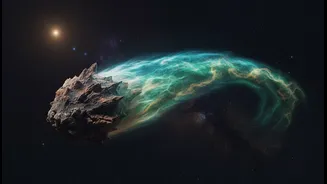
This accumulation of evidence is pushing astronomy away from a binary classification system and toward a more nuanced spectrum. Instead of asking if an object is an asteroid or a comet, the question is becoming, where does it fall on the continuum between a purely rocky body and a highly active icy one? This shift doesn't just affect how we label things; it has profound implications for understanding the formation and evolution of our solar system. These transitional objects are like cosmic time capsules, potentially holding clues about how water and other volatile materials were distributed, including how they might have arrived on early Earth. Studying them helps piece together the history of our planetary neighborhood, revealing a more dynamic and interconnected system than previously imagined.