






Beyond Buckets and Guesses
For decades, urban flood management has been a reactive process. Municipal workers would manually check water levels, and authorities would issue warnings based on broad weather forecasts. This traditional approach is often too little, too late in the face
of increasingly frequent and intense rainfall events caused by climate change. The old methods, reliant on passive observation, are simply no match for the speed at which a modern city can flood. This is where smart drainage systems come in, shifting the paradigm from reaction to pro-action. By embedding technology directly into the city's water management arteries, authorities can gain a real-time, data-driven understanding of the situation on the ground, or rather, under it.
How Smart Drainage Technology Works
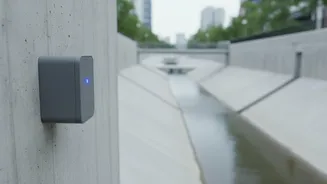
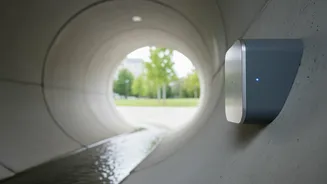
At its heart, a smart drainage system is an intricate network of Internet of Things (IoT) devices. Ultrasonic or pressure sensors are installed at critical points within the drainage network, such as manholes, storm drains, and canals. These battery-powered sensors continuously monitor water levels, flow rates, and even potential blockages. This data is transmitted wirelessly, often every few minutes, to a central cloud-based platform. Here, Artificial Intelligence (AI) and data analytics get to work. The system combines the sensor data with other crucial information, like weather forecasts, historical flood data, and the city's topographical maps, to create highly accurate predictive models.
From Raw Data to Life-Saving Alerts
The true power of this technology lies in its ability to translate data into actionable intelligence. When the system detects that water levels in a specific drain are nearing a critical threshold, it can trigger a series of automated responses. An instant alert is sent to a central control room, pinpointing the exact location of the potential flood. This allows municipal teams to be dispatched preemptively to clear a blockage or deploy pumps before the situation escalates. Simultaneously, these systems can provide advance warnings to the public through mobile apps or public address systems, allowing residents to move vehicles or prepare for evacuation, transforming a potential disaster into a manageable event.
India's Fight Against Urban Floods
Indian cities, which are highly vulnerable to urban flooding, are beginning to adopt these technologies. In Uttar Pradesh, Gorakhpur has launched an AI-based Urban Flood Management System, which has been lauded for its success in trial phases, reportedly mitigating waterlogging issues by over 65%. This system uses sensors to monitor water levels and can issue forecasts up to 24 hours in advance. Similarly, cities like Mumbai and Chennai are integrating IoT sensors and digital twin technology—virtual replicas of the city—to simulate flood scenarios and improve their response. These initiatives are part of a broader push under programs like the Smart Cities Mission to build more resilient urban infrastructure.
More Than Just a Flood Alarm
The benefits of smart drainage extend far beyond emergency flood warnings. The constant stream of data helps municipal corporations operate more efficiently year-round. By identifying drains that are prone to blockages, sanitation departments can create targeted cleaning schedules, saving time and resources. The sensors can also help detect illegal dumping of waste into the drainage network, a common problem that exacerbates flooding. This wealth of data supports predictive maintenance, allowing authorities to repair or upgrade parts of the network before they fail catastrophically. In essence, it helps cities understand the health of their drainage infrastructure in unprecedented detail.
Challenges on the Road to a Smarter Future
Despite the clear advantages, widespread implementation faces several hurdles. The initial cost of deploying a large network of sensors and the associated IT infrastructure can be substantial. Integrating new technology with aging, often poorly mapped drainage systems is a significant technical challenge. Furthermore, these systems require a steady power supply, reliable internet connectivity, and skilled personnel to manage and interpret the data. Ensuring the security of the data to prevent tampering is another critical concern that must be addressed for these systems to be truly effective and trustworthy.