
Where History Meets the Trail
In Greenland, particularly in the southern regions, the landscape itself is an open-air museum. Here, history is not confined behind glass; it is etched into the very ground you walk on. The experience of exploring these remote communities is best done
on foot, following trails that connect the past to the present. The journey is punctuated by two key cultural anchors that define village life: the brightly painted wooden church and the humble community museum. These structures are more than just buildings; they are the heart and soul of the community, offering focal points for walks that reveal the deep story of this ancient land and its resilient people.
A Walk Through Time in Qassiarsuk
Nowhere is this more evident than in Qassiarsuk, a small sheep-farming settlement that sits on the very site of Brattahlíð, the former estate of the famed Norse explorer Erik the Red. A walk here is a journey through a millennium of history. Paths lead you from the modern village to stunningly accurate reconstructions of a Norse longhouse and Tjodhilde’s Church, a tiny turf-and-timber chapel considered the first of its kind in North America. As you stand before this ancient site, with sheep grazing peacefully nearby, you can almost feel the echoes of its Viking past. The walk continues back to the present, culminating at the village’s own picturesque modern church, creating a powerful link between Greenland’s Norse origins and its contemporary identity.
The Colours of Faith and Community
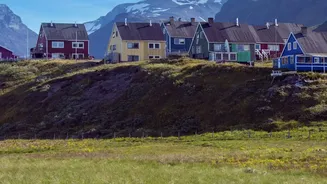
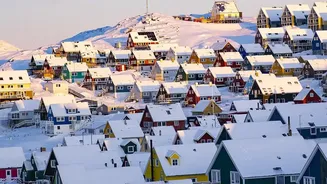
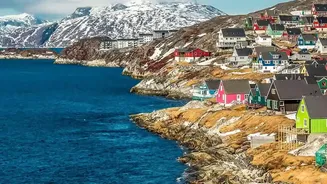
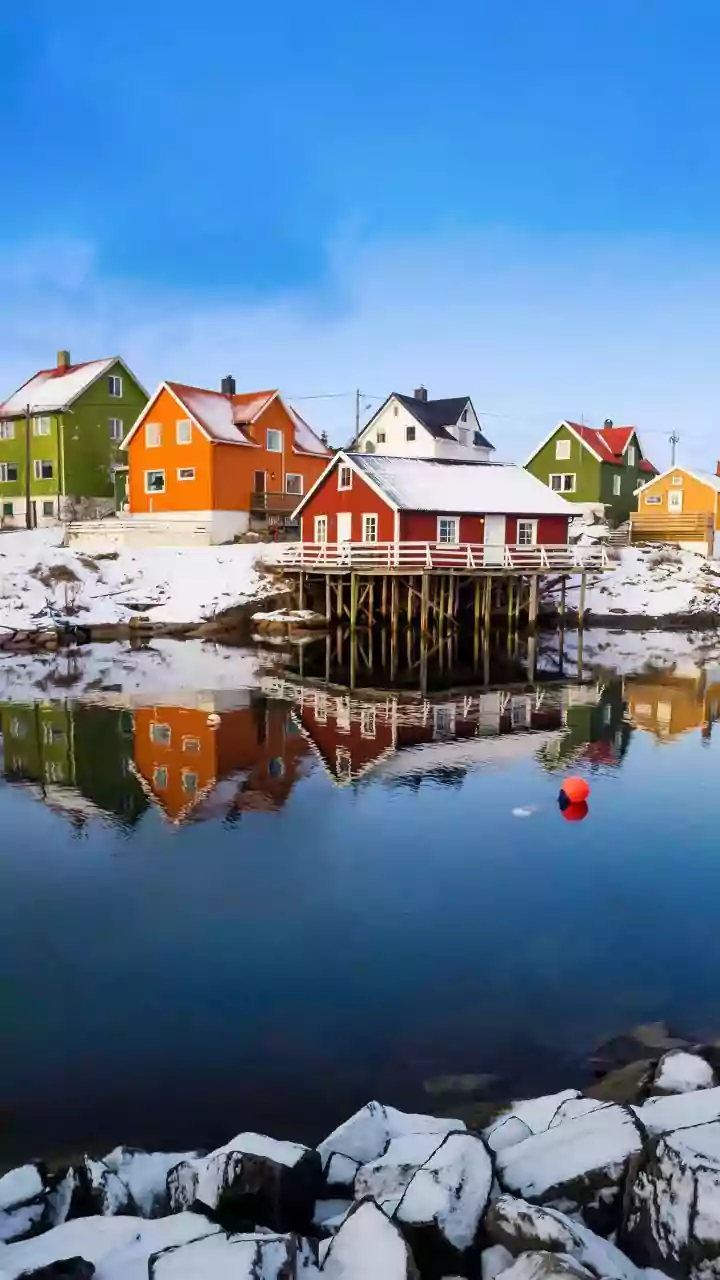
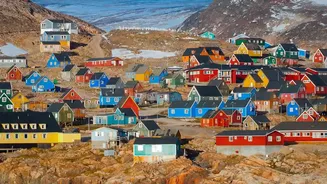
Greenland's village churches are landmarks in every sense of the word. Often built from wood and painted in striking shades of red, blue, or green, they stand out against the raw, untamed landscape. These simple, beautiful structures are a legacy of the Danish missionaries who arrived centuries after the Norse. Today, they are the undeniable centre of community life, hosting services, confirmations, and gatherings. Whether it is the historic Saviour's Church in the larger town of Qaqortoq or a smaller, more modest chapel in a remote village, these buildings provide a quiet, contemplative stop on any walk. They are sanctuaries of peace and powerful symbols of the enduring faith and spirit of the Greenlandic people.
Museums by the People, for the People
Complementing the spiritual anchor of the church is the community museum, which serves as the village's collective memory. Forget sprawling, impersonal institutions; these museums are often small, intimate, and deeply personal. They might be housed in a single historic building, curated by local volunteers who are passionate about preserving their heritage. Inside, you will find treasures that tell the story of everyday life: traditional sealskin kayaks, intricate handmade garments, weathered hunting tools, and black-and-white photographs of ancestors. Places like the Qaqortoq Museum, located in the town's oldest building, offer a glimpse into the region’s history, from Norse ruins to its more recent colonial past. These spaces provide an authentic, unpolished look into the soul of the community.
More Than Just a Destination
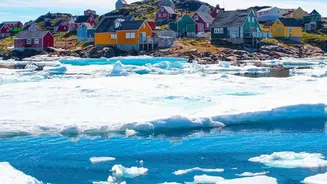
Ultimately, what makes these walks so profound is the journey itself. The churches and museums are the anchors, but the experience is woven from the moments in between. It is in the quiet observation of an iceberg calving in the distant fjord, the friendly nod from a passing local, and the sheer scale of the mountains that cradle the village. These walks are slow by nature, encouraging a connection to the environment that is impossible to achieve from a vehicle. They offer a way to understand Greenland not as a series of sights to be checked off a list, but as a living, breathing place with a rich and complex story to tell, one footstep at a time.