

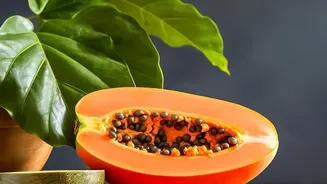
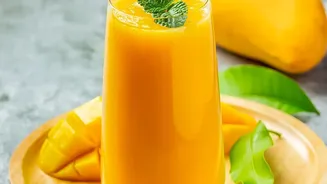

In the world of tropical fruits, mango and papaya are true heavyweights, beloved for their vibrant colours and sweet flavours. But while they may share a sunny disposition, they are entirely different fruits with unique personalities in the kitchen.
Flavour and Texture Showdown
The
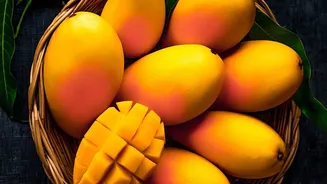
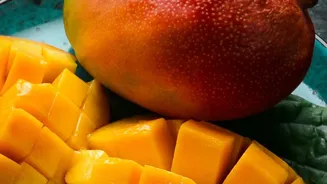
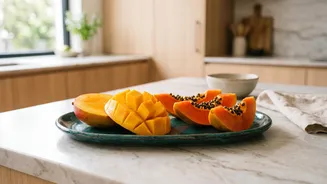
most immediate difference between these two fruits is how they taste and feel. A ripe mango delivers a complex, sweet flavour with tangy, citrusy, and sometimes pine-like notes, depending on the variety. Its flesh is typically fibrous yet juicy and smooth. Papaya, in contrast, has a milder, more uniformly sweet taste with a distinct musky undertone. Its texture is famously soft and buttery, often compared to melon or even avocado, and it lacks the fibrousness of mango, making it exceptionally creamy.
A Tale of Two Nutritional Profiles
Both fruits are nutritional powerhouses, but they excel in different areas. Papaya is a vitamin C champion, with a single cup providing nearly a full day's recommended intake. It is also lower in calories and sugar compared to mango. Papaya is perhaps most famous for papain, an enzyme that aids in protein digestion. Mango, meanwhile, is significantly richer in Vitamin A (in the form of beta-carotene), which is crucial for eye health. It also contains more folate and Vitamin E. While mango has more sugar, it also boasts a lower glycemic index, meaning it may lead to a slower rise in blood sugar levels.
In the Savoury Kitchen
Mango’s sweet-and-sour profile makes it a versatile player in savoury dishes. Ripe mango is a star in fresh salsas, salads, and glazes for grilled chicken or paneer. Unripe or raw mango is a staple in Indian cuisine, used to make tangy chutneys, pickles, and even sour curries like the Keralan raw mango fish curry. Papaya's role in savoury cooking is often more subtle. Ripe papaya can be added to fresh salads, pairing well with avocado or feta. Green, unripe papaya is more widely used, famously grated into Thai green papaya salad or used in Filipino chicken soup (Tinolang Manok) to add texture and a mild vegetable-like flavour.
The Sweet Finale: Desserts and Drinks
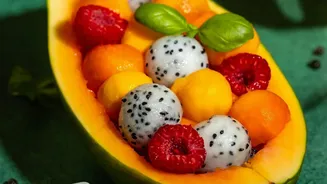
When it comes to desserts, mango's intense flavour makes it a dominant ingredient. It’s the heart of iconic Indian treats like mango lassi, kulfi, and aamras. It's also incorporated into cheesecakes, mousses, tarts, and ice creams around the world. Papaya's gentle sweetness and creamy texture lend themselves to simpler preparations. It's fantastic in smoothies, often blended with milk and a touch of condensed milk for a classic Taiwanese drink. A popular Brazilian dessert, Creme de Papaya, simply blends the fruit with vanilla ice cream. Papaya is also enjoyed in fruit salads or made into halwa.
How to Pick a Winner
Choosing the right fruit at the store is key. For a mango, don't rely on its colour, as ripeness varies by variety. Instead, give it a gentle squeeze; it should be slightly soft, similar to a ripe avocado or peach, and often have a fruity scent at the stem. To ripen a firm mango, leave it at room temperature, or place it in a paper bag to speed up the process. For papaya, look for skin that is turning from green to yellow. A ripe papaya will also yield to gentle pressure. It should be eaten soon after ripening but can be stored in the refrigerator for a few days to slow the process.