
Chasing the Shadow for Coronal Clues
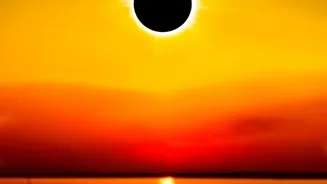
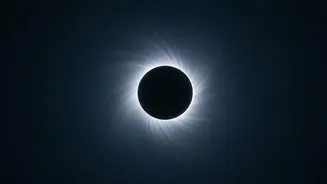
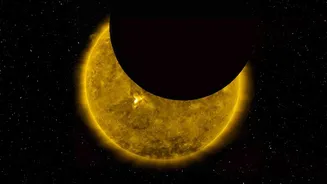
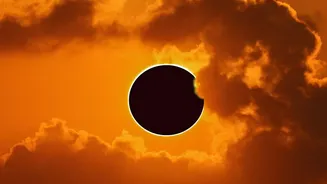
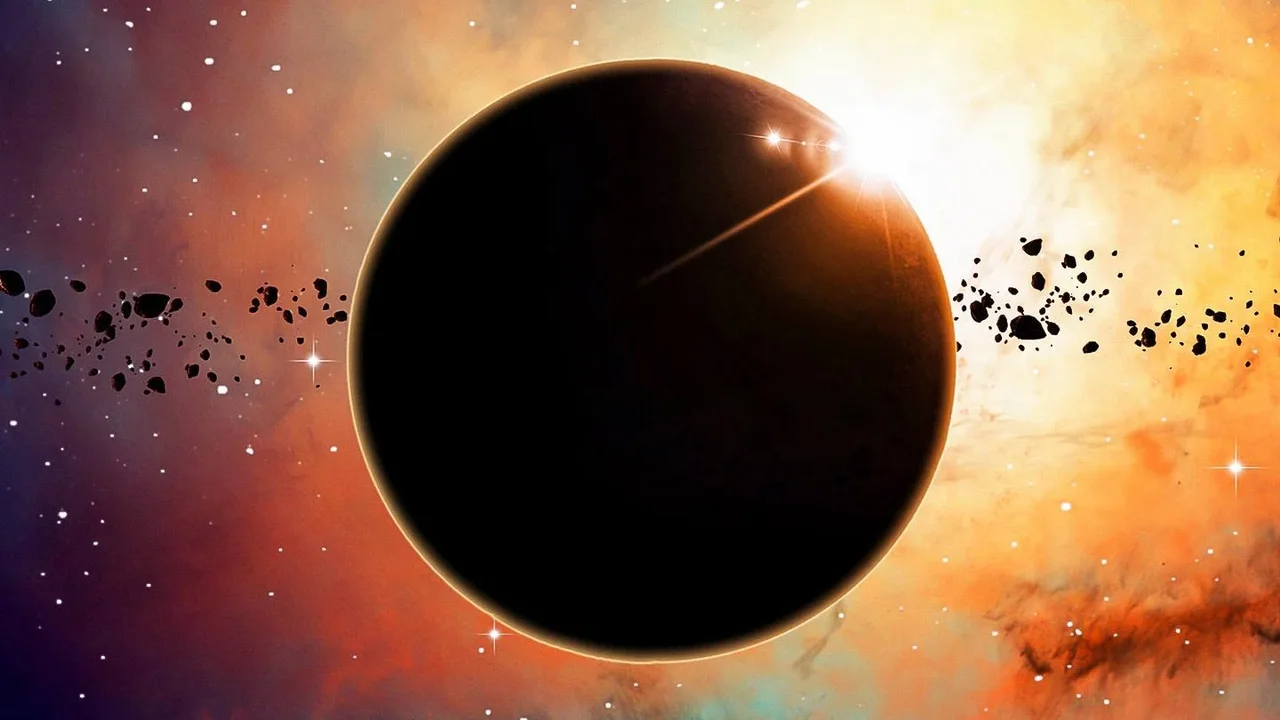
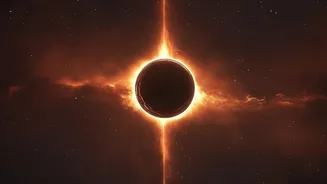
One of the biggest scientific prizes during an eclipse is a clear view of the Sun's corona—its mysterious, superheated outer atmosphere. Normally invisible, the corona blazes into view when the Moon blocks the Sun's blinding glare. To maximize this precious
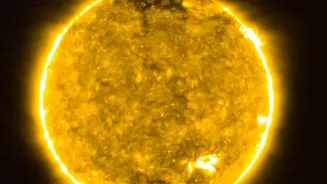
viewing time, a NASA WB-57 high-altitude research jet chased the Moon's shadow over the Atlantic. Flying at 50,000 feet, the jet extended its observation of totality from just over two minutes to nearly three. Outfitted with specialized cameras, the mission aimed to capture high-resolution images of the corona's structure in different light wavelengths. Scientists hope this data will help solve one of solar physics' greatest puzzles: how the corona gets heated to millions of degrees, far hotter than the Sun's surface below. Understanding these dynamics is key to learning more about the solar wind, the stream of charged particles that constantly flows from the Sun and impacts Earth.
An Atmospheric Pause Button
A total solar eclipse doesn't just affect the Sun's visibility; it presses a temporary pause button on solar radiation reaching Earth, providing a unique natural experiment. The NASA-supported Nationwide Eclipse Ballooning Project took advantage of this by launching dozens of scientific balloons from Spain and Iceland. In Iceland, teams launched 80 balloons over 26 hours to study how the sudden loss of sunlight affected the boundary layer, the part of the atmosphere closest to the ground. Previous eclipses showed this layer can collapse in the sudden coolness, and scientists were keen to see how Iceland's unique long-daylight conditions in August might alter that effect. Other balloons launched from Spain measured how ozone levels changed during the darkness, building on findings from the 2024 eclipse. These atmospheric studies help refine our models of weather and atmospheric chemistry.
A Test of Einstein and New Technology
The 2026 eclipse also provided a stage to both test cutting-edge technology and revisit one of physics' most famous experiments. In Spain, the Astronomical Association of Barcelona planned a modern version of the 1919 Eddington experiment, which first provided proof for Einstein's General Theory of Relativity. Using modern digital imaging, they attempted to once again measure the tiny deflection of starlight as it passed by the Sun's massive gravitational field, an effect only visible during an eclipse. Meanwhile, the European Space Agency (ESA) used the natural event as a real-world test for its computer models and missions like Proba-3, which uses two satellites flying in precise formation to create artificial, long-lasting eclipses on demand. By comparing its predictions of the corona's appearance with the reality seen on August 12, ESA can fine-tune the tools used to forecast space weather.
How Did Earth's Creatures React?
The sudden plunge into midday darkness also offers a rare chance to see how animals respond to an unexpected disruption of their daily cycle. Several research projects focused on this question. The ECOECLIPSE project set up bioacoustic monitoring to listen for changes in the activity of birds and bats. Another study deployed light traps across Spain to see if nocturnal insects like moths would be tricked into activity by the false twilight. Past eclipses have revealed a wide range of behaviors. Some birds fall silent, while others begin an evening chorus. In zoos, some animals have shown signs of anxiety or confusion, while many others seem to take little notice. These 'natural experiments' provide valuable insights into how deeply light cues govern the animal kingdom's rhythms.