




The Heartbeat of Devotion
For four days every year during the monsoon month of Ahaar, the Kamakhya Temple in Guwahati becomes the epicentre of a faith that is as ancient as the hills it occupies. This is the Ambubachi Mela, often called the 'Mahakumbh of the East'. It's not just
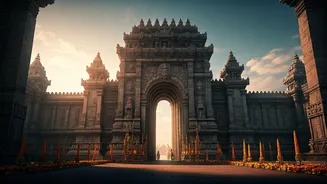
another festival; it is a profound expression of devotion drawing pilgrims, sadhus, and tantrics from every corner of India and beyond. The streets around the temple transform into a makeshift city of faith. Chants fill the air, the scent of incense hangs heavy, and a palpable energy emanates from the mass of humanity waiting patiently for a divine moment. For the devotees, this gathering is the culmination of a year-long spiritual wait, a time to reconnect with the primal energy of Shakti.
A Unique Celebration of Feminine Power
What makes the Ambubachi Mela unique is its core belief: the festival celebrates the annual menstruation of the presiding deity, Goddess Kamakhya. The temple is one of the most revered Shakti Peeths, believed to be the spot where the yoni (vulva) of the Goddess Sati fell. Here, the divine is not worshipped in the form of an idol but as a stone yoni-shaped rock formation, perpetually fed by an underground spring. During Ambubachi, it is believed that the Goddess undergoes her yearly menstrual cycle, a powerful symbol of the earth's fertility and its capacity to create and sustain life. This celebration of a natural biological process, integrated so deeply into spiritual practice, stands in stark contrast to the taboos that often surround menstruation in society, making the festival a powerful statement on the sanctity of womanhood and nature's cycles.
The Rituals and The Patient Wait
The festival's primary ritual involves the closure of the temple's main sanctum, the Garbhagriha, for three days. During this period, the Goddess is believed to be resting. No worship, prayers, or farming activities are conducted. Devotees do not enter the inner sanctum. Instead, they gather outside, transforming the temple complex into a vibrant hub of spiritual activity. They spend their days and nights singing devotional songs (bhajans), engaging in scriptural discussions, and performing austerities. It is a period of intense collective meditation and patience. The atmosphere is not one of mourning but of quiet, respectful anticipation, as everyone waits for the temple doors to reopen on the fourth day, signifying the purification of the Goddess.
The Gathering of Ascetics
The Ambubachi Mela is particularly significant for followers of the Tantric tradition. Sadhus, aghoris, and tantrics, many of whom live in seclusion in the Himalayas or other remote areas, descend upon Kamakhya for the festival. For them, this is the most auspicious time to perform spiritual practices and pursue 'siddhi' (spiritual powers). Their presence, with matted hair, ash-smeared bodies, and distinct rituals, adds a layer of mystique and intensity to the festival. While their practices can seem esoteric to the uninitiated, their gathering is a central feature of Ambubachi, drawing curiosity and reverence from the general pilgrims who flock to seek their blessings.
The Sacred Prasad of Fertility
When the temple doors finally swing open on the fourth day, the climax of the festival is reached. Devotees rush forward to receive the special 'prasad'. This is not edible but a small piece of red cloth, known as 'Rakta Bastra' or 'Angabastra'. These cloths are used to cover the sacred yoni stone during the three days of seclusion and are believed to be moistened with the menstrual fluid of the Goddess. This prasad is considered immensely powerful and auspicious. Devotees, especially couples seeking children and farmers praying for a good harvest, treasure it as a potent symbol of fertility and a tangible blessing from the divine mother herself. It's a symbolic end to the wait, a gift of life-giving energy to take back into the world.