


The Great Air Purifier Debate
The belief that indoor plants can clean our air gained popularity from a 1989 NASA study. The research showed that certain plants could remove volatile organic compounds (VOCs) like formaldehyde and benzene from sealed chambers. However, our homes are
not sealed chambers. More recent analysis has clarified that you would need an enormous number of plants—some estimate between 10 to 1,000 per square metre—to match the air-cleaning effect that simple, natural ventilation already provides. So, while plants do absorb some pollutants, their impact on a home's overall air quality is minimal. But that doesn't mean they aren't worth it. The proven benefits to our mental health, productivity, and the sheer joy of having living decor are reason enough to welcome them indoors.
Snake Plant: The Indestructible Classic
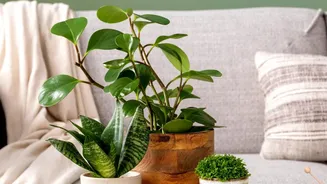
The Snake Plant, or Sansevieria, is the ultimate beginner's plant. Its stiff, upright leaves have a striking architectural quality that suits modern and traditional decor alike. It's famous for being incredibly resilient and tolerant of neglect. What makes it truly special is its ability to perform photosynthesis differently from many other plants, releasing oxygen at night, which has made it a popular choice for bedrooms. It was also one of the plants featured in NASA's original study for its ability to filter chemicals.Care Guide: Thrives in almost any light condition, from low light to bright, indirect sun. It is extremely drought-tolerant; the biggest mistake is overwatering. Wait until the soil is completely dry before watering again, typically every 2-6 weeks depending on the season and light.
Money Plant: The Trailing Favourite
Known in India as the Money Plant, Pothos (Epipremnum aureum) is arguably one of the most common houseplants, and for good reason. This fast-growing vine is incredibly easy to care for and propagates with ease—just snip off a stem and place it in water. Its heart-shaped leaves can be solid green or variegated with yellow or white. It's perfect for hanging baskets or placing on shelves where its trailing vines can cascade downwards. It's also known to be effective at removing common indoor pollutants.Care Guide: Pothos is very adaptable but prefers bright, indirect light. It can tolerate lower light, though variegation may fade. Water it thoroughly when the top inch or two of soil feels dry, and let it dry out between waterings. You can also grow it directly in a vase of water, changing the water weekly.
Peace Lily: The Elegant Bloomer
The Peace Lily (Spathiphyllum) brings a touch of elegance to any room with its glossy, dark green leaves and beautiful white flowers that resemble cobra hoods. It’s another plant that topped NASA’s list for its air-purifying capabilities. Beyond its looks, it's known for being communicative; its leaves will dramatically droop when it needs water, taking the guesswork out of its care routine. This makes it a great choice for those still learning to read a plant's needs.Care Guide: Peace Lilies prefer medium to bright, indirect light but can tolerate low-light conditions, though they may not bloom as much. They like consistently moist, but not waterlogged, soil. Watering once a week is often sufficient. Brown leaf tips can sometimes be caused by chemicals in tap water, so using filtered water can help.
Spider Plant: The Prolific Propagator
The Spider Plant (Chlorophytum comosum) is a cheerful and resilient plant with arching, grass-like leaves. It’s renowned for being exceptionally easy to grow and is non-toxic, making it a safe choice for homes with pets and children. True to its name, it produces little 'spiderettes' or baby plants that dangle from the mother plant. These can be easily snipped off and planted to create new plants. The NASA study found it was highly effective at removing formaldehyde from the air in a controlled setting.Care Guide: Spider plants are not fussy. They thrive in bright, indirect light but can adapt to lower light areas. Water them when the top inch of soil feels dry. They are forgiving if you forget to water them occasionally. They also appreciate a bit of humidity, so they do well in kitchens or bathrooms.
Areca Palm: The Tropical Humidifier
For a touch of the tropics, the Areca Palm (Dypsis lutescens) is a fantastic choice. With its feathery, arching fronds, it can make any corner of a room feel lush and vibrant. It's one of the most popular palms for indoor growing in India. In addition to being listed in NASA's study, the Areca Palm is an excellent natural humidifier, releasing moisture into the air, which can be a bonus in dry, air-conditioned rooms.Care Guide: This palm needs bright, filtered light—direct sun will scorch its leaves. Keep the soil lightly moist, but ensure the pot has good drainage to prevent root rot. Reduce watering in the winter. It’s a relatively fast grower and brings a big, green impact to your living space.