

Why Core Stability Matters
Before diving into the exercises, it’s important to understand what 'core stability' truly means. Your core isn't just the six-pack muscles (rectus abdominis). It’s a complex group of muscles, including your deep transverse abdominis, obliques, lower
back, and even your glutes and pelvic floor. These muscles work together like a natural corset, stabilising your spine and pelvis. A strong, stable core improves posture, enhances balance, reduces the risk of injury, and can even alleviate lower back pain. It's the central hub from which all movement originates, making daily activities like lifting groceries or playing with your kids easier and safer.
The Classic Plank
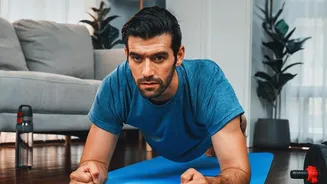
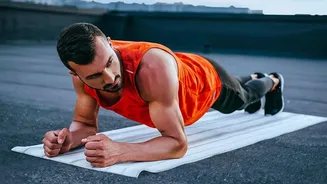
The plank is a fundamental core exercise for a reason: it engages multiple core muscles simultaneously without putting strain on the lower back. To perform a forearm plank, place your forearms on the floor with your elbows aligned directly under your shoulders. Extend your legs straight behind you, resting on your toes. Your body should form a straight, rigid line from your head to your heels. The key is to avoid letting your hips sag or rise too high. Engage your abdominals by drawing your navel toward your spine. Hold this position, focusing on your breathing. Start with 20-30 seconds and gradually increase the time as you get stronger.
The Bird-Dog
This exercise is excellent for improving stability and coordination, as it challenges your core to prevent your torso from rotating. Start on all fours with your hands directly under your shoulders and your knees under your hips. Keeping your back flat and your core tight, simultaneously extend your right arm straight forward and your left leg straight back. Pause for a moment, focusing on keeping your hips level with the floor. Return to the starting position with control and repeat on the other side, extending your left arm and right leg. This counts as one rep. The movement should be slow and deliberate, not rushed.
The Dead Bug
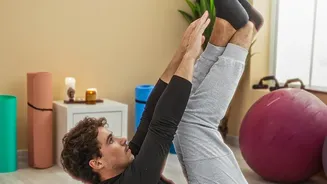
The dead bug is another fantastic exercise for enhancing deep core stability with minimal risk of back strain. Lie on your back with your arms extended toward the ceiling and your knees bent at a 90-degree angle over your hips. Press your lower back gently into the floor to engage your abdominals. Slowly lower your right arm and left leg toward the floor simultaneously, stopping just before they touch the ground. Exhale as you lower, and inhale as you return to the starting position with control. Repeat with the opposite arm and leg. The goal is to keep your torso completely still throughout the movement.
Heel Taps
Targeting the obliques, or side abdominal muscles, is crucial for a well-rounded core. Heel taps are a simple yet effective way to do this. Lie on your back with your knees bent and your feet flat on the floor, close to your glutes. Lift your head and shoulders slightly off the ground. From here, reach your right hand down to tap your right heel, then return to the center and reach your left hand to tap your left heel. Keep your lower back pressed into the floor and focus on the side-to-side crunching motion, feeling your obliques engage with each tap.
Reverse Crunch
While traditional crunches can sometimes strain the neck, the reverse crunch shifts the focus to the lower abdominals. Lie on your back with your hands by your sides or under your hips for support. Lift your legs and bend your knees to a 90-degree angle. Using your lower abs, slowly curl your hips off the floor, bringing your knees toward your chest. The movement should be small and controlled; avoid using momentum by swinging your legs. Slowly lower your hips back to the starting position. This move effectively targets the often-neglected lower part of the rectus abdominis.
Bicycle Crunch
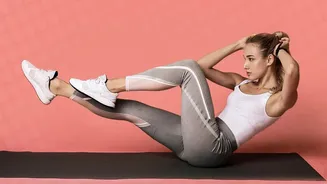
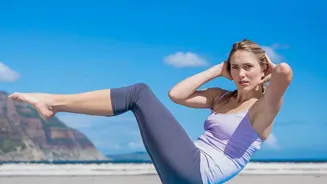
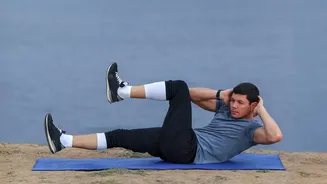
The bicycle crunch is a dynamic movement that works the rectus abdominis and the obliques at the same time. Lie on your back with your hands gently behind your head, being careful not to pull on your neck. Lift your knees to a 90-degree angle and raise your head and shoulders off the floor. Simultaneously bring your right elbow toward your left knee while extending your right leg straight out. Then, switch sides, bringing your left elbow toward your right knee while extending your left leg. The key to making this effective is to move slowly and deliberately, focusing on twisting your torso rather than just your elbows.