


The Trouble with a Simple Swap
Many who try millets for the first time make a common mistake: they cook them exactly like rice. This often leads to disappointment, with grains that are either too hard or turn into a sticky clump. The truth is, millets are not rice. Each type—from foxtail
and bajra to ragi and jowar—has a unique flavour, texture, and cooking property. They require different water ratios, soaking times, and cooking methods. Simply replacing rice with millet in your favourite pulao or biryani recipe without adjustments ignores the distinct character of the grain. To truly appreciate millets, we need to look beyond substitution and towards tradition, where these grains have been the star of their own dishes for centuries.
A Southern Staple: The Power of Ragi
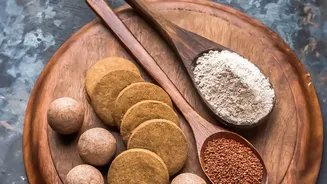
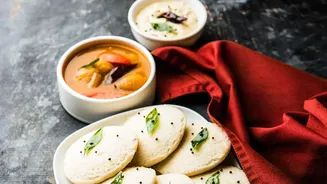
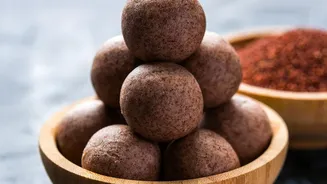
In South India, particularly Karnataka, ragi (finger millet) is not a health trend but a way of life. For generations, it has been the foundation of the agrarian diet. The most iconic dish is the Ragi Mudde, a dense, pliable ball made by cooking ragi flour in boiling water. Eaten not by chewing but by tearing off small portions and swallowing with a flavourful curry like 'upsaaru' (a thin lentil and greens broth), it provides sustained energy for farmers and labourers. Ragi's versatility extends to crispy dosas, savoury idlis, and a cooling fermented porridge called Ragi Ambali. These dishes are designed around ragi's earthy flavour and dense nutritional profile, which is incredibly rich in calcium.
Hearty Breads of the West
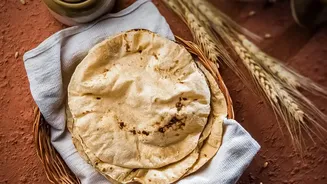
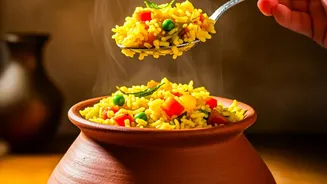
Travel to the western states of Maharashtra, Gujarat, and Rajasthan, and you'll find flatbreads made from jowar (sorghum) and bajra (pearl millet) are staples. In Maharashtra, the Jowar Bhakri is a soft, unleavened bread patted into shape by hand and cooked on a hot griddle. It is the perfect accompaniment to spicy vegetable preparations like 'pitla' or 'thecha', a fiery green chilli and garlic chutney. Similarly, Rajasthan's cuisine is defined by the robust Bajra Roti, often generously slathered with ghee and served with garlic chutney or a hearty lentil dish. These regions also have unique preparations like the Rajasthani Bajra Khichdi, a warming, porridge-like one-pot meal, and 'Raabdi', a fermented bajra and buttermilk drink perfect for cooling down in the summer heat.
Comfort in a Northern Bowl
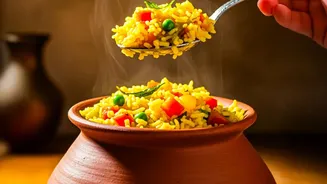
In North India, millets like foxtail (kangni) and barnyard (samak) often feature in comforting one-pot meals and fasting recipes. Barnyard millet, often called 'samak ke chawal', is a popular substitute for rice during Navratri fasts. It's light, easy to digest, and forms the base for dishes like 'vrat ki khichdi' or pulao. Foxtail millet, with its slightly nutty flavour, is used to make everything from upma and pulao to dhokla. These recipes are crafted to complement the millet's texture and taste, creating wholesome meals that are both nourishing and satisfying. You can also find dishes like Bajra Fara, a steamed dumpling from Uttar Pradesh, showcasing how millets are integrated into regional snacks and breakfasts.
Beyond the Main Course
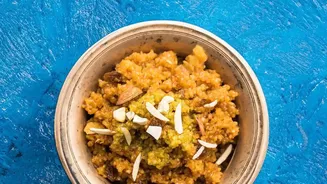
The diversity of millets in Indian cuisine goes far beyond main meals. They are transformed into a delightful array of snacks, desserts, and drinks. In the south, Ragi Malt is a popular energy drink, while in Maharashtra, Thalipeeth is a savoury multigrain pancake often made with a mix of millet flours. Sweet treats are also common, with recipes for millet-based ladoos, where roasted millet flour is mixed with jaggery and ghee, or even modern interpretations of classics like the Goan Bebinca made with foxtail millet flour. These dishes prove that millets are not just a 'healthy alternative' but a versatile ingredient group capable of creating a vast spectrum of flavours and textures that a simple rice swap could never replicate.