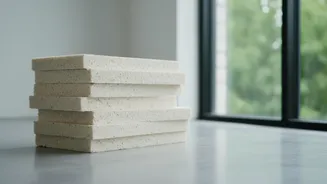








The Unsung Hero of Fungi
When you think of a mushroom, you probably picture the cap and stem. But beneath the surface lies the real powerhouse: the mycelium. This intricate, web-like network of filament-like roots is the vegetative part of the fungus. It acts as nature’s glue,
binding soil and decomposing organic matter. In recent years, innovators and bio-manufacturing firms have realised this natural binding property can be harnessed. By giving mycelium a specific food source—namely, agricultural waste—it can be coaxed into growing into specific shapes and forms, creating a solid, durable, and lightweight composite material.
From Farm Waste to Finished Panel
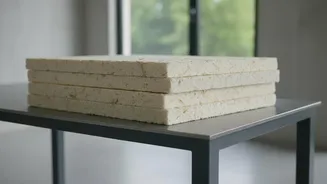
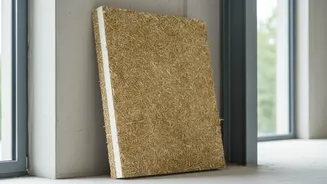
The production process is a remarkable example of biotechnology meeting circular economy principles. It starts with collecting low-value agricultural byproducts, such as hemp stalks, sawdust, or straw, that might otherwise be left to rot. This waste material, known as the substrate, is then sterilized and inoculated with a chosen species of fungal mycelium. It is placed into a mould, which can be 3D-printed to any desired shape or size. Over the next several days, in controlled conditions, the mycelium grows, threading its way through the substrate and digesting it. As it grows, it binds the waste particles together, forming a solid, interconnected mass. Once the mould is filled, the growth is stopped through a drying process, resulting in a finished panel or block that is ready for use.
A Green Revolution in Building
The environmental benefits are significant. Firstly, the process transforms waste into a valuable resource, reducing landfill and preventing the release of greenhouse gases from decaying biomass. Secondly, the production requires far less energy than manufacturing conventional insulators like fibreglass or polystyrene foam. The material itself is not only biodegradable at the end of its life, but it can also be carbon-negative, meaning it sequesters more carbon during its growth than is emitted during its production. Companies like UK-based Biohm and Mykor are pioneering these carbon-negative materials, aiming to decarbonise the construction supply chain. This makes mycelium insulation a powerful tool in the push for zero-emission buildings.
How Does It Perform?
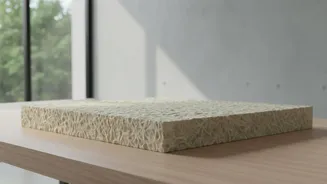
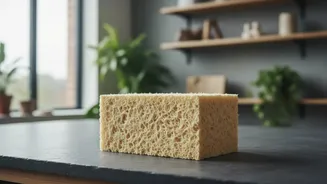
For any insulation to be viable, it must effectively resist heat transfer. Studies and tests have shown that mycelium composites perform admirably. Their thermal conductivity is competitive with, and in some cases better than, traditional materials like extruded polystyrene (XPS). The intricate, porous structure created by the mycelial network is excellent at trapping air, which is key to its insulating properties. Beyond thermal performance, mycelium insulation boasts other attractive qualities. It is naturally fire-resistant, charring rather than catching flame, and releases significantly less heat and smoke than plastic-based foams. It is also breathable, with an ability to absorb and release moisture, which helps regulate humidity and prevent issues like mould. Furthermore, it provides excellent acoustic absorption, making it a dual-purpose material for quieter, more comfortable indoor environments.
The Road Ahead
Despite its promise, mycelium insulation is still a developing technology and faces hurdles to widespread adoption. Scaling up production to compete with the massive global output of conventional insulation is a major challenge. Production costs can be higher, and ensuring consistent quality and performance across different batches and manufacturers requires standardization. Market acceptance is another factor; architects, builders, and consumers need to be educated on the benefits and reliability of this novel material. However, with the global mycelium market projected to grow significantly and venture capital flowing into biomaterial startups, the momentum is undeniable. As regulations against plastics tighten and demand for sustainable construction grows, mycelium is perfectly positioned for the future.