


A Cosmic Fireworks Display
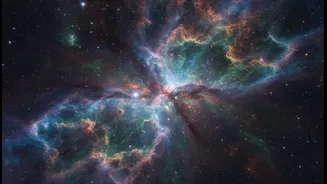
NASA recently released a spectacular new view of FS Tau, a multi-star system located in a vibrant star-forming region. The image, captured by the powerful infrared instruments of the JWST, looks like a celestial celebration. It showcases wisps of translucent
blue and purple gas, punctuated by the fiery orange glow of a baby star, or protostar, known as FS Tau B. This young star is actively spewing jets of material, seen as orange and red wisps that carve through the surrounding dust and gas. Unlike previous images from telescopes like Hubble, which were obscured by thick dust, Webb's infrared vision cuts through the haze to reveal the intricate processes of star birth in stunning detail.
What is a Stellar Nursery?
So, what exactly are we looking at? FS Tau is part of what astronomers call a stellar nursery. These are vast, dense clouds of gas and dust floating in interstellar space. Think of them as cosmic maternity wards where new stars are born. Over immense periods, gravity pulls clumps of this material together into denser cores. As these cores get more and more compressed, they heat up and eventually become hot enough to ignite nuclear fusion, the process that makes stars shine. These infant stars, known as protostars, are what we see glowing brightly in the new JWST image. Our own Sun was born in a similar nursery billions of years ago.
Why This New View Matters
This isn't just another pretty picture. The JWST's image of FS Tau provides a wealth of new scientific information. Because Webb can see in infrared light, it allows astronomers to peer through the dense dust clouds that hide the earliest stages of star formation. The new image reveals how protostars, like FS Tau B, interact with their environment. The powerful jets of gas they eject slam into the surrounding material, creating bright, compressed ridges and shaping the entire nebula. By studying the colours and textures of the gas and dust, scientists can learn about the chemical composition of the nursery and better understand the ingredients available for forming not just stars, but future planets as well.
Galactic Archaeology in Action
Images like this are a form of galactic archaeology. Each point of light and swirl of gas contains clues about the past. By observing stellar nurseries, scientists can piece together a timeline of how stars and galaxies evolve. For instance, some nebulae have chemical compositions similar to those in the very early universe. Studying them gives us a window into a time when star formation was much more rapid and violent across the cosmos. This new view of FS Tau helps refine our models of how low-mass stars like our Sun form and how their early activity influences the potential for planets to develop around them, a key step in understanding our own cosmic origins.