







The Old Way vs. The New
For decades, weather forecasting has been the domain of massive supercomputers. These machines run what are known as numerical weather prediction (NWP) models. In essence, they solve complex physics equations to simulate the Earth's atmosphere, dividing
the globe into a grid and calculating variables like temperature, pressure, and wind for each section. While these models have become remarkably accurate, they have limitations. They are incredibly expensive and time-consuming to run; a single 10-day forecast can take hours on a supercomputer the size of a bus. This computational bottleneck restricts how many scenarios can be run and how detailed the forecasts can be. Artificial intelligence offers a fundamentally different approach. Instead of solving physics equations from scratch, AI models are trained on decades of historical weather data, learning the complex patterns that connect atmospheric conditions to future weather outcomes.
How AI Changes the Game
AI models like Google's GraphCast, NVIDIA's FourCastNet, and Huawei's Pangu-Weather are leading this transformation. GraphCast, for example, was trained on nearly 40 years of reanalysis data, allowing it to generate a 10-day global forecast in less than a minute on a single specialized computer. This is a monumental leap in speed. The key difference is that AI treats forecasting as a pattern-recognition problem, not a physics simulation. By analysing vast historical datasets, these models learn the subtle, non-linear relationships in the atmosphere that traditional models can struggle to capture perfectly. This allows them to produce forecasts that are not only thousands of times faster but also, in many cases, more accurate. Studies have shown that models like GraphCast can outperform the gold-standard European forecasting system on a majority of metrics.
What This Means For India
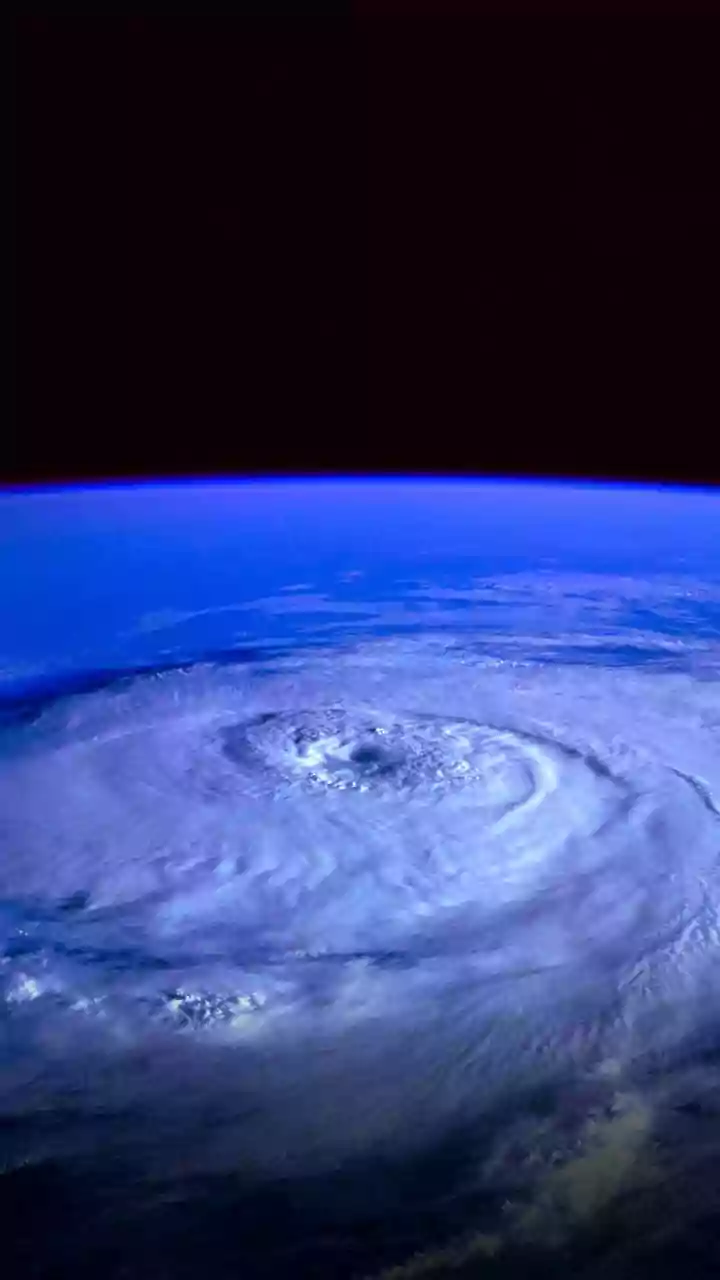
For a country as exposed to climate volatility as India, this technological shift is not just academic. The implications for agriculture, disaster management, and public safety are immense. In 2025, a collaborative project involving the Indian Ministry of Agriculture gave 38 million farmers an AI-powered monsoon forecast four weeks in advance, a feat that helped them make crucial decisions about planting and investment. This was followed by the launch of India's own Bharat Forecasting System, which provides high-resolution (6km) predictions at the village level. Furthermore, AI models are showing remarkable promise in tracking the paths of tropical cyclones with greater accuracy and longer lead times. For India's densely populated coastlines, getting an extra day or even hours of accurate warning can make a life-or-death difference, enabling more effective evacuations and resource deployment. The ability to predict extreme heatwaves and intense rainfall with greater precision will also be vital for protecting vulnerable urban and rural populations.
Not a Magic Bullet
Despite their power, AI models are not ready to replace traditional methods entirely. Their biggest weakness is that they are only as good as the data they were trained on. This means they can struggle to predict events that are truly unprecedented or fall outside the historical patterns they have learned. For instance, while excellent at tracking storm paths, some AI models currently underestimate the intensity of extreme rainfall events that cause flash floods. Experts see the future as a hybrid approach, where the incredible speed of AI is used to generate a wide range of possible scenarios (an ensemble forecast), which are then refined and interpreted by human meteorologists using their knowledge of physics-based models. AI is an incredibly powerful tool that enhances, rather than replaces, the expertise of scientists.