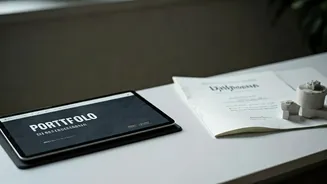









The Big Shift: Why 'What You Can Do' Beats 'Where You Studied'
The hiring landscape in India is undergoing a seismic shift. Companies are increasingly realising that a traditional degree, while valuable, is no longer a perfect predictor of success. [3, 6] The rapid pace of technological change means that university
curricula can struggle to keep up. [2, 14] As a result, there's a growing gap between academic knowledge and the practical skills required in the modern workplace. [2] According to NASSCOM, a significant percentage of graduates require additional training to be job-ready. [2] This has pushed employers to adopt a more direct and logical approach: skills-based hiring. [3, 6] Instead of just looking at credentials, they want to see tangible proof of a candidate's abilities through real-world projects and work samples. [15]
What Employers Mean by 'Projects'
When a hiring manager asks about your projects, they aren't just looking for a list of coursework. They want to see evidence of your ability to solve real-world problems. [5, 16] A strong project in your portfolio should tell a story. It should outline the problem you identified (the situation), what you set out to achieve (the task), the specific steps you took (the action), and the measurable outcome (the result). [5] It's about demonstrating your process, from critical thinking and planning to execution and collaboration. [4, 18] This approach allows employers to gauge skills that are hard to quantify on a resume, such as problem-solving, creativity, adaptability, and teamwork. [4, 19] A portfolio full of such projects shows you can create value, not just pass exams. [9]
How to Build a Killer Project Portfolio
Starting a portfolio can feel daunting, but it doesn't have to be. Begin by selecting impactful projects that showcase the skills you want to be hired for. [9] If you don't have professional experience, create your own projects. [13] Interested in fintech? Build a small app that addresses a common financial challenge. Passionate about marketing? Launch and document a social media campaign for a local business. [5] The key is to choose projects that solve a business problem or demonstrate in-demand skills. [5] Document everything clearly, explaining your role, the tools you used, and the project's impact. A clean, organised digital portfolio, perhaps on a personal website or a platform like LinkedIn, can make your work easily accessible to recruiters. [11]
Beyond Tech: Projects for Every Field
While project portfolios are most associated with tech and creative fields, the principle applies across all industries. A business management student can analyse a local company's strategy and propose improvements. [19] A marketing aspirant can develop a detailed campaign plan for a product launch. A student in the social sector can organise a community initiative and document its impact. Even in more traditional fields, a portfolio can set you apart. It's about taking the initiative to apply your knowledge in practical ways. This shift requires a change in mindset—from being a passive learner to an active practitioner in your field of study.
The Degree Is Still Important, But It's a Starting Point
This trend doesn't mean your degree is worthless. On the contrary, it provides a crucial foundation of knowledge. [3] However, in a competitive job market, the degree is increasingly seen as the starting line, not the finish line. [21] A recent report highlighted that while many employers are moving towards skills-first models, a significant number still value a degree or a combination of both. [7] The most powerful combination for any job seeker today is a solid educational background supplemented by a rich portfolio of projects that prove you can apply that knowledge effectively. Your degree gets you in the door; your projects convince them to offer you a seat at the table. [21]