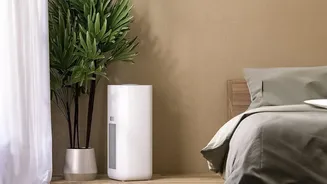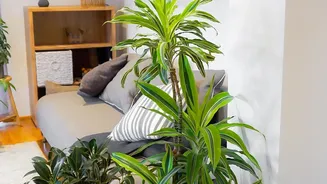





The quest for cleaner indoor air often leads to two popular choices: lush houseplants or sleek air purifiers. While one adds natural beauty and the other offers technological might, which one actually does the heavy lifting for your air quality?
The Plant-Powered Purifier: A Green Myth?
The belief
that houseplants are effective air cleaners largely stems from a 1989 NASA study. The study showed that, in a small, sealed chamber, certain plants could remove volatile organic compounds (VOCs) like formaldehyde and benzene from the air. However, translating this to a real-world home is problematic. Your living room isn't a sealed lab; it has drafts, open doors, and constant air exchange. Scientific reviews have since concluded that you would need an impractically large number of plants—anywhere from 10 to 1,000 per square metre—to match the air-cleaning capacity of a standard building's ventilation, let alone a mechanical purifier. While plants are wonderful for aesthetics and can boost mood and humidity, they are not an effective solution for significantly reducing airborne pollutants.
Air Purifiers: The Mechanical Solution
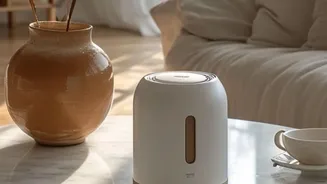
Unlike plants, air purifiers are engineered specifically to clean the air. They work by pulling air through a series of filters, actively trapping pollutants. Most quality units use a multi-stage system. A pre-filter catches large particles like hair and lint. The main workhorse is often a HEPA (High-Efficiency Particulate Air) filter, which is designed to capture 99.97% of airborne particles as small as 0.3 microns, including dust, pollen, mould spores, and pet dander. Many purifiers also include an activated carbon filter, which is crucial for removing gases, odours, and VOCs that HEPA filters can't trap. This combination makes them far more effective and faster at removing a wide range of common indoor contaminants than houseplants.
The Verdict: Plants for Vibe, Purifiers for Purity
When it comes to a head-to-head comparison, there is a clear winner for air purification. If your goal is to measurably reduce dust, allergens, smoke, and other pollutants, an air purifier is the only practical choice. Recent studies confirm that a single air purifier is thousands of times more efficient at cleaning air than a houseplant. The best approach is to see them as having complementary, not competing, roles. Use houseplants to enhance your home's decor, boost your mood, and foster a connection to nature. For the serious work of cleaning the air you breathe, rely on a mechanical purifier.
Choosing a Purifier: Understanding CADR
Once you've decided on an air purifier, the next step is choosing the right one. The most important metric to understand is the Clean Air Delivery Rate, or CADR. Certified by the Association of Home Appliance Manufacturers (AHAM), CADR tells you how much clean air a purifier delivers, measured in cubic feet per minute (CFM). It is reported as three numbers for three different particle sizes: smoke, dust, and pollen. The smoke rating is often considered the most important because it reflects performance against the smallest particles. A higher CADR number means the purifier can clean the air in a room more quickly.
Matching a Purifier to Your Room Size
To ensure your purifier is effective, its CADR must match your room's size. An undersized unit will struggle to keep up, while an oversized one can run on lower, quieter settings. A widely accepted rule of thumb from AHAM is that the CADR rating for smoke should be at least two/thirds of the room's area in square feet. For example,' for a room that is $150$ square feet (e.'g., $10$ feet by $15$ feet), you would calculate:' $150$ x ($2/3$) = $100$. Therefore,' you should look for a purifier with a smoke CADR of at least $100$. If you have ceilings higher than the standard $8$ feet,' or if you're dealing with high levels of pollutants like smoke or pet dander,' it's wise to choose a unit with an even higher CADR rating.