




What Are These Mysterious Red Dots?
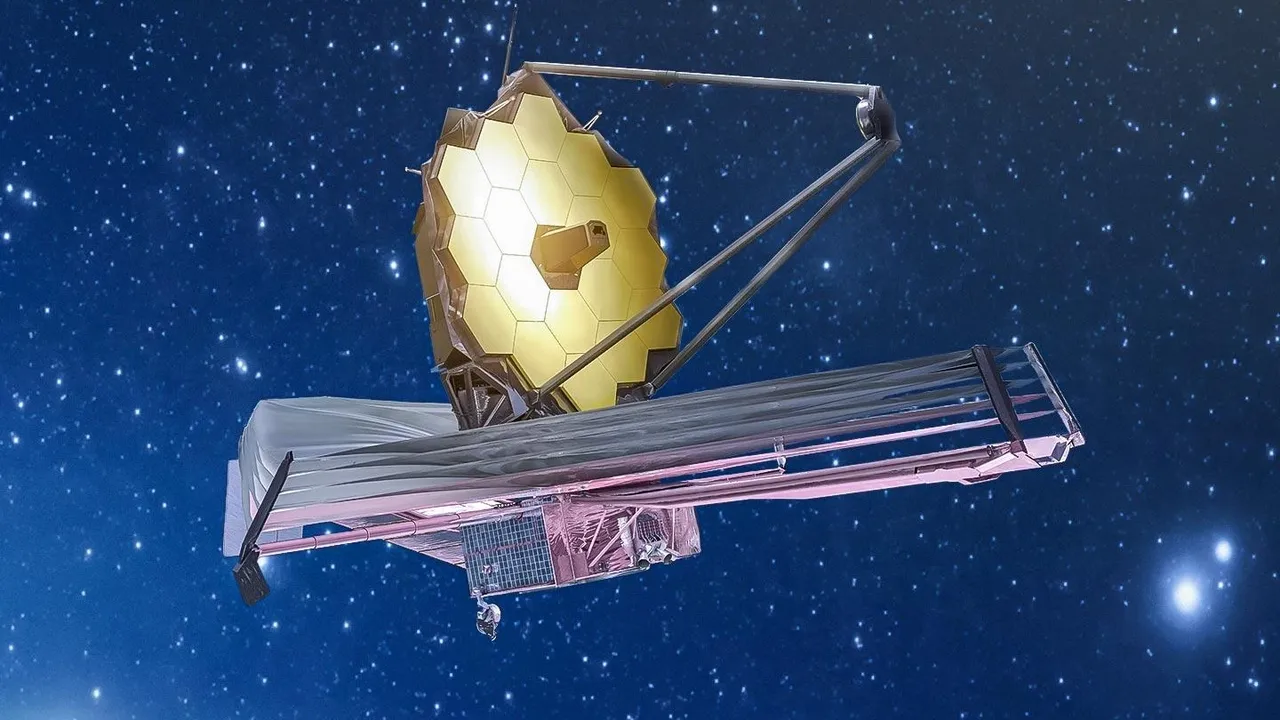
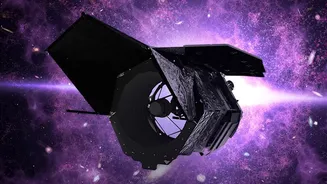
Since the James Webb Space Telescope (JWST) began delivering its breathtaking images, astronomers have been captivated by a new class of object: 'little red dots' (LRDs). These are not stars, but extremely compact and intensely bright sources of light
from the dawn of time, seen as they were just 600 million to a billion years after the Big Bang. Their red colour comes from the vast expansion of the universe, which stretches light waves over billions of years. The central puzzle was that these LRDs appeared in vast numbers in the early universe and then seemed to vanish as the cosmos matured, leaving scientists to wonder what they were and where they went.
A Breakthrough Hiding in a Cactus
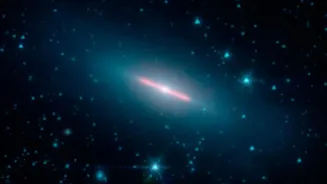
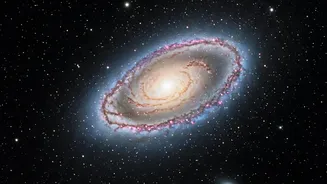
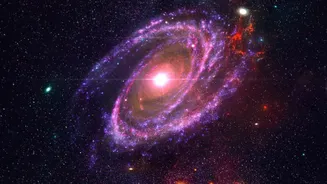
A recent study provides a compelling answer, and it comes from an unlikely source: a more recent spiral galaxy nicknamed “Saguaro” for its cactus-like arms. A team of researchers noticed that the core of this galaxy behaved exactly like a little red dot, likely powered by a furiously feeding supermassive black hole. This gave them an idea. What would Saguaro look like if it were much farther away, back in the early universe? They ran a simulation, digitally pushing the galaxy to a high redshift. The result was astounding. The galaxy's vast, faint spiral arms faded into nothingness, leaving behind only its tiny, brilliant red core. It had become a little red dot.
The Ultimate Cosmic Illusion
This discovery suggests that many little red dots are not a strange, new type of object, but rather a powerful observational illusion. They are the hyper-luminous centers of vast galaxies whose outer regions are too faint and spread out for even the Webb telescope to see at such extreme cosmic distances. In essence, we have been seeing the glowing hearts of galaxies whose bodies are shrouded by distance. This also helps explain why LRDs don't always behave like nearby active galaxies; in many cases, their central black holes are so heavily obscured by gas and dust that much of their tell-tale radiation, like X-rays, is blocked before it reaches us.
It's Just a Phase
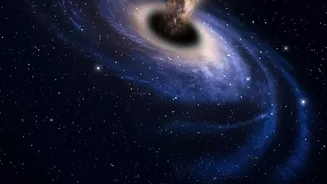
The Saguaro study strongly implies that being a 'little red dot' is not a permanent state but a temporary phase in a galaxy’s life. In the early universe, conditions were ripe for the rapid growth of supermassive black holes. During this phase, the black hole blazes so brightly it completely outshines its host galaxy, making it appear as a dot. As the galaxy evolves and the black hole's feeding frenzy subsides, the system transforms. The galaxy grows, its stars become more visible, and it no longer looks like an LRD. This elegant solution explains why the dots seemed to disappear: they didn't vanish, they simply grew up into the kinds of galaxies we see in the universe today.
So, Why Does This Matter?
This discovery fundamentally reframes our understanding of the early universe. It suggests that the first massive galaxies might not be missing, but have been hiding in plain sight, their true scale concealed by distance and the brilliance of their cores. For years, the surprising number of early, massive black holes posed a major challenge to cosmic models. Now, it seems they may be a key part of the normal evolutionary process. This is the ultimate reader service of science: it peels back cosmic illusions to reveal a deeper, more complete story. It's not just about solving the mystery of some distant dots; it's about piecing together the history of how everything, including our own Milky Way, came to be.