





The Solar Paradox in a Monsoon Climate
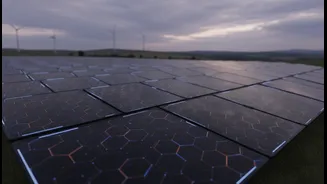
India’s solar ambitions are among the most aggressive in the world, with vast solar farms and rooftop panels becoming an increasingly common sight. This push is critical for the nation's energy security and climate goals. Yet, traditional solar panels face
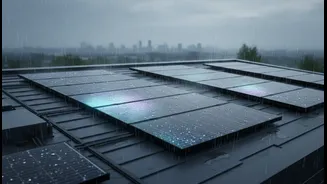
a significant challenge: their peak performance is reserved for bright, sunny days. During India's four-month monsoon season, or even on hazy days in polluted urban centres, the output of conventional solar arrays can drop significantly. On a heavily overcast day, panel output can fall to just 10-25% of its rated capacity. This intermittency poses a problem for grid stability and makes solar power a somewhat fair-weather friend. For a nation that experiences extensive cloud cover for a third of the year, a solution has been desperately needed to make solar a true year-round power source.
Enter Perovskites and Tandem Cells
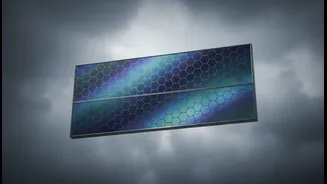
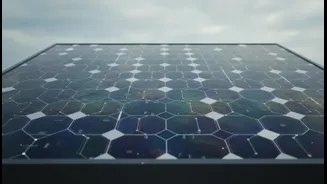
The solution is arriving in the form of next-generation photovoltaic materials, chief among them being Perovskite Solar Cells (PSCs). Unlike the thick, rigid silicon wafers used in most panels today, perovskites are a family of compounds with a unique crystal structure that can be synthesized into a thin, flexible, and lightweight film. Even more exciting is the development of 'tandem' solar cells. These innovative cells feature a layer of perovskite placed on top of a traditional silicon cell. This combination creates a multi-layered powerhouse capable of capturing more of the sun's energy than either material could alone. While technologies like TOPCon and HJT are already improving low-light performance in commercially available panels, perovskite and tandem cells represent a quantum leap forward.
The Science of Conquering Clouds
So, what is the secret behind their superior performance in low light? It comes down to how they interact with the light spectrum. Traditional silicon panels are highly efficient at converting a specific range of light but are less effective with the 'diffuse' sunlight that dominates on a cloudy day. Perovskites, however, have what is known as a tunable bandgap. Scientists can adjust their chemical composition to make them highly efficient at absorbing different wavelengths of light, including the blue and green light that is more prevalent on overcast days. In a tandem cell, the top perovskite layer skims off the high-energy blue light, while the lower silicon layer captures the lower-energy red and infrared light that passes through. This division of labour allows the cell to convert a much broader spectrum of sunlight into electricity, maximising energy generation when the sun isn't shining brightly.
A Game-Changer for India’s Monsoon
The implications for India are enormous. The ability to generate significant power during cloudy conditions could revolutionise the country's energy landscape. Analyses show that modern panels designed for diffuse light can already boost annual generation by 3-5% in regions with heavy monsoons. The widespread adoption of even more advanced perovskite-based technology would amplify this effect dramatically. It would mean more reliable power from solar installations during the rainy season, reducing the reliance on coal and other fossil fuels to fill the gap. For homeowners, it means more consistent savings on electricity bills throughout the year. For the national grid, it translates to greater stability and a smoother transition to renewable energy. This technology could finally solve the intermittency problem that has long been solar's Achilles' heel in tropical climates.
The Road to Rooftops
While the promise is immense, these next-generation panels are not yet lining every rooftop. Researchers are still working to overcome key challenges, particularly long-term durability. Early versions of perovskite cells were known to degrade when exposed to moisture and heat, two elements in abundant supply across India. However, significant progress is being made. Scientists are developing new protective layers and more stable chemical formulations to extend the lifespan of these cells. Several companies have already begun limited commercial production of tandem panels, and the technology is rapidly moving from the lab to the real world. While it may be a few more years before they are as common and cost-effective as conventional silicon panels, the pace of innovation is staggering, and their arrival in the mainstream market is now a question of 'when', not 'if'.