



A 'Hat-Trick' of Success
The Indian Space Research Organisation (ISRO) has once again proven its prowess by successfully conducting a series of landing experiments for its Reusable Launch Vehicle (RLV), nicknamed 'Pushpak'. The latest test, the third in the Landing Experiment
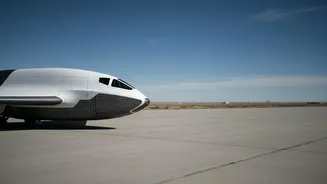
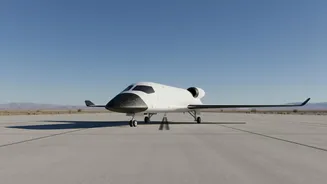
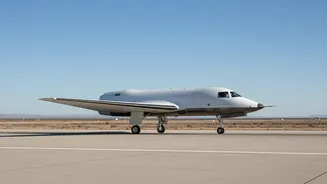
(LEX) series, saw the winged vehicle dropped from an Indian Air Force Chinook helicopter at an altitude of 4.5 kilometres. From there, Pushpak navigated its own way to the runway at the Aeronautical Test Range in Chitradurga, Karnataka, autonomously correcting its course and executing a perfect, high-speed horizontal landing. This 'hat-trick' of successful landings, each one testing more challenging conditions, confirms that the complex technology required for an uncrewed space plane to land like an aircraft is now firmly within ISRO's grasp.
Why Autonomous Landing is a Game-Changer
Imagine buying an airplane, flying it once, and then throwing it away. That has been the reality of space launches for decades. The rockets that carry satellites into orbit are incredibly expensive pieces of equipment that are discarded after a single use. Reusability changes this economic model entirely. By designing a vehicle that can fly into space and then return to land on a runway, ISRO aims to recover and reuse the most expensive parts of the launch system. This could drastically reduce the cost of launching satellites, potentially by a factor of ten, from the current $20,000 per kilogram to a more accessible figure. This isn't just about saving money; it's about opening up space for more frequent and ambitious missions, from deploying communications satellites to future interplanetary exploration.
Meet Pushpak: India's Space Shuttle
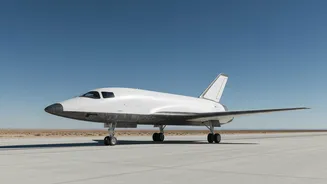
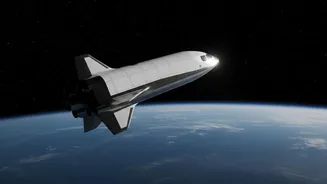
The star of the show is the RLV-TD, or 'Pushpak'. Looking like a miniature version of the American Space Shuttle, it is a winged vehicle designed to withstand the extreme temperatures of re-entry into Earth's atmosphere and then glide down for a controlled landing. The recent LEX tests focused on the final, critical phase of flight: the autonomous landing. Coming in at speeds over 320 kmph, much faster than a commercial jet, Pushpak has to manage its own high-speed approach and touchdown without a pilot. It uses a suite of indigenous technologies, including advanced navigation and control systems, a Ka-band Radar Altimeter, and a NavIC receiver, to perform these precise manoeuvres. After touching down, it uses a brake parachute and landing gear brakes to slow down and come to a stop on the runway.
The Global Race for Reusability
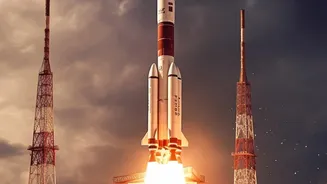
ISRO is not alone in this pursuit. The global space industry has been revolutionized by the concept of reusability, most famously demonstrated by SpaceX's Falcon 9 rockets, which land their first stages vertically on sea or land platforms. While SpaceX has mastered vertical landing, ISRO is pursuing a different, but equally complex, method: winged horizontal landing. This technology is part of ISRO's broader plan for a Two-Stage-to-Orbit (TSTO) fully reusable launch vehicle. The idea is that a large, winged first stage would carry a smaller upper stage with the satellite, fly to a high altitude, release it, and then fly back to an airstrip. This series of successful landing tests for Pushpak is a foundational step toward realising that long-term vision and ensuring India remains a competitive player in the global launch market.
What This Means for India's Future in Space
The success of the RLV landing experiments is a landmark achievement. It validates ISRO's expertise in autonomous navigation, guidance, and control systems under the challenging conditions of re-entry and landing. With the landing phase now mastered, ISRO can move on to the next set of challenges, including an orbital re-entry experiment (OREX), which will see a similar vehicle launched into orbit and then tasked with returning to Earth. Every successful test brings India closer to its goal of low-cost, reliable, and on-demand access to space. This capability will not only benefit the nation's own satellite deployment needs—for everything from communication and navigation to Earth observation—but it will also strengthen India's position in the lucrative international market for satellite launches, paving the way for a more robust and sustainable national space program.