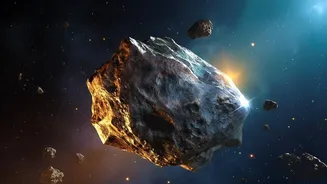








A Fireball Over the Ocean
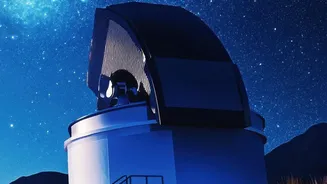
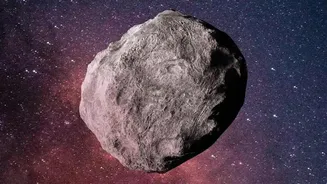
The object, designated 2026 RW1, was first detected by the Mount Lemmon Survey in Arizona. It was a tiny rock, estimated to be only about a meter in diameter. Within hours, a network of observatories around the globe coordinated to track its trajectory.
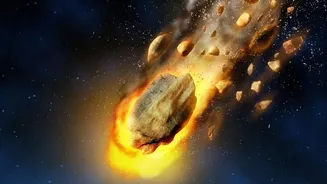
Calculations confirmed it was on a collision course, set to enter the atmosphere over the Indian Ocean, northwest of Australia. Because of its small size, scientists at the European Space Agency and other institutions were confident it would burn up completely, posing no danger. And it did, creating a harmless fireball high above the water. This incident was only the 13th time in history that an asteroid has been detected in space right before impacting our atmosphere.
The Needle in a Cosmic Haystack
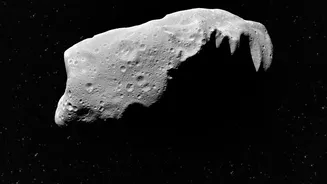
So why was it found so late? The simple answer is its size. Planetary defense systems are primarily designed to find large, potentially hazardous asteroids—those 140 meters or wider that could cause regional devastation. These are the "planet killers" that agencies like NASA are tasked by law to catalogue. Objects like 2026 RW1 are incredibly faint and move at immense speeds, making them visible to our telescopes only when they get very close to Earth. Detecting them at all is like spotting a piece of coal in the dead of night. Complicating matters further, 2026 RW1 belonged to a class of asteroids known as the Aten group, which have orbits mostly inside Earth's path around the sun. This means they often approach from the direction of the sun, hidden in its glare, making them nearly impossible for ground-based telescopes to see until the final hours.
A Success Story, Not a Failure
While a seven-hour warning may sound alarming, most experts view the detection of 2026 RW1 as a resounding success. The fact that our current systems could spot such a small, fast-moving object at all is a testament to how far our detection capabilities have come. The global coordination that kicked into gear—from discovery to tracking to trajectory confirmation—worked exactly as it should. These real-world events serve as invaluable fire drills for the planetary defense community, allowing them to test their systems and communication protocols in real time. Spotting these tiny impactors proves that the network of telescopes and data-processing algorithms is growing more sensitive and effective every year.
Closing the Gaps in Our Defense
The late detection of 2026 RW1 simultaneously highlights a known vulnerability: our blind spot to objects coming from the sun. Ground-based optical telescopes can only survey the night sky. To address this, space agencies are developing next-generation, space-based observatories. NASA’s upcoming NEO Surveyor mission, planned for a 2027 launch, is a purpose-built infrared space telescope designed to find asteroids from all directions, including those obscured by sunlight. The European Space Agency is also planning a similar mission called NEOMIR. These telescopes will operate from a stable point in space, scanning for the heat signature of asteroids rather than reflected visible light, allowing them to spot dark objects and those approaching from the day-side of Earth, effectively closing a critical gap in our planetary shield.