



Why Weather Is Everything
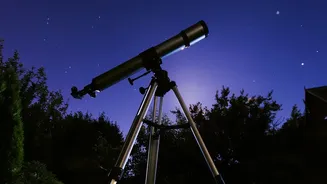
For successful stargazing, three factors are crucial: low light pollution, high altitude, and clear skies. While you can plan for the first two, weather remains the most unpredictable variable. In a country governed by the monsoon, planning a trip requires
understanding regional weather patterns. Dry, stable air is the goal. Humidity and atmospheric dust scatter starlight, reducing visibility and washing out fainter objects like the Milky Way. Cloud cover, of course, is a complete showstopper. Therefore, timing your trip to coincide with a region's driest, clearest season is the most important decision you will make.
Decoding India’s Stargazing Seasons
India’s stargazing calendar can be broadly divided into three periods. The post-monsoon season (October to November) offers fresh, clean skies as the rain washes away atmospheric dust. Winter (December to February) brings some of the crispest, clearest air, especially in desert and high-altitude regions, though fog can be an issue in the northern plains. The pre-monsoon summer (March to May) is another excellent window, particularly for the high Himalayas as snow-bound roads begin to open. The monsoon season (June to September) is generally best avoided for most of the country due to heavy cloud cover, with a few key exceptions.
Prime Time: Autumn and Winter Spots
The period from October to March is the optimal window for many of India’s best stargazing destinations. The Rann of Kutch in Gujarat is a spectacular choice, offering vast, flat horizons from November to February. The cool, dry winter air in this salt desert creates exceptional clarity. Further north, Rajasthan’s desert camps near Jaisalmer or Churu also provide fantastic opportunities during these months. For those in the south, Coorg in Karnataka is a great option between October and March, when the skies are clear after the monsoon. Similarly, the hills around the Nilgiris offer good viewing conditions.
High-Altitude Havens: Summer and Early Autumn
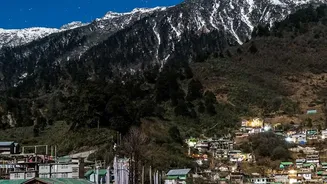
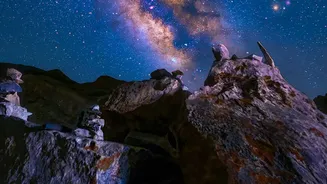
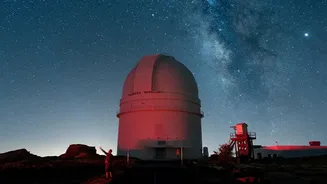
For the most dramatic views, you must head to the Himalayas. The high-altitude deserts of Ladakh and Spiti Valley in Himachal Pradesh offer world-class conditions. Due to extreme winter cold and road closures, the best time to visit these regions is from May to October. Hanle in Ladakh, home to the Indian Astronomical Observatory and India's first official Dark Sky Reserve, boasts over 250 clear nights a year. The thin, dry air at altitudes above 3,500 metres results in incredibly sharp and brilliant views of the cosmos. Spiti Valley offers similarly pristine skies in villages like Kaza, Kibber, and Langza, which are accessible during this period.
Navigating the Monsoon Challenge
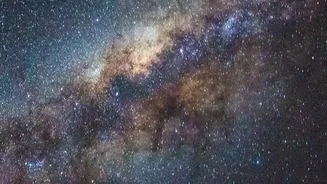
While most of India is blanketed in clouds from June to September, the rain-shadow regions of the Himalayas are a unique exception. Both Ladakh and Spiti Valley receive very little monsoon rainfall, meaning they remain prime stargazing locations throughout these months. In fact, this is the peak season for accessibility and offers fantastic views of the Milky Way's galactic core, which is positioned high in the summer sky. So, while a trip to the Western Ghats or Rajasthan would be a washout, a journey to the trans-Himalayan region can offer some of the best celestial sights of the year.
Essential Tools for Planning
A successful trip relies on good planning tools. Always check the lunar calendar and aim for a period around the New Moon; bright moonlight can wash out all but the brightest stars. For weather, use apps like Astrospheric or Clear Outside, which provide astronomy-specific forecasts, including cloud cover, transparency (atmospheric clarity), and 'seeing' (air stability). A light pollution map website is invaluable for finding truly dark sites away from city glow. Finally, apps like Stellarium or SkyView Lite can act as your personal planetarium, helping you identify constellations, planets, and even satellites in real-time on your phone.