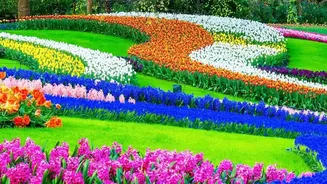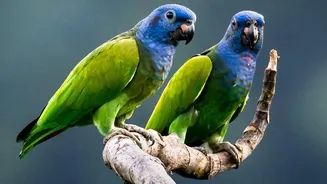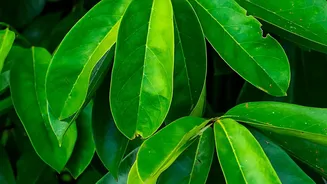





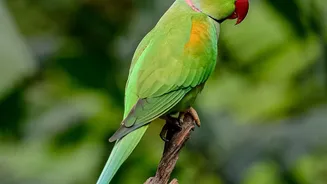


Look around a park or garden and you'll see a symphony of greens—from the bright lime of a new sprout to the deep, rich green of a mango leaf. The reason for this diversity is more complex than just a single pigment.
The Green Machine: More Than One Chlorophyll
The fundamental reason leaves are green
is a pigment called chlorophyll, the engine of photosynthesis. This molecule is exceptional at absorbing light from the red and blue parts of the spectrum, but it reflects green light, which is why we see it as the dominant colour. However, plants don't rely on just one type. Most terrestrial plants use two main varieties: chlorophyll a and chlorophyll b. Chlorophyll a, the primary pigment, reflects a blue-green or teal colour, while the accessory pigment, chlorophyll b, reflects a yellow-green. The specific ratio of these two pigments in a leaf is the primary factor determining its particular shade of green.
Hidden Helpers: The Role of Other Pigments
Chlorophyll rarely works alone. Leaves also contain other pigments, mainly carotenoids and xanthophylls, which are responsible for yellow and orange hues. Think of the vibrant orange of a carrot; that's from carotenoids. Throughout spring and summer, these pigments are present in the leaf but are completely masked by the sheer abundance of chlorophyll. However, their presence subtly influences the final shade, nudging a pure green towards a more olive or yellowish tone depending on their concentration. It’s only in autumn, when chlorophyll production stops, that these hidden yellows and oranges are finally revealed.
Age, Sun, and Shade
A leaf's age and its access to sunlight play a huge role in its colour. Young, developing leaves often appear as a lighter, brighter green. This is because their chlorophyll-making machinery is still ramping up. As the leaf matures, its chlorophyll concentration increases, leading to a darker, more robust green colour. Sun exposure is another critical factor. Leaves in direct, bright sunlight might actually produce less overall chlorophyll to avoid damage from excessive light. In contrast, leaves growing in the shade often become darker green. They increase their chlorophyll concentration, particularly chlorophyll b, to maximize their ability to capture every available bit of limited sunlight.
A Sign of Health
The shade of green can also be an indicator of a plant's health and the conditions it's growing in. A well-nourished plant will typically have vibrant, deep green leaves. However, if a plant is stressed or lacking essential nutrients, its appearance can change. A nitrogen deficiency, for example, often causes older leaves to turn a pale green or yellow. A lack of iron or magnesium can lead to 'chlorosis', where the leaf tissue turns yellow while the veins remain green. The structure of the leaf itself matters, too. Leaves with thick, leathery tissue tend to look darker green because their cells are more densely packed with chlorophyll.