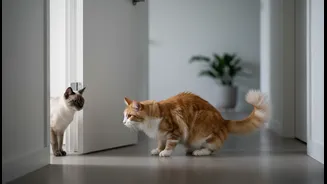






The Fantasy vs. The Reality
We've all seen the viral videos: a Golden Retriever patiently allowing a kitten to clamber all over it, or a parrot sharing a snack with the family cat. These images are powerful because they suggest a universal harmony, a world where natural differences
can be overcome with enough love and a shared home. This human desire to see our pets as one big, happy family is understandable. However, it often projects our own social ideals onto animals who operate by a completely different set of rules. The reality is that for many animals, coexisting with a different species isn't about friendship; it's about enduring a constant source of low-grade stress. Pushing them into physical contact for a cute photo can betray their trust and create an environment of anxiety, not affection.
Hardwired Instincts Run Deep
You can take the animal out of the wild, but you can’t always take the wild out of the animal. Many of our beloved pets are separated from their wild ancestors by thousands of years of domestication, yet deep-seated instincts remain. The most powerful of these is the predator-prey dynamic. For many dogs, the quick, erratic movement of a smaller animal like a rabbit, guinea pig, or even a cat can trigger an innate prey drive to chase. This instinct is not a sign of aggression or malice; it is a hard-wired behavioural sequence that is rewarding for the dog to perform. For the smaller animal, the presence of a natural predator is a constant threat, forcing them into a state of hyper-vigilance. Even if no chase ever occurs, the potential for it creates an environment of fear that can have long-term health consequences.
Lost in Translation
Animals communicate primarily through body language, and different species speak entirely different dialects. A gesture that is friendly in one species can be interpreted as a threat by another. For example, a dog's playful bow, with its front end down and rear in the air, is an invitation to play. A cat, however, may see this lowered posture as a precursor to a lunge. Similarly, a dog’s enthusiastic tail wag can mean many things, from happiness to high arousal or tension. A cat’s lashing or twitching tail, on the other hand, almost always signals irritation or overstimulation. When a well-meaning dog tries to engage with a cat using its own canine rulebook, it can be perceived as rude, threatening, and terrifying, leading the cat to hiss, swat, or flee. This isn't a personality clash; it's a fundamental failure to communicate.
The Invisible Toll of Chronic Stress
When forced to share space with a perceived threat, animals can experience chronic stress. This isn't always dramatic; often, it's a quiet, persistent suffering. Signs of stress can be subtle and easily missed by owners. They can include hiding, changes in eating or sleeping habits, excessive grooming, house soiling, or becoming more withdrawn. An animal living under these conditions is constantly on alert, never truly able to relax. This state of sustained anxiety can weaken the immune system, making the pet more susceptible to illness and potentially leading to a shorter lifespan. Furthermore, chronic stress is a leading cause of behavioral problems. A cat that feels cornered may eventually lash out, and a dog that is constantly frustrated in its attempts to interact may develop anxiety or destructive habits.
The Goal Is Harmony, Not a Hug
So, does this mean different species can never live together? Not at all. The key is to manage the environment and aim for peaceful coexistence rather than forced friendship. Behavior specialists emphasize the importance of slow, controlled introductions. This often involves keeping the animals in separate spaces initially, allowing them to get used to each other's scent before any visual contact. Subsequent interactions should be short, supervised, and overwhelmingly positive, with plenty of treats and praise for calm behavior. Crucially, each animal must have its own safe space—a crate for the dog, a high perch for the cat—where it can retreat and be left alone. Forcing interactions or letting the animals "work it out" is a recipe for disaster. The ultimate sign of a successful multi-species household isn't a cuddle pile, but an environment where all animals feel secure and relaxed.