



A New Lunar Gold Rush
The Moon is open for business. For decades, lunar exploration was the exclusive domain of national space agencies with colossal budgets. Today, a paradigm shift is underway, driven by private companies and a vision for a sustainable cislunar economy.
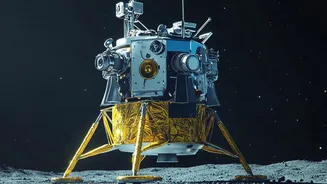
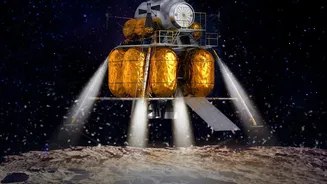
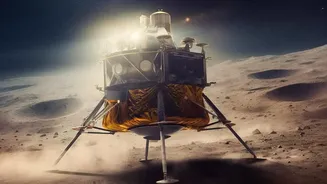
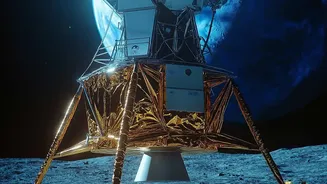
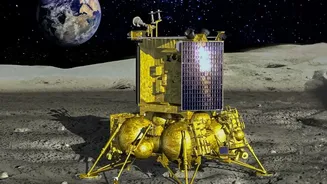
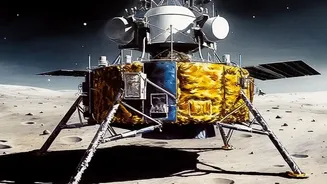
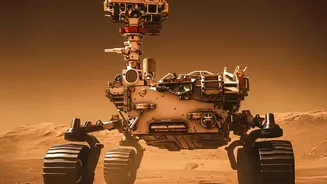
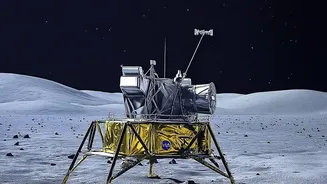
Commercial landers, operated by companies in the US and Japan, are preparing to make regular trips to the lunar surface. But a lander is just the delivery truck; the real value lies in the cargo it carries. This has created a surging demand for scientific instruments, technology demonstrations, and, most importantly, rovers—the mobile explorers that can venture out, gather data, and conduct experiments far from the landing site. This new market is not about prestige; it's about providing a service. Payloads are sold by the kilogram, and every gram counts, making efficiency and cost-effectiveness the most sought-after commodities.
India's Space-Tech Ascent
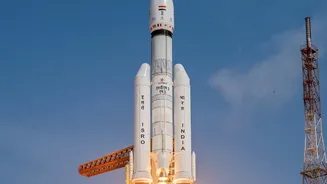
India's reputation for 'frugal engineering' in space is well-earned. The Indian Space Research Organisation (ISRO) has a history of executing complex missions, like the Mars Orbiter Mission and the Chandrayaan lunar program, at fractions of the cost of their global counterparts. The successful landing of the Pragyan rover near the Moon's south pole in 2023 was a watershed moment, proving India's technical prowess. Building on this momentum, the Indian government has actively opened the space sector to private enterprise. A recent policy shift encourages startups and established companies to take the lead in manufacturing and operations, while ISRO focuses on pioneering research and ambitious future missions, such as sending an Indian to the Moon by 2040. This has unleashed a wave of innovation, with an estimated 450 space startups now operating in the country. These companies are perfectly positioned to compete in the new lunar economy, where low cost does not mean low quality.
The Innovators: Building for the Moon
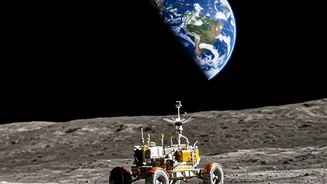
At the forefront of this movement is Bengaluru-based Axiom Research Labs, better known by its original name, TeamIndus. The company was born from the ambition to compete in the Google Lunar XPRIZE and, though the prize ended without a winner, the team's expertise endured. TeamIndus developed a 10kg micro-rover platform designed for affordability and reliability. Their rover, named ECA (Ek Choti Si Asha, or 'A Small Hope'), was engineered to be lightweight and robust, a challenging combination for the harsh lunar environment. While early partnerships and mission plans have shifted over the years, the core technology developed by the company continues to be relevant. Their work has demonstrated that a private Indian entity can design and build flight-ready lunar hardware, attracting interest from international partners for collaborations on AI-powered mission software and other technologies.
What Makes a Rover 'Cheap'?
The key to creating affordable rovers lies in a combination of innovative design, clever use of components, and efficient manufacturing. Unlike the bespoke, multi-billion dollar rovers of past NASA missions, Indian startups are embracing a different philosophy. This often involves using commercial off-the-shelf components where possible, which drastically reduces costs compared to developing everything from scratch. Furthermore, Indian engineers are masters of optimization, designing systems that are just robust enough for the mission's requirements without being over-engineered. This approach minimizes mass, which is a critical cost driver in space missions where every kilogram launched can cost thousands of dollars. Companies like TeamIndus also focus on creating scalable platforms—a common architecture that can be adapted for different missions and payloads, reducing development time and cost for future clients. This 'collaborative consumption' model, where a single lander can carry payloads from multiple customers, further spreads the cost, making lunar access more democratic.
The Path to the Lunar Surface
For these startups, the business model is clear: they aren't building their own rockets or landers. Instead, they are creating compact, lightweight rovers that can be sold as a payload to commercial launch providers. This 'rover-as-a-service' model is the next logical step in the commercialization of space. An American or Japanese company might provide the lander, which hitches a ride on a rocket from SpaceX or another provider, and upon landing, it deploys an Indian-made rover to carry out a scientific or commercial objective. This global supply chain is essential to the new space economy. With NASA actively inviting international partners, including ISRO, to join its lunar base program, the demand for reliable, low-cost surface mobility is only set to grow. Indian startups are not just building hardware; they are positioning themselves as indispensable partners in humanity’s return to the Moon.