
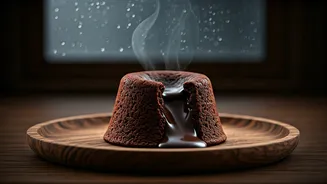


A Deliciously Disputed Origin
The story of the molten chocolate cake is as rich and messy as the dessert itself. The most famous claim comes from celebrated French chef Jean-Georges Vongerichten, who says he discovered it by accident in his New York restaurant in 1987. As the story goes,
he pulled a chocolate sponge cake from the oven too soon, only to find its unintentionally runny center was a hit with diners. However, another French chef, Michel Bras, contends he invented the dessert six years earlier in 1981. His version, called the *coulant au chocolat*, was no accident; it was a technically precise creation inspired by his family drinking hot chocolate after a ski trip, made by baking a cake around a frozen ganache core. While Vongerichten is credited with popularising it in America, its true origin remains a topic of sweet debate.
The Science of a Perfect Ooze
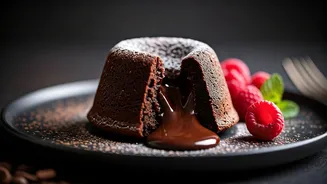
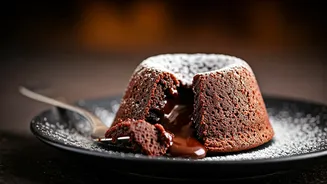
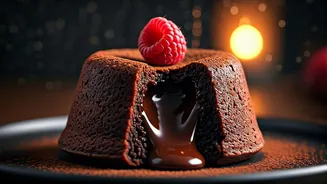
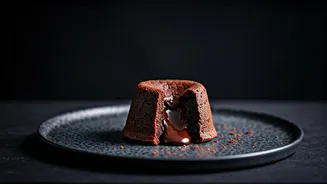
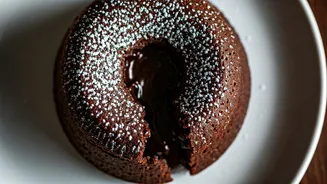
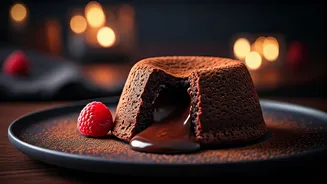
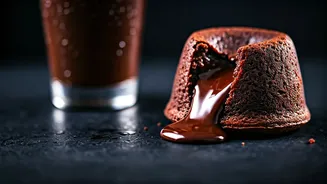
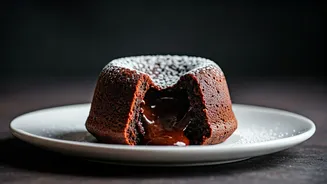
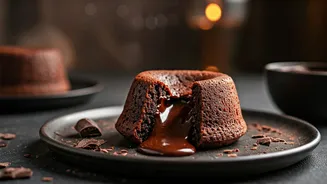
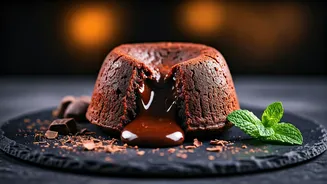
The magic of a lava cake lies in its textural contrast: a firm, tender cake giving way to a warm, liquid chocolate centre. This isn't just a happy accident; it's a matter of precise science. The effect is achieved by intentionally underbaking the cake. With a high oven temperature, heat diffusion cooks the cake from the outside in. The trick is to pull it from the oven at the exact moment the edges are set, but before the heat has had enough time to travel to the core and solidify it. A few seconds too long, and you have a simple (though still delicious) chocolate cake. Too little time, and the structure collapses. It’s this delicate balance of chemistry and timing that delivers the dessert's signature 'wow' moment.
Our Brain's Love for Comfort and Chocolate
Beyond the impressive presentation, the lava cake's appeal is deeply rooted in psychology. Chocolate itself is a powerful comfort food, often associated with positive memories, celebrations, and moments of reward. When we eat foods high in sugar and fat, our brains release feel-good chemicals like dopamine and serotonin, which can temporarily boost our mood and reduce stress hormones. The lava cake doubles down on this by serving its chocolate warm and gooey. This combination of warmth and a rich, flowing texture creates a luxurious and deeply satisfying sensory experience. It taps into our craving for comfort, offering a feeling of safety and indulgence that feels both special and familiar.
An Enduring Restaurant Staple
First popularised in high-end restaurants in the 1990s, the chocolate lava cake quickly became a sensation. Its theatricality—the moment the 'lava' flows out—made it a star. Its popularity was so immense that it transitioned from fine dining menus to beloved chain restaurants like Chili's, making it accessible to everyone. For restaurants, the dessert is a high-profit, reliable crowd-pleaser. For diners, it's a dependable choice that rarely disappoints. In an age of fleeting food trends, the lava cake has become a modern classic precisely because it delivers on its promise: a simple, dramatic, and intensely chocolaty experience.