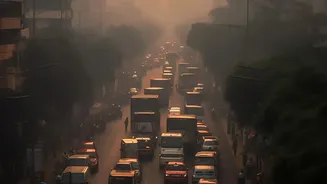







The October Pollution Shift
October marks a significant transition in India's atmospheric conditions. The withdrawal of the monsoon means less rain to wash away pollutants. Simultaneously, wind patterns change, and wind speeds often decrease, leading to the stagnation of air. This
is compounded by a phenomenon called temperature inversion, where cooler, denser air gets trapped near the ground by a layer of warmer air above, acting like a lid that prevents pollutants from dispersing. This period also coincides with the start of agricultural stubble burning in northern states like Punjab and Haryana. Smoke from these fires can travel hundreds of kilometers, significantly contributing to the pollution load in the Indo-Gangetic Plain and beyond. Adding to this are local emissions from traffic, industry, and construction dust, which accumulate more easily in the stable post-monsoon atmosphere.
Understanding the Health Risks
The primary culprits in this seasonal smog are fine particulate matter, known as PM2.5 and PM10. These microscopic particles are small enough to be inhaled deep into the lungs and can even enter the bloodstream. During exercise, your breathing rate increases, and you tend to breathe more through your mouth, bypassing the natural filtration system of your nose. This means you inhale a much greater volume of these harmful pollutants. Short-term exposure can cause coughing, throat irritation, and shortness of breath. For those with asthma or allergies, it can trigger more severe symptoms. Chronic exposure to high pollution levels during exercise is linked to reduced lung function, increased risk of respiratory infections, and long-term cardiovascular problems.
Check the AQI Before You Go
Your most crucial tool for planning is the Air Quality Index (AQI). The AQI is a color-coded scale from 0 to 500 that measures major pollutants and tells you how clean or polluted your air is. You can check the daily AQI for your city on various government websites, weather apps, and dedicated air quality monitoring platforms like AirNow and IQAir. An AQI between 0 and 50 ('Good') is ideal for all outdoor activities. An AQI of 51 to 100 ('Satisfactory' or 'Moderate') is generally acceptable for healthy individuals, but sensitive groups should be cautious. As the number climbs higher, so do the health risks.
Strategic Timing and Location
The common belief that early morning is the freshest time for a workout can be misleading during this season. Due to temperature inversion, pollution levels are often at their highest in the early morning (around 5-9 am) as pollutants are trapped overnight. Air quality may improve in the late morning and afternoon as the sun heats the ground and breaks the inversion layer, allowing pollutants to disperse. However, this can coincide with peak traffic. Choosing your location wisely is also key. Opt for parks, green spaces, or quieter residential streets away from congested roads and construction sites to reduce your exposure to direct sources of pollution.
Adjust Your Workout, Don't Abandon It
On days with poor air quality, you don't have to stop being active; you just need to be smarter about it. If the AQI is in the 'Poor' range (201-300), consider reducing the intensity and duration of your outdoor workout. For example, a brisk walk might be a better choice than a high-intensity run. Pay attention to your body; if you experience unusual coughing, chest tightness, or irritation, it's a sign to stop and head indoors. Many experts recommend avoiding strenuous outdoor exercise altogether when the AQI exceeds 150 ('Unhealthy') or 200 ('Very Unhealthy').
When to Move Your Exercise Indoors
When the AQI is in the 'Very Poor' (301-400) or 'Severe' (401-500) categories, it is safest for everyone to move their workouts indoors. This is the time to explore alternatives like home workouts, yoga sessions, or visiting a gym. Even indoors, air quality can be affected by outdoor conditions, but it is generally safer. Some gyms and indoor spaces use air purifiers, which can further improve the air quality. Having a flexible fitness plan that includes indoor options is essential for maintaining your routine safely during India's high-pollution season.