


The Next Great Eye on the Universe
Imagine a telescope so powerful it could spot signs of life on planets orbiting other stars. That’s the ambitious goal of the Habitable Worlds Observatory (HWO), NASA’s planned flagship mission for the 2040s. With an estimated budget of $11 billion, HWO is designed
to be a successor to the Hubble and James Webb space telescopes, combining their strengths to do something revolutionary: directly image at least 25 Earth-like planets and scan their atmospheres for biosignatures like oxygen and methane. This isn't just about finding more planets; it's about finding out if we're alone. The observatory will be a multi-purpose machine, also peering into the dawn of the universe and studying how galaxies evolve. But before it can answer humanity's biggest questions, its designers must answer a hugely consequential one of their own.
The Ghost of Hubble
The entire debate is haunted by the glorious ghost of the Hubble Space Telescope. Launched in 1990 with a famously flawed mirror, Hubble could have been a billion-dollar blunder. Instead, it became a legend precisely because it was designed to be serviced. Over five Space Shuttle missions, astronauts performed daring spacewalks to correct its vision, replace aging parts, and install more advanced instruments. These missions not only saved the telescope but transformed it, keeping it at the cutting edge of science for over three decades. This legacy created a powerful cultural narrative: servicing isn't just about repairs; it's about renewal and possibility. For many space enthusiasts, the images of astronauts working on Hubble are as iconic as the cosmic photos it produced. The James Webb Space Telescope, by contrast, was sent to its distant orbit as a 'one-and-done' mission, with no plans for servicing. For HWO, NASA is determined not to repeat that.
To Service or Not to Service?
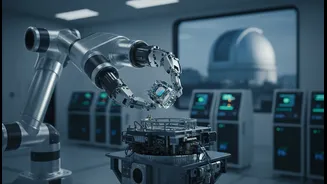
The question is no longer if HWO will be serviceable, but how. NASA officials have confirmed that the ability to repair and upgrade the telescope is a core requirement of its design. The logic is both scientific and economic. The instruments designed today will be practically ancient by the time HWO launches in the 2040s. Allowing for instrument swaps means the observatory can evolve with technology, dramatically increasing its scientific return over a longer lifespan. From a financial perspective, upgrading a single $11 billion observatory is far more cost-effective than building and launching a brand-new one every 15 years. It represents a fundamental shift toward creating sustainable, long-term scientific infrastructure in space, rather than a series of disposable missions.
The Culture War: Robots vs. Astronauts
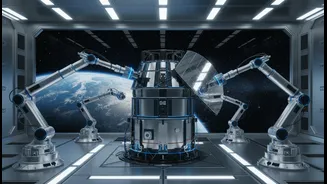
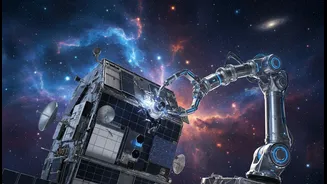
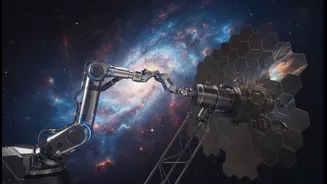
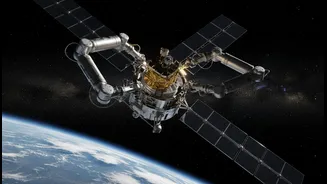
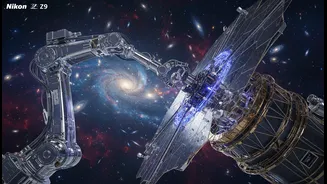
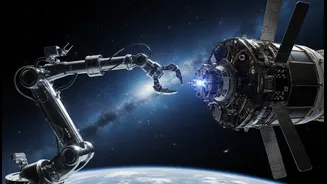
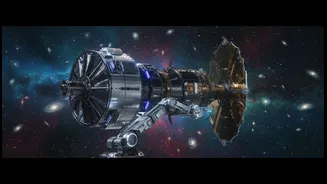
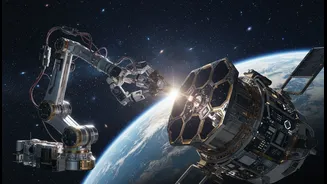
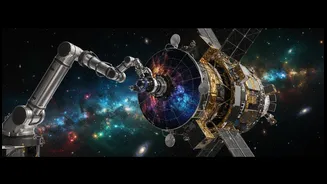
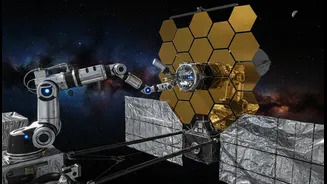
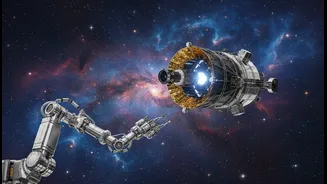
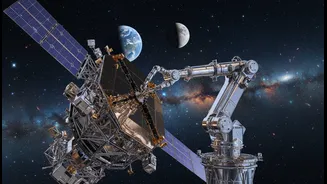
This is where a technical decision blossoms into a cultural debate. How do you service a telescope located 1.5 million kilometers from Earth at the L2 Lagrange point—a stable orbital spot four times farther away than the Moon? Sending astronauts, as we did with Hubble in its low-Earth orbit, would be an incredibly complex and risky mission with current technology. The more pragmatic and likely solution is robotics. NASA envisions a future where robotic servicing spacecraft, either autonomous or remotely piloted, can dock with HWO. These mechanical mechanics could swap out modular science instruments, refuel the observatory, or even perform initial assembly in orbit if the telescope proves too large to launch in one piece. This has sparked a classic debate pitting the romance of human spaceflight against the relentless advance of robotics. It touches on different visions for humanity's future in space: one centered on human crews and another driven by smart machines and commercial partners.
Building a New Industry
NASA's decision is about more than just one telescope; it's a strategic move to jumpstart an entire commercial industry. By mandating serviceability, NASA is creating a guaranteed, high-profile customer for the emerging field of in-space servicing, assembly, and manufacturing (ISAM). Private companies like Astroscale are already working with NASA on concepts for robotic servicing, hoping to build the robotic arms and autonomous systems that will one day fly out to HWO. The investment is expected to drive innovation that will benefit not just science missions but also commercial and military satellites, creating a robust economy in Earth's orbit and beyond. In this sense, the servicing debate isn't just about fixing a telescope; it's about building the infrastructure for a permanent presence in space.