


More Than Just a Walk
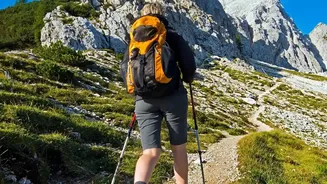
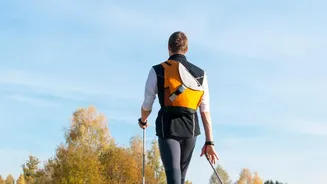
So, what transforms a regular walk into Nordic walking? The answer lies in a pair of specially designed poles. Originally developed in Finland as a summer workout for cross-country skiers, the technique uses poles to propel you forward. This simple addition
engages up to 90% of your body's muscles, compared to about 50% with regular walking. The result is a surprisingly effective, low-impact workout that burns significantly more calories—estimates range from 18% to over 45% more—without necessarily feeling harder. By engaging your arms, shoulders, back, and core, you’re not just moving your legs; you're getting a true full-body workout that improves cardiovascular fitness, builds strength, and can even enhance posture.
Poles: The One Essential Investment
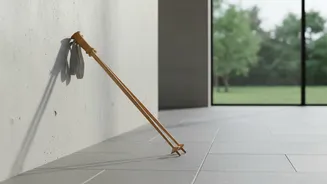
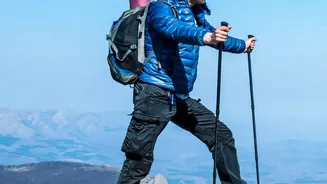
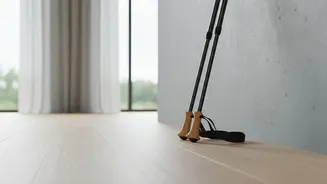
If you're looking to start, the poles are the only piece of specialized equipment you absolutely need. It’s crucial to understand that Nordic walking poles are different from trekking or hiking poles, which are designed for stability on uneven terrain rather than propulsion. Nordic walking poles feature a unique glove-style strap system that allows you to push off and let the pole swing forward without losing your grip. This design is fundamental to the correct technique. When choosing poles, you’ll encounter two main types: fixed-length and adjustable. Fixed-length poles are often lighter and stronger, while adjustable poles offer versatility, especially if they will be shared by multiple users or if you plan on travelling with them.
Finding the Right Fit and Material
Getting the pole length right is critical for proper technique and comfort. A common guideline is that when you hold the pole vertically with the tip on the ground, your elbow should be at roughly a 90-degree angle. Another formula is to multiply your height in centimetres by 0.68. For beginners, it's often recommended to choose a slightly shorter pole if you're between sizes. In terms of material, poles are typically made from aluminum or carbon fibre. Aluminum poles are durable and more affordable, making them a great choice for beginners. Carbon fibre poles are lighter and absorb vibration better, a feature that regular walkers often appreciate for added comfort on longer routes.
Footwear: Comfort Over Category
While some brands market specific "Nordic walking shoes," the consensus is that you don't need them. The most important factor is comfort. A good pair of walking shoes, flexible running shoes, or light trail shoes will work perfectly well for most people. Unlike running, which involves high-impact landing, walking is a smoother, rolling motion. Therefore, your shoes should be flexible, especially in the forefoot, to allow your foot to move naturally. Look for a shoe that provides good support, has a secure heel, and offers decent grip for the surfaces you'll be walking on, whether it's pavement, park paths, or dirt trails. Ultimately, the best shoe is the one that feels good on your foot.
Clothing and Extras: Keep It Simple
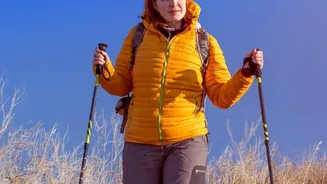
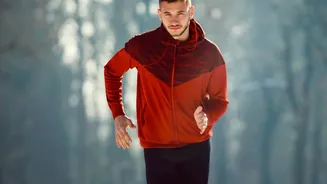
Beyond poles and shoes, the rest of your gear can be simple and practical. There is no need for specialized outfits. The key is to dress for the weather in comfortable, breathable layers that allow for a full range of motion, particularly in your arms and shoulders. Moisture-wicking fabrics are always a smart choice to keep you dry and comfortable. Depending on the weather, you might consider a lightweight waterproof jacket, a cap for sun or rain, and sunglasses. While accessories like special gloves can be helpful for some, they are not essential to getting started. The beauty of Nordic walking’s shift to an everyday fitness activity lies in its simplicity.