







The Hidden Risks of Humid Runs
Running is a fantastic cardiovascular workout, but running in high humidity puts a unique and significant strain on the body. When the air is saturated with moisture, your sweat doesn't evaporate effectively. Since evaporation is the body's primary cooling
mechanism, your internal temperature can rise faster, increasing the risk of heat exhaustion or even heatstroke. Your heart also has to work much harder to pump blood to your skin to try and cool down, leading to a higher heart rate for the same perceived effort. Furthermore, pounding the pavement or hard ground, especially when your muscles are fatiguing faster due to the heat, can amplify the high-impact stress on your joints—ankles, knees, and hips.
The Low-Impact, High-Reward Alternative
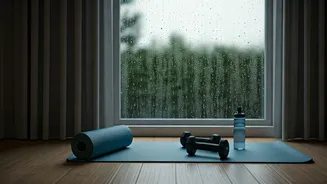
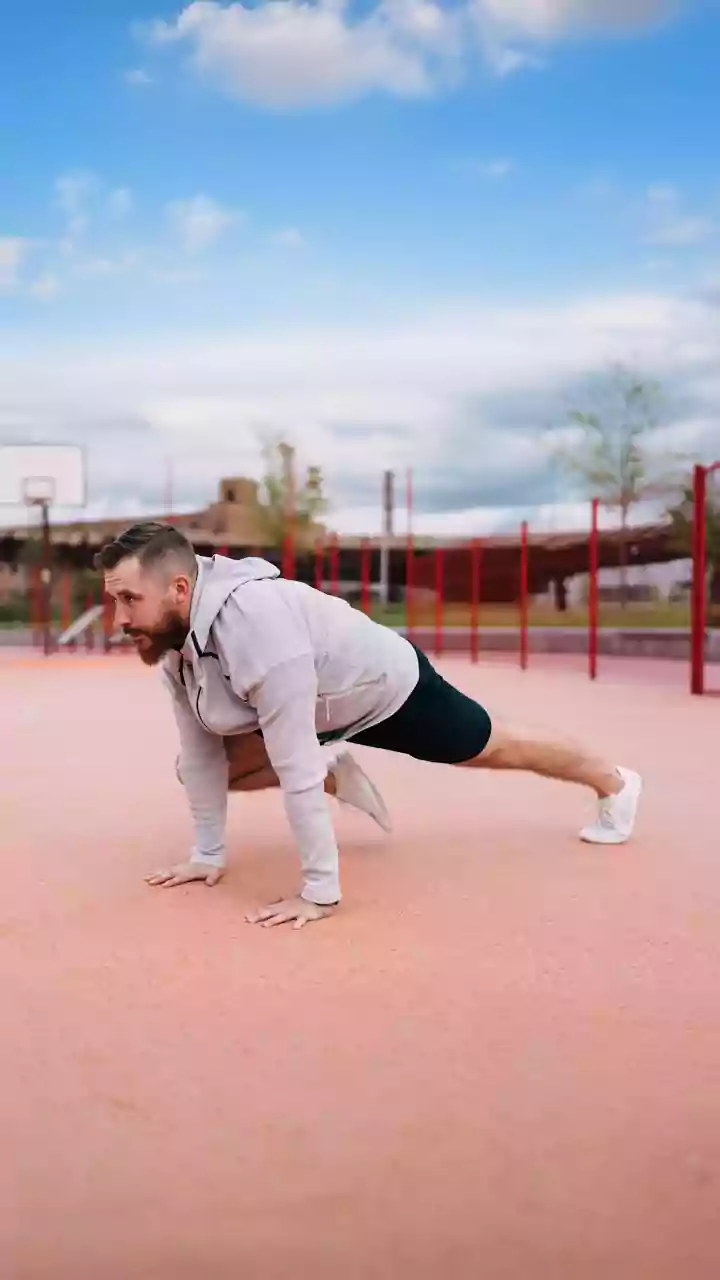
This is where low-impact calisthenics comes in. Calisthenics is a form of strength training that uses your own body weight for resistance. The 'low-impact' part means you're avoiding jarring movements like jumping or sprinting, making it much kinder to your joints. Instead of fighting the weather, you can perform these workouts in the comfort of your home, away from the oppressive humidity and potential air pollution. This isn't about taking it easy; it's about training smarter. Calisthenics builds functional strength, improves stability and mobility, and engages your core in ways that linear running often misses. It's the perfect complement to a runner's training, building a resilient body that's less prone to injury when you do return to the road.
Your New Indoor Workout
Ready to make the switch? You don't need any equipment, just a small patch of floor. A great starting point is to create a simple circuit. Perform each of the following exercises for 45 seconds, rest for 15 seconds, and then move to the next. After completing all five, rest for 60-90 seconds and repeat the circuit 3-4 times. 1. **Glute Bridges:** Lie on your back with knees bent and feet flat on the floor. Lift your hips toward the ceiling, squeezing your glutes, then lower back down. This activates your posterior chain, which is crucial for running power. 2. **Bird-Dog:** Start on all fours. Extend your right arm forward and your left leg backward simultaneously, keeping your back flat. Return to the start and switch sides. This builds core stability. 3. **Bodyweight Squats:** Stand with feet shoulder-width apart. Lower your hips as if sitting in a chair, keeping your chest up and back straight. Go as deep as is comfortable without pain. 4. **Plank:** Hold a push-up position, resting on your forearms or hands. Keep your body in a straight line from head to heels. This is a full-body exercise that builds immense core strength. 5. **Wall Push-ups:** Stand facing a wall and place your hands on it at shoulder height. Lean in until your nose almost touches the wall, then push back to the starting position. This builds upper body strength with minimal strain.
Integrating Calisthenics Into Your Routine
You don't have to abandon running completely. Think of this as a strategic adjustment for the most challenging months. You could dedicate 2-3 days a week to calisthenics, replacing your shorter or higher-intensity runs. On days when the humidity is slightly lower, you might still go for a short, easy jog. The goal is consistency and injury prevention. By using the humid season to build a foundation of strength and stability, you'll likely find that you're a stronger, more efficient runner when the weather clears. Listen to your body—if you're feeling drained and overheated on a run, it's a clear signal to retreat indoors and opt for a session that builds you up without breaking you down.