






Not All Sugars Are Created Equal
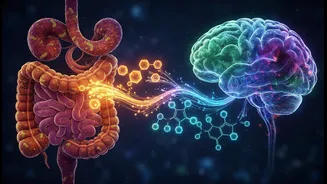
A new study has found that glucose and fructose, two simple sugars that have the same number of calories, communicate with the brain in surprisingly different ways. Research conducted in mice and published in the journal Neuron revealed that glucose is significantly
more effective at suppressing the activity of hunger-promoting brain cells than fructose is. While both sugars reduced food intake in the short term, glucose sent a much stronger "I'm full" signal to the brain. This finding challenges the long-held idea that a calorie is just a calorie and that all nutrients affect hunger signals equally. The results suggest that the type of sugar we consume, not just the quantity, plays a distinct role in appetite regulation and food preferences.
The Gut-Brain Superhighway
The study highlights the complexity of the gut-brain axis, the constant communication network between our digestive system and our central nervous system. Researchers discovered that fructose and glucose use different pathways to send their messages. Fructose relies on the vagus nerve, a major information highway, to modestly reduce the activity of key hunger-driving neurons known as AgRP neurons. It does this by triggering a gut hormone called PYY. Glucose, on the other hand, uses a different, more direct route that doesn't depend on the vagus nerve to strongly suppress these same hunger cells. This illustrates that our bodies have sophisticated and distinct systems for sensing specific nutrients, influencing our eating behavior in nuanced ways.
What About High-Fructose Corn Syrup?
Interestingly, the researchers also tested high-fructose corn syrup (HFCS), a sweetener containing a mix of both glucose and fructose. They found that this blend suppressed hunger neurons more effectively than fructose alone, and the mice in the study showed a clear preference for it. This might help explain why foods and drinks containing HFCS can be particularly appealing. The combined effect of the two sugars appears to create a signal that is more powerful in some respects than either sugar on its own, adding another layer to our understanding of how modern diets interact with our brain's appetite systems.
Science vs. The Sensational Headline
This study is fascinating, but it's crucial to place it in context—something media headlines often fail to do. Nutrition science is incredibly complex. Studies are often conducted in animals, like this one, and results may not directly translate to humans. Furthermore, real-world diets involve intricate combinations of nutrients, not isolated sugars, making it hard to pinpoint cause and effect. People's bodies also react differently based on genetics, lifestyle, and existing health conditions. Many studies rely on self-reported dietary information, which can be notoriously inaccurate. A single study is never the final word; it is one piece of an enormous, evolving puzzle. Sensational reporting often oversimplifies findings, ignoring limitations and the broader body of evidence for the sake of a clickable headline.
How to Be a Savvy Nutrition Reader
So, how can you navigate the confusing world of diet news? First, check the source. Is it a reputable scientific journal or a site trying to sell you something? Look at the study details. Was it conducted on a small group of people or a large, diverse population? Was it a short-term trial or a long-term observational study? Remember that correlation does not equal causation; just because two things are linked doesn't mean one caused the other. Be wary of stories that declare a food a "miracle" or a "poison." True nutrition science rarely works in such absolutes. Instead, look for advice that is consistent across multiple credible sources and emphasizes overall dietary patterns rather than demonizing or glorifying single ingredients.