





The Problem with Plaster of Paris
For decades, Plaster of Paris (PoP) became the go-to material for festival idols due to its low cost, light weight, and ability to be moulded into intricate designs. However, the convenience of PoP masks a serious environmental cost. PoP is made from
gypsum and does not biodegrade or dissolve easily in water. When thousands of PoP idols are immersed in rivers, lakes, and seas after festivals, they settle on the beds of water bodies, hardening the surface and releasing toxic chemicals for months, or even years. The synthetic and oil-based paints used for decoration often contain heavy metals like lead, mercury, and cadmium, which poison aquatic ecosystems, harm marine life, and contaminate water sources used by communities. This pollution leads to a significant drop in dissolved oxygen and a rise in dissolved solids, severely degrading water quality.
A Return to Sustainable Tradition
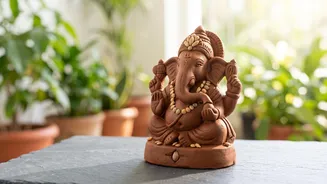
The turn towards clay idols, often made from 'shadu mati' or natural riverbed clay, is less of a new trend and more of a return to tradition. Historically, idols were always crafted from the earth, symbolising the cycle of creation and return to nature. Unlike PoP, unbaked clay idols dissolve completely in water within hours, leaving behind no toxic residue. This ensures the immersion ritual, or 'visarjan', honours its spiritual meaning of returning the divine to the elements without causing harm. Growing public awareness, driven by environmental campaigns and educational workshops, has significantly boosted demand for these eco-friendly alternatives. Many artisans, responding to this shift, are now exclusively crafting clay idols, sometimes using natural dyes derived from vegetables and minerals to complete the eco-friendly cycle.
Innovation Meets Devotion: Seed-Embedded Idols
Taking sustainability a step further is the innovative concept of 'seed-embedded' idols. These are typically clay idols with seeds of vegetables, flowers, or trees mixed into the material. Instead of being immersed in a public water body, these idols are designed for 'visarjan' at home in a pot or garden. As the clay dissolves with regular watering, the seeds germinate, and the idol transforms into a living plant. This beautiful concept turns the end of the festival into a new beginning, creating life from an object of devotion. It offers a deeply personal and responsible way to celebrate, completely avoiding water pollution and leaving a positive green legacy. These 'plantable' Ganeshas are becoming especially popular with families and children, serving as a powerful lesson in sustainability.
The Push from People and Policy
The shift is not just happening at an individual level. It is being propelled by community action and government policies. Across India, municipal bodies and NGOs are promoting the use of clay idols by distributing them for free or at subsidised rates. In some cities, like Bengaluru, authorities have outright banned the manufacture and sale of PoP idols to prevent water pollution. However, the transition is not without challenges. In Maharashtra, the government has acknowledged the need to phase out PoP idols but cited practical difficulties in implementing a complete ban for 2026, opting for a gradual approach. This highlights the ongoing tension between environmental goals, economic realities for idol makers, and the massive scale of festival preparations. Nonetheless, the public sentiment and official direction are clearly moving towards a greener future for these beloved traditions.