







The Incredible Expanding Space Station
Imagine a habitat that launches folded inside a rocket, then puffs up in orbit to the size of a multi-story building. This is the core concept behind inflatable, or expandable, space modules. Unlike traditional rigid structures, whose size is strictly
limited by the rocket’s payload fairing, inflatable habitats offer a revolutionary advantage: a massive increase in usable volume for a fraction of the launch mass. Companies like Sierra Space are developing modules made from layers of high-strength fabrics, such as Vectran, which are more resilient to micrometeoroid impacts than traditional aluminum hulls. The idea itself isn't new, with NASA exploring concepts since the 1960s, but it's now commercially viable. This leap in packaging efficiency is critical for making life and work in space more sustainable and affordable.
Heirs to the International Space Station
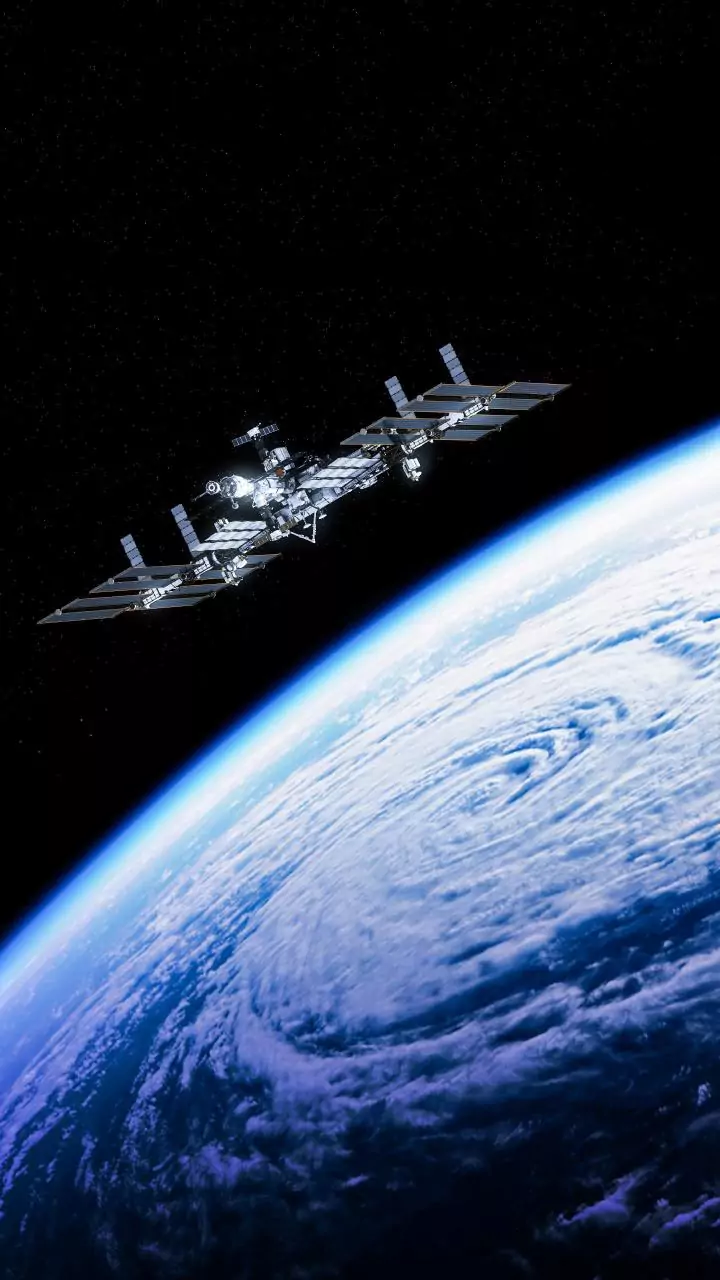
This boom in private space station development is driven by a critical deadline: the planned decommissioning of the International Space Station (ISS) around 2030. For over two decades, the ISS has been the world's premier laboratory for microgravity research. Rather than build a costly replacement, NASA is fostering a commercial market through its Commercial Low-Earth Orbit Destinations (CLD) program. The strategy allows NASA to become just one of many customers, purchasing services from privately owned and operated stations. This public-private partnership model is designed to ensure the United States maintains a human presence in LEO for research and to stimulate a robust commercial space economy, preventing a void that could otherwise be filled by other nations like China with its Tiangong station.
The Race for Orbital Real Estate
Several key players are vying to build these commercial outposts. Sierra Space is a prominent contender with its Large Integrated Flexible Environment (LIFE) habitat. The company has conducted successful burst tests on full-scale modules, proving they can withstand pressures far exceeding operational requirements. These LIFE modules are intended to form a major part of the Orbital Reef station, a joint project with Blue Origin. Another major player is Axiom Space, which is building a modular station that will initially attach to the ISS before becoming a free-flying platform as early as 2028. While its initial modules are rigid, the company's long-term plans have included inflatable structures. Meanwhile, the company Vast is developing Haven-1, a smaller, single-module station planned for a 2027 launch, aiming to be the first-ever commercial space station.
A Laboratory Unlike Any on Earth
The primary purpose of these new stations is to host scientific and commercial research in the unique environment of microgravity. The absence of gravity-driven forces like sedimentation and convection allows for breakthroughs not possible on Earth. Companies will be able to conduct research in areas like drug development, studying cancer cells, and creating flawless protein crystals for new medicines. Another promising field is in-space manufacturing. The microgravity environment is ideal for producing materials like exotic fiber optics or perfectly uniform alloys that are impossible to create on the ground. Vast's Haven-1, for instance, will feature a dedicated lab for research, development, and manufacturing, with companies already signed on to place payloads there.
Challenges on the Final Frontier
Despite the rapid progress, the path to a thriving LEO economy is not without hurdles. These companies must prove the long-term durability and safety of their inflatable structures over years of exposure to radiation and temperature extremes. Securing the massive, sustained private investment needed to see these multi-billion-dollar projects through to completion is an ongoing challenge. Furthermore, the logistics of launching, assembling, and servicing these stations require flawless execution. The recent volatility in NASA's strategy for the CLD program has also highlighted the policy and funding uncertainties that these commercial ventures must navigate. Ultimately, their success hinges on creating a viable business case where the demand for research, manufacturing, and even tourism is strong enough to support these ambitious orbital platforms.