



The Invisible Supermarkets
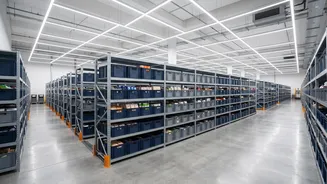
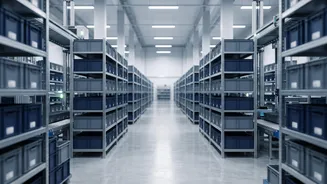
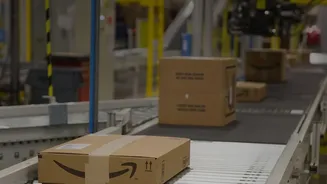
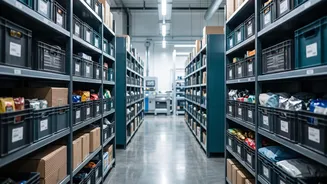
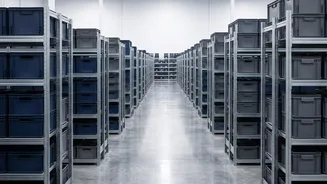
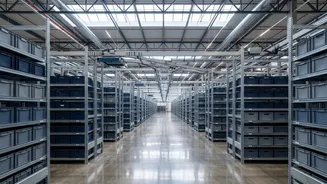
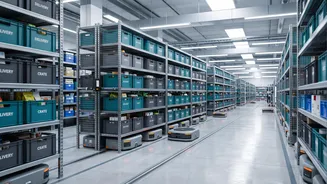
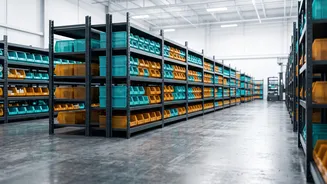
First, let's clarify what a dark store is. It’s not a store you can walk into. Instead, it's a small, neighbourhood-level warehouse exclusively serving online orders. Ranging from 2,500 to 5,000 square feet, these spaces are optimised for one thing: speed.
Inventory is arranged for quick picking and packing, designed for delivery partners to collect orders and reach customers within a tight radius of just a few kilometres. This model is the engine of quick commerce, a market segment in India that has exploded in growth and is fundamentally reshaping urban logistics.
Why Bengaluru is the Epicentre
The headline isn't an exaggeration. As of July 2026, Bengaluru hosts 629 dark stores, more than any other Indian city, including Delhi (474) and Hyderabad (406). This represents over 11% of India's entire dark store network concentrated in a single city. The reasons are a perfect storm of factors. The city's notorious traffic makes a 10-minute delivery far more appealing than a 30-minute trip to the supermarket. Its high density of apartment complexes makes last-mile delivery incredibly efficient. Furthermore, Bengaluru's large population of young, tech-savvy professionals in dual-income households represents a demographic with high disposable income but very little free time—the ideal customer for convenience-led services. This intense concentration is also a result of fierce competition, with platforms like Blinkit, Zepto, and Swiggy Instamart all operating at a massive scale within the city.
The Real Estate Reshuffle
The explosive growth of dark stores is having a tangible impact on Bengaluru's real estate market. These companies aren't leasing space in traditional industrial parks; they need to be embedded within dense residential zones. As a result, once-overlooked ground-floor commercial spaces, old retail outlets, and even defunct movie theatres are being snapped up and converted into micro-fulfilment hubs. This has led to a surge in demand, with enquiries for such properties jumping by around 40% in the last year alone. Consequently, commercial rents in high-demand localities have increased by 20-25%, as landlords find that quick-commerce firms are stable, long-term tenants willing to pay a premium for strategic locations.
The Neighbourhood Impact
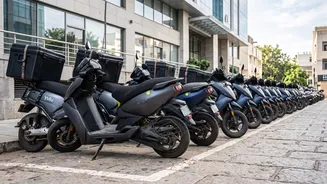
For residents, the dark store next door is a double-edged sword. On one hand, it offers unparalleled convenience, making last-minute grocery runs a thing of the past. On the other, it brings a new kind of commercial activity deep into residential lanes. The constant traffic of delivery riders can lead to noise and congestion, changing the character of a neighbourhood. Furthermore, regulatory oversight is still catching up. In some cities, dark stores have faced scrutiny for operating in designated residential zones without the proper licenses or for failing to meet food safety standards, leading to surprise inspections and shutdowns. As these networks continue to expand, the question of how they integrate into community life without causing friction becomes increasingly important.
A New Economic Engine
Beyond convenience and real estate, the quick commerce boom is a significant creator of jobs. Dark stores are labour-intensive operations, requiring staff for inventory management, picking, packing, and, of course, a massive fleet of delivery riders. One estimate suggests that for every ₹100 crore of monthly sales, the quick commerce sector creates 62-64 jobs, a figure far higher than traditional e-commerce or modern trade. In Bengaluru alone, the existing network of over 600 dark stores represents an estimated 7,500 to 12,500 jobs, providing a substantial economic injection into local communities. This makes the dark store not just a logistics node, but a new and growing pillar of the urban gig economy.