







The Monsoon's Uneven March
The 2026 southwest monsoon season has been a story of a great imbalance. While the country's overall rainfall deficit was around 12% below the long-period average, the real problem lies in the details of its spatial and temporal distribution. Key pulse-growing
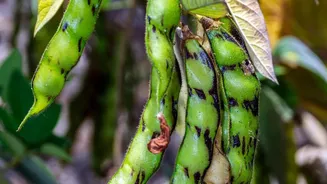
regions, particularly for the Kharif (summer) season, have been significantly affected. Parts of Maharashtra, Karnataka, and Andhra Pradesh—critical states for crops like tur (pigeon pea) and urad (black gram)—recorded rainfall deficiencies between 20% and 30%. This unevenness, coupled with a looming El Niño phenomenon known to suppress rainfall, has created a precarious situation for rain-fed agriculture, where the majority of India's pulses are grown.
Sowing a Story of Scarcity
The direct consequence of poor rains is a drop in planted area. Farmers, wary of the dry conditions, have held back. While the overall Kharif sowing was only slightly below last year's levels, the figures for key pulses are worrying. As of late July 2026, total pulse planting was trailing the previous year's numbers. Acreage for tur and moong (green gram) saw declines. Although there was an increase in urad acreage, the overall picture for Kharif pulses suggests that production will likely fall short of the government's target of 8.4 million tonnes. The shortfall is particularly pronounced for tur, a dietary staple, with production expected to be significantly impacted.
From the Field to Your Finances
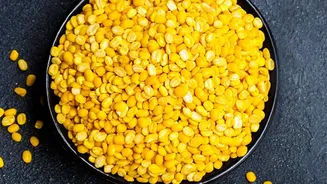
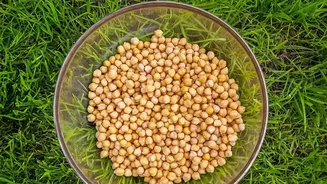
The journey from a parched field to a pricier kitchen is a short one. Lower production tightens supply, and with steady demand, prices inevitably climb. This is already being witnessed in the market. Well before the harvest, prices of several pulses, including chana, moong, and tur, have risen by up to 10% in just a month. This feeds directly into food inflation, a metric that directly impacts the financial health of every household. Food inflation in August 2026 stood at 5.95%, with economists expecting it to potentially cross 7% in the coming months due to these very supply-side pressures. Pulses, being a primary source of protein for a vast population, have an outsized impact on the consumer price index and household sentiment.
The Government's Balancing Act
In response to the rising prices and anticipated production gap, the government is deploying a multi-pronged strategy. It has already allowed duty-free imports of tur and urad until March 2027 to improve domestic availability. Now, it is reportedly considering lowering import tariffs on other varieties like lentils and yellow peas to further ease the supply crunch. Simultaneously, the government can use its buffer stocks, built up through procurement schemes like PM-AASHA, to release supplies into the market and cool down prices. However, this is a delicate balancing act. The government must manage inflation for consumers without discouraging farmers, who need remunerative prices for their produce, especially as they face the upcoming Rabi (winter) sowing season with depleted reservoir levels and low soil moisture.