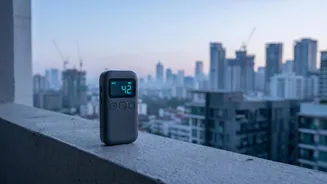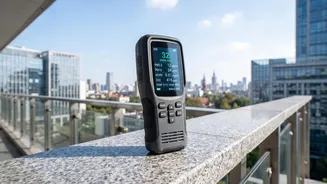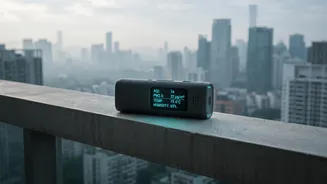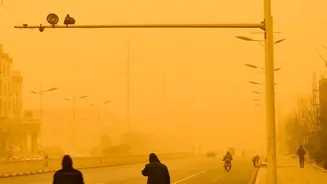







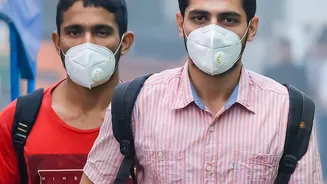
The arrival of winter brings relief from the heat, but for India's outdoor enthusiasts, it also brings a familiar foe: toxic air. How does this impact your daily walk or cycle, and how can you stay active without compromising your health?
The Winter Air Pollution Trap
Across many Indian
cities, winter brings a significant spike in air pollution. This isn't a coincidence; it's a meteorological phenomenon called temperature inversion. During winter, a layer of cold, dense air gets trapped near the ground by a layer of warmer air above it. This acts like a lid, preventing pollutants from vehicles, industry, construction dust, and seasonal activities like crop burning from dispersing. The result is a thick, stagnant smog that settles over cities, sending Air Quality Index (AQI) numbers soaring into unhealthy categories for days or weeks at a time.
Your Body on Polluted Air
When you exercise, your breathing rate increases dramatically. You can inhale 10 to 20 times more air than when you are resting, pulling in a much larger volume of harmful pollutants. Furthermore, during intense exercise, many people switch to mouth-breathing, which bypasses the natural filtration system of the nose, allowing fine particulate matter (like PM2.5) to travel deeper into the lungs. This can lead to a host of health issues, including throat and eye irritation, coughing, shortness of breath, and inflammation of the airways. For those doing regular outdoor workouts, repeated exposure can put stress on the cardiovascular system and may even increase long-term risks for respiratory and heart conditions. The negative effects can sometimes outweigh the benefits of the exercise itself.
Decoding the Air Quality Index (AQI)
Understanding the AQI is the first step to making safer choices. The index runs on a scale from 0 to 500, broken into colour-coded categories. For healthy adults, outdoor exercise is generally considered safe when the AQI is below 100 ('Good' or 'Satisfactory'). The 'Moderate' range (101-200 in some Indian scales, or 101-150 internationally) is a grey area where caution is advised. Experts recommend that when the AQI enters the 'Poor' or 'Unhealthy' range (typically above 151), everyone should avoid strenuous and prolonged outdoor exertion. In 'Very Poor' and 'Severe' conditions (above 301), all outdoor activity should be avoided.
Your Air Quality Toolkit
Thankfully, a number of reliable mobile apps can provide real_time, location_specific AQI data. Having one of these is essential for any urban cyclist or walker. Key apps for India include:
- SAMEER: The official app from the Central Pollution Control Board (CPCB), it provides authentic data from government monitoring stations across the country.
- IQAir AirVisual: A popular international app with extensive coverage in India, it offers detailed forecasts, pollutant breakdowns, and even a world pollution map.
- SAFAR_Air: Managed by the Ministry of Earth Sciences, this app provides city_specific data and forecasts for major metropolitan areas.
- AQI India (Ambee): This app specialises in hyper_local readings and offers personalised health advice based on the current air quality.
Other apps like Plume Labs and BreezoMeter also offer powerful forecasting and user_friendly interfaces.
Smart Strategies for Safer Workouts
Being informed doesn't mean you have to be inactive. With the right strategy, you can minimise your risk. First, always check the AQI before you head out. Try to time your activity for when pollution is typically lower, which is often in the mid_afternoon when the sun has warmed the atmosphere, helping to disperse pollutants. Early mornings, a popular time for exercise, can often have high pollution levels trapped by overnight inversions. Choose your location wisely. Parks and green spaces generally have better air than streets with heavy traffic. On days with 'Moderate' AQI, consider reducing the intensity or duration of your workout—perhaps a brisk walk instead of a long run. If you must exercise when the AQI is high, a well_fitted N95 mask can help filter out particulate matter, though it can make breathing more difficult. Most importantly, listen to your body; if you feel discomfort, head indoors.