



The Universe’s Time Machine
The vastness of space is almost impossible to comprehend. To measure it, astronomers don't use kilometres; they use light-years. A light-year isn't a measure of time, but of distance: it’s the distance light travels in one year. And light is the fastest
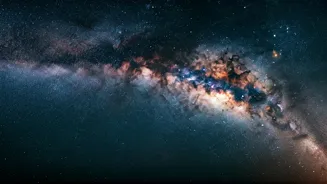
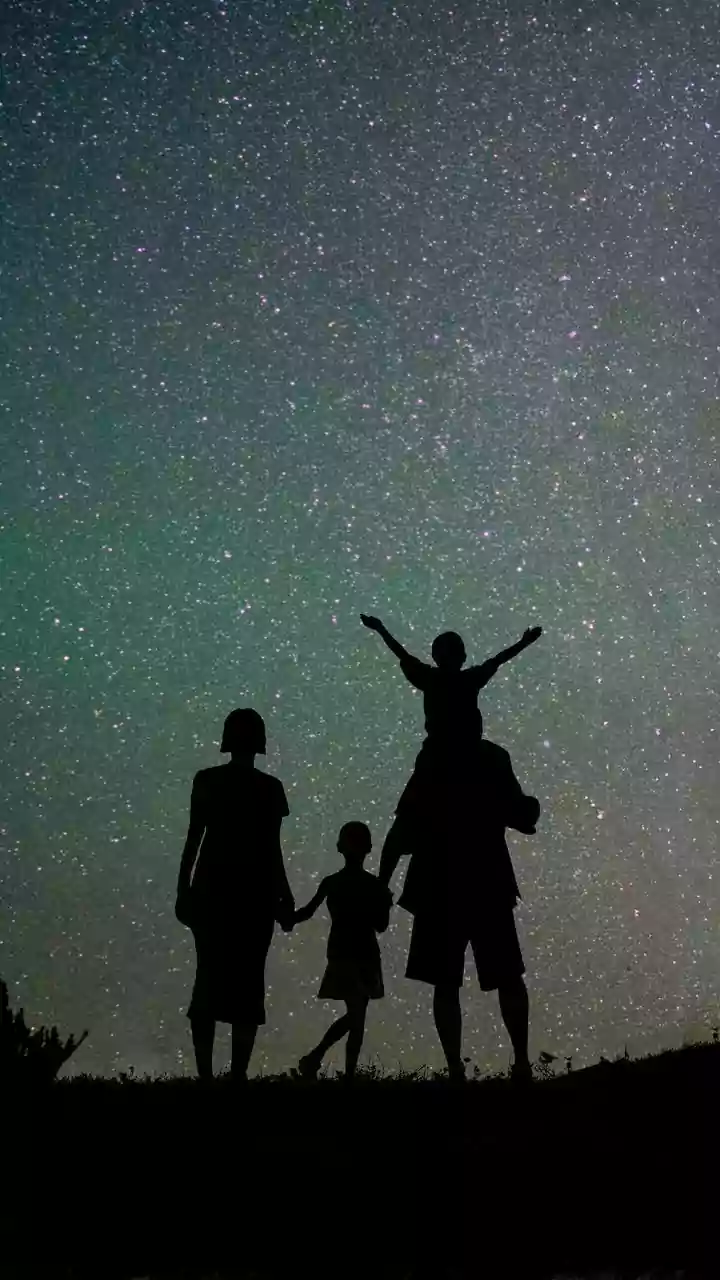
thing in the universe, zipping along at nearly 300,000 kilometres per second. Even at that blistering speed, the universe is so big that the light from the nearest stars takes years to reach us. The light from many others takes centuries, or even millennia. This means that when we look at a star that is 500 light-years away, we are seeing it as it was 500 years ago. The photons—the tiny particles of light—that hit your retina began their journey long before you were born, before modern India existed, before the Industrial Revolution. The night sky isn't a snapshot of the present; it's a collage of different moments in the past, all arriving at your eye at the same time.
Postcards From a Distant Past
Let’s take a famous example: Polaris, the North Star. A guiding light for travellers for generations, Polaris is approximately 433 light-years away. The light we see from it tonight began its journey around the year 1590. As those photons raced towards Earth, the Mughal Empire was flourishing under Emperor Akbar. By the time that light reached us, centuries of history had unfolded. Or consider Betelgeuse, the bright reddish star in the shoulder of the Orion constellation. It is roughly 640 light-years away. The light from Betelgeuse that graces our night sky started its voyage around the 1380s. This cosmic message has been in transit for over six centuries, carrying with it a picture of a star as it was when the world was a vastly different place. Every star tells a story not just of its own life, but of the time its light has been travelling.
A Sky Full of Ghosts
This leads to a profound and slightly unsettling idea: some of the stars we see in the night sky may not even exist anymore. A star that is 1,000 light-years away could have exploded in a supernova 500 years ago, but we wouldn't know it for another 500 years. We are watching a celestial drama with a significant time delay. For all we know, we are looking at a field of brilliant stellar ghosts. Astronomers are particularly interested in Betelgeuse for this very reason. It is a red supergiant nearing the end of its life, and it could go supernova anytime in the next 100,000 years. If it exploded tomorrow, it means the event actually happened over 600 years ago, and the news, travelling at the speed of light, is only just arriving. When we look up, we are bearing witness to the echoes of cosmic events.
Bringing It Closer to Home
This phenomenon of 'lookback time' isn't just for distant stars. It happens right here in our own solar system, just on a much smaller scale. The Sun is about 150 million kilometres away. Its light doesn't reach us instantly; it takes about 8 minutes and 20 seconds. So, if the Sun were to suddenly vanish, we would have eight minutes of blissful ignorance before the sky went dark. The light from the Moon, our closest celestial neighbour, takes about 1.3 seconds to reach us. Even a conversation on a video call with an astronaut on the Moon would have a noticeable 2.6-second delay. This simple fact grounds the mind-boggling scales of the cosmos. The eight-minute delay from our own star makes the centuries-long journey of light from other stars feel all the more incredible.