







The Banana Peel Potassium Punch
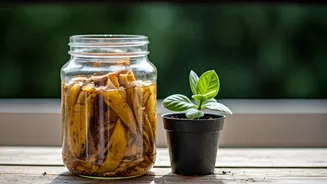
Why throw away banana peels when they are packed with potassium? This essential nutrient helps plants move water and nutrients between cells. It strengthens stems, aids in flowering, and improves the quality of fruit. A potassium boost is like a health
tonic for your flowering plants like hibiscus, roses, and bougainvillaea. **How to Make It:** 1. **Gather:** Collect the peels from 3-4 bananas. 2. **Soak:** Place the peels in a large jar and fill it with 1 litre of water. Seal the jar and let it sit for 2-3 days in a cool, dark place. The water will turn a murky brown, which is a good sign! 3. **Strain & Dilute:** After a few days, strain the liquid to remove the peels (you can add these to your compost). Dilute this concentrated “shake” by mixing one part banana water with four parts plain water. 4. **Feed:** Use this diluted mixture to water your plants once every two weeks during their growing season.
The Eggshell Calcium Elixir
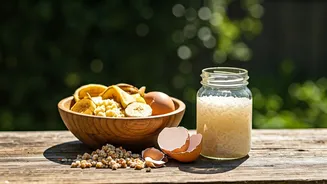
Don't discard your eggshells! They are a fantastic source of calcium carbonate, a crucial mineral for building strong cell walls in plants. This helps prevent common problems like blossom-end rot in tomatoes and capsicums, leading to healthier, more robust plants. It’s a simple way to recycle and give back to your garden. **How to Make It:** 1. **Prepare:** Collect about 10-12 eggshells. Rinse them well to remove any residue and let them dry completely. You can bake them on low heat for a few minutes to make them brittle. 2. **Crush:** Using a mortar and pestle or a grinder, crush the dried shells into a fine powder. The finer the powder, the faster the nutrients will be released. 3. **Infuse:** Add the powder to a jar with 1 litre of water. For an extra kick, add a tablespoon of vinegar to help draw the calcium out of the shells. Let it sit for 24 hours, shaking occasionally. 4. **Use:** Use this calcium-rich water directly on your plants. You can also sprinkle the dry powder around the base of your plants for a slow-release feed.
The Fermented Rice Water Reviver
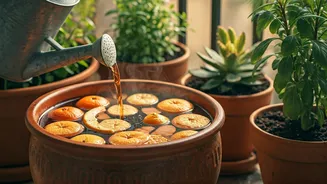
The cloudy water left after rinsing rice is liquid gold for your plants. It contains starch, vitamins, and minerals like nitrogen, phosphorus, and potassium. Fermenting it increases the nutrient content and introduces beneficial microbes that improve soil health. It's a gentle, all-purpose feed perfect for houseplants and vegetables. **How to Make It:** 1. **Collect:** When you wash rice, save the first or second rinse water. It should be cloudy. 2. **Ferment:** Pour the rice water into a jar, but don’t seal it tightly—gases need to escape. Let it sit at room temperature for 3-5 days. It will develop a slightly sour smell, which means it’s fermenting correctly. 3. **Dilute:** The fermented water is potent. Dilute it with plain water at a ratio of one part rice water to five parts plain water. 4. **Apply:** Water your plants with this mixture once a week. It’s particularly great for money plants, ferns, and other foliage-heavy indoor plants.
The All-Rounder Compost Tea
If you have a compost pile or bin, you're sitting on the best plant food imaginable. Compost tea is a liquid concentrate teeming with beneficial microorganisms and a balanced spectrum of nutrients. It not only feeds your plants but also improves soil structure and helps suppress diseases. It’s the ultimate homemade fertiliser. **How to Make It:** 1. **Gather:** Take a large scoop of finished, earthy-smelling compost (about 2 cups). 2. **Brew:** Place the compost in a porous cloth bag (like an old pillowcase or muslin cloth) and tie it securely. Submerge the bag in a bucket containing about 10 litres of water. For best results, use chlorine-free water (let tap water sit out for 24 hours). 3. **Steep:** Let the “tea” steep for 24-48 hours, stirring it a few times to aerate the mixture. 4. **Feed:** Remove the compost bag. The resulting liquid should be light brown. Use it undiluted to water the soil around your plants or as a foliar spray. This is a complete meal for almost any plant in your garden.
The Neem Defender Shake
Neem is a cornerstone of traditional Indian agriculture and for good reason. A liquid feed made from neem cake (the residue left after extracting oil from neem seeds) not only provides nitrogen and other essential nutrients but also acts as a natural pest and fungus repellent. It strengthens the plant's immunity from the inside out. **How to Make It:** 1. **Source:** Get a block of neem cake (also known as *neem khali*) from any local garden store. 2. **Soak:** Take a handful of neem cake (around 100 grams) and soak it in 2 litres of water for 24 hours. 3. **Stir & Strain:** Stir the mixture well. It will have a strong, distinct smell. Strain the liquid to remove any solid particles. 4. **Dilute & Use:** Dilute this concentrate by adding it to 5-8 litres of plain water. Use this solution to drench the soil around your plants once a month. It helps keep root-knot nematodes and other soil-borne pests at bay while providing slow-release nutrition.