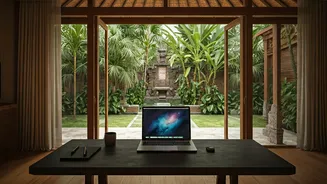









The New Digital Nomad Visa
Indonesia has officially rolled out a Remote Worker Visa, indexed as E33G, specifically designed for foreigners who work for companies located outside of Indonesia. This replaces the previous grey area where nomads often used tourist visas, an increasingly
risky practice as immigration has tightened enforcement. The E33G visa is a temporary stay permit (KITAS) that allows you to legally reside in Indonesia for one year, with the possibility of renewal for a second year. It's a multiple-entry permit, meaning you can travel in and out of the country freely, which is a major advantage for professionals who may need to return to India or travel for business.
Eligibility for Indian Applicants
The main requirement for the E33G visa is financial. Applicants must prove they have a minimum annual income of USD 60,000. This is a firm requirement and is verified through employment contracts, payslips, or tax documents. Additionally, you must demonstrate financial stability by showing a bank balance of at least USD 2,000 for the three months leading up to your application. Crucially, your employer must be based outside of Indonesia; you are strictly prohibited from earning income from any Indonesian company or client while on this visa. The application is submitted online and requires a passport valid for at least six months, a recent photograph, and your CV.
Navigating the Tax Maze
Taxation is a critical, and often confusing, aspect of the digital nomad life. In Indonesia, the key is the '183-day rule'. If you reside in the country for more than 183 days within a 12-month period, you are generally considered an Indonesian tax resident. This means you are technically obligated to get a local tax ID number (NPWP) and may be liable to pay tax on your worldwide income. However, the situation is nuanced. Indonesia has a Double Taxation Avoidance Agreement (DTAA) with India, which is designed to prevent you from being taxed twice on the same income. While your foreign-sourced income is the focus, the rules around whether it is taxed depend on various factors and bilateral treaties. Due to this complexity, seeking advice from a tax professional familiar with Indonesian law is strongly recommended before making the move.
Alternative Visa Options
For those who don't meet the high income threshold of the E33G visa, other pathways exist. The B211A Visit Visa (now often called the C1 visa) is a popular choice. It's initially valid for 60 days but can be extended twice, allowing for a total stay of up to 180 days. While not an official work visa, it is commonly used by remote workers whose employers are overseas. Another option for the wealthy is the 'Second Home Visa'. This is aimed at investors and retirees, requiring applicants to deposit approximately USD 130,000 in an Indonesian state-owned bank or purchase property worth at least USD 1,000,000. It allows for a stay of five or ten years but does not permit local employment.
Life in the Digital Nomad Hub
Beyond the paperwork, Bali offers an attractive lifestyle with a relatively low cost of living compared to major Indian metro cities like Mumbai. Thriving communities of remote workers exist in hubs like Canggu and Ubud, which are well-equipped with co-working spaces, high-speed internet, and a vibrant social scene. This infrastructure makes the transition smoother, providing a network for professional and social connections. However, it's essential to remember that Indonesian immigration authorities are cracking down on illegal work. Ensuring you are on the correct visa is more important than ever to avoid fines, deportation, and a ban on re-entry.