



The Bottleneck of Big Data from Space
Traditional satellites are powerful data collectors. They capture high-resolution images for everything from weather forecasting and disaster monitoring to urban planning and military surveillance. However, they have one major limitation: all that raw
data, often terabytes of it, must be transmitted back to ground stations. This process creates a significant bottleneck. It consumes enormous bandwidth, takes time, and means that by the time the data is processed, the window for immediate action might have passed. For example, during a flood or wildfire, getting information hours later is far less useful than getting it in near real-time. This is the core problem that on-orbit computing aims to solve.
Edge Computing Takes Flight
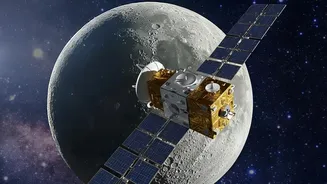
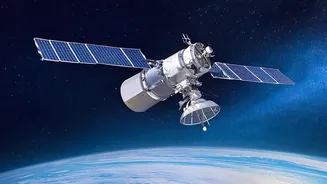
The solution is to equip satellites with powerful onboard processors capable of running artificial intelligence (AI) models. This is a form of 'edge computing'—processing data at its source rather than at a centralized facility. Instead of downlinking a massive, high-resolution image of a coastal area, an AI-powered satellite can analyze the image itself, identify that a cyclone has made landfall, calculate its position, and send back just that critical, actionable insight. This drastically reduces the amount of data transmitted, speeds up decision-making, and allows for much faster responses to dynamic events on the ground. It transforms the satellite from a simple camera into an intelligent observer.
India's Push into Orbital Intelligence
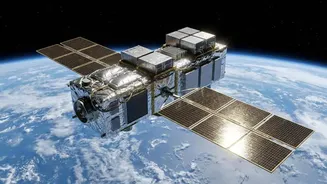
India is actively pursuing this next-generation space architecture through both its national space agency and a burgeoning private sector. Hyderabad-based startup TakeMe2Space is at the forefront of this commercial push. Its MOI-1A satellite, scheduled for launch on October 1, 2026, is described as India's first orbital computing satellite. Weighing under 50 kg, it carries powerful Nvidia Orin NX chips designed for edge computing. This will allow customers from sectors like agriculture, mining, and insurance to upload their own AI models to the satellite, process data as it passes over a target area, and receive just the finished analysis. The Indian Space Research Organisation (ISRO) is also exploring the concept of data centres in space, signalling a national strategic interest in developing these capabilities for everything from national security to disaster management.
Real-World Impact: Floods, Farms, and Security
The applications for in-orbit AI are vast. For disaster management, a satellite could autonomously detect the start of a forest fire or the extent of flooding and alert authorities within minutes. In agriculture, it could analyze multispectral imagery to identify crop stress or pest infestation on a specific farm, sending precise data to the farmer. For national security, on-orbit processing offers a huge advantage by providing rapid intelligence without the delay and vulnerability of downlinking raw, sensitive data. Furthermore, ISRO has highlighted the use of quantum technology to secure these future satellite networks from cyber threats like signal spoofing. This creates a more resilient and responsive infrastructure for critical economic and strategic activities.
The Challenges of a Cosmic Computer
Putting a data centre in space is not simple. The hardware must be 'radiation-hardened' to withstand the harsh environment of orbit, which can damage electronics. Power is another major constraint; AI models require significant computational resources, and satellites have a limited power budget from their solar panels. The MOI-1A, for instance, operates on about 150 watts. There are also challenges related to thermal management—keeping the processors cool in the vacuum of space—and ensuring the systems can be securely updated from the ground. Overcoming these engineering hurdles is key to unlocking the full potential of computing in orbit.