






First, What Exactly Are eVTOLs?
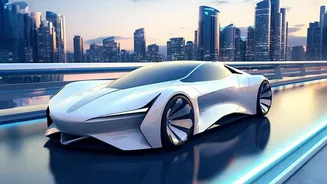
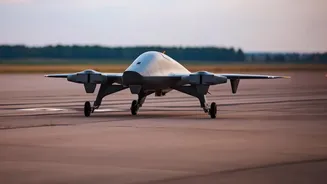
Imagine a vehicle that combines the best of a helicopter and a small airplane, but is fully electric. That's an eVTOL, or electric Vertical Take-Off and Landing aircraft. These vehicles are designed to ascend and descend vertically like a drone, eliminating
the need for long runways. Once airborne, they can transition to flying forward like a conventional plane. Because they are electric, they promise quieter operation and zero emissions, making them ideal for navigating the skies above crowded cities. They are at the core of what experts call Advanced Air Mobility (AAM), a new system for transporting people and cargo in the skies above us.
The Government's Green Signal
India's interest in eVTOLs is no longer just theoretical. The government is actively creating the foundation for an air taxi ecosystem. The Directorate General of Civil Aviation (DGCA) has been working on a comprehensive regulatory framework since 2024, covering everything from aircraft certification and pilot licensing to vertiport (mini-airports for eVTOLs) design. In April 2026, the Ministry of Civil Aviation circulated a draft national policy for urban air mobility, signalling its intent to establish clear rules. This proactive approach, learning from the rollout of drone regulations, is meant to give manufacturers and operators the confidence to invest, test, and eventually launch services in India. Union Civil Aviation Minister Ram Mohan Naidu has expressed strong support, even suggesting commercial flights could be a reality by 2028.
India's Homegrown Sky-High Ambitions
Several Indian startups are at the forefront of this aviation revolution. Chennai-based The ePlane Company, incubated at IIT Madras, is a prominent name. Founded in 2019, it is developing its e200 aircraft for passenger and cargo transport and has already secured Design Organisation Approval from the DGCA. The company has raised significant funding and aims to certify its air ambulance variant first. Another key player is Bengaluru-based Sarla Aviation, which is also developing an indigenous air taxi. The startup received a visit from the Civil Aviation Minister in August 2026 and has also been granted DGCA design approval, with plans to begin services in Bengaluru by 2028.
Global Players Eyeing Indian Skies
The massive potential of the Indian market hasn't gone unnoticed by global giants. Blade India, which already operates helicopter services, has made significant moves to transition to electric aviation. It has signed an agreement with Jaunt Air Mobility to introduce eVTOL operations in India by 2027, with an intent to acquire up to 150 aircraft. Blade India also has a deal with Eve Air Mobility, a subsidiary of aerospace major Embraer, for up to 200 of its eVTOLs. Furthermore, InterGlobe Enterprises, the parent company of IndiGo, has partnered with US-based Archer Aviation to launch an all-electric air taxi service in India, initially connecting Connaught Place to Gurugram in just seven minutes starting in 2026.
The Hurdles Before Takeoff
Despite the optimism, the path to a sky full of air taxis has challenges. The biggest is building the necessary infrastructure. Vertiports with high-capacity charging stations need to be built across cities, a complex and expensive task. Battery technology is another hurdle; ensuring sufficient range and quick charging times without compromising safety or payload is critical. Integrating these new aircraft safely into already crowded airspace, alongside commercial flights and drones, will require sophisticated air traffic management systems. Finally, public acceptance and affordability will determine whether air taxis become a mainstream mode of transport or remain a niche service for the wealthy.