

A Planet in Transition
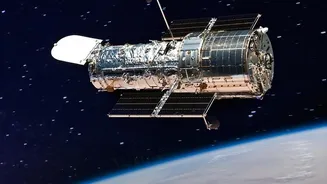
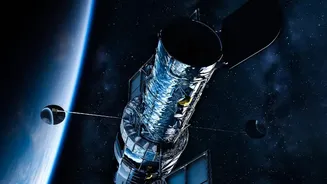
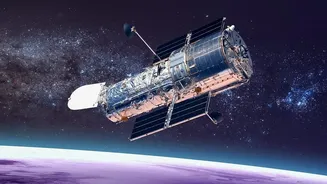
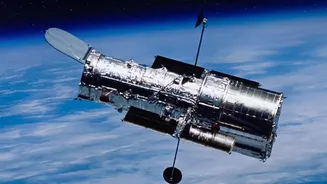
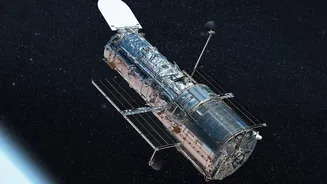
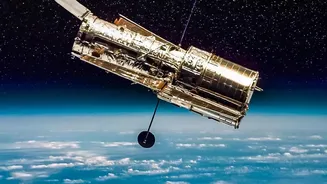
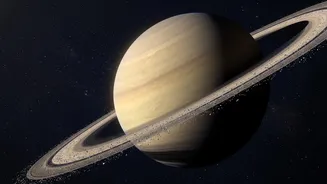
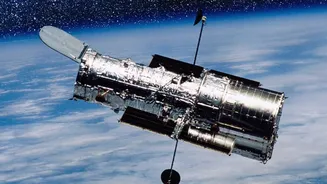
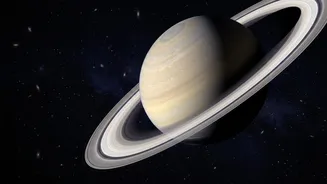
Recent observations from the Hubble Space Telescope have given scientists a remarkable view of Saturn's atmosphere in flux. As the planet's southern hemisphere slowly tilts away from the Sun, it is transitioning from a long, seven-year summer into autumn.
This seasonal shift isn't just a change on the calendar; it triggers visible transformations in the planet's appearance. Data collected by Hubble shows noticeable changes in the color, temperature, and cloud haze, particularly around the polar regions. Scientists have noted subtle year-to-year variations in the planet’s colorful bands. These observations are part of the Outer Planet Atmospheres Legacy (OPAL) program, a long-term project where Hubble annually checks in on our solar system's gas giants to track how they evolve over time.
The Science of a Seven-Year Autumn
So, what drives these massive changes? Much like Earth, Saturn has an axial tilt, which means its hemispheres receive different amounts of sunlight as the planet makes its journey around the Sun. However, Saturn's orbit is vastly different from our own. It takes the gas giant about 29.5 Earth years to complete one trip around the Sun, meaning each of its four seasons lasts for more than seven Earth years. The recent changes are a direct result of the southern hemisphere receiving less direct solar radiation as its summer ends. This decrease in sunlight impacts everything from atmospheric temperature to chemical processes. For instance, changes in ultraviolet radiation from the Sun can alter the production of photochemical hazes, which could explain the observed shifts in color and atmospheric haze that Hubble has documented.
A New Southern Mystery
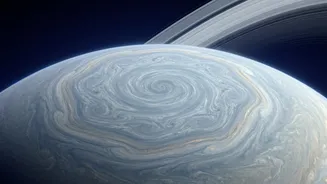
While tracking these seasonal shifts, Hubble uncovered something entirely new and unexpected: a massive, 10-sided atmospheric wave pattern forming around Saturn's south pole. First hinted at in 2023 and becoming more distinct in recent observations, this 'decagon' is a stunning discovery. For decades, scientists have been fascinated by a persistent hexagonal jet stream at Saturn's north pole, but a similar long-lived structure had never been seen in the south. This new decagonal feature appears to be strengthening, giving scientists a rare opportunity to witness the formation of a giant planetary weather system in real-time. Researchers believe it's a deep, vertically extended structure, not just a surface-level cloud pattern, making it a significant piece in the puzzle of Saturn's complex atmospheric dynamics.
Why This Watch Matters
Observing Saturn's seasonal evolution does more than just produce breathtaking images. It provides a natural laboratory for understanding how the atmospheres of gas giants work. By tracking these changes over many years, scientists can test and refine their models of planetary climates. The data from Hubble's OPAL program helps explain the forces that shape weather on a massive scale, from wind speeds that can exceed 1,600 kilometers per hour to the formation of colossal storms. Furthermore, understanding the atmospheric physics of a planet in our own solar system provides crucial context for studying exoplanets orbiting distant stars. The patterns, chemistry, and seasonal cycles we witness on Saturn can help us interpret what we might one day find in the atmospheres of worlds far beyond our own.