



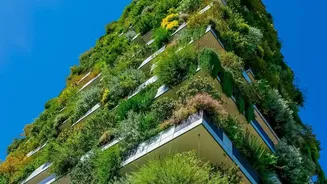
A vertical garden can transform any space, but success hinges on one crucial element: light. Without the right light, plants will fail to thrive. Understanding your space's lighting is the first step to creating a lush, living wall.
Natural Light: The Foundation of Your Garden
Before you choose a
single plant, you must become an expert on the light in your chosen location. Most vegetables and flowering plants need at least six to eight hours of direct sunlight per day to flourish. Foliage plants are more forgiving and often prefer bright, indirect light. A simple way to assess your light is the shadow test: place your hand a foot above a piece of white paper where your garden will be. A sharp, dark shadow indicates direct sun, a soft shadow suggests bright indirect light, and a faint or non-existent shadow means low light. Also, consider the direction your wall faces. In India, a south-facing wall will receive the most intense, all-day sun. East-facing walls get softer morning sun, ideal for many herbs and leafy greens, while west-facing walls receive intense afternoon heat. North-facing walls get the least light and are best for low-light specialists. Observe the spot for a few days to truly understand its unique light pattern.
Choosing Plants for Your Light Conditions
Matching plants to the available light is the most critical decision you'll make. For bright, sunny walls that get over six hours of sun, consider vegetables like cherry tomatoes, peppers, and various herbs. Succulents are also an excellent choice for hot, bright conditions due to their low water needs. For locations with medium or indirect light (four to six hours), leafy greens like lettuce and spinach, along with many flowering plants, will do well. If your wall is in a low-light area, don't despair. Many beautiful plants thrive in the shade. Pothos, with its trailing vines, is nearly indestructible and perfect for filling out a wall. Heartleaf philodendrons offer a similar look with glossy, heart-shaped leaves. Ferns, such as the Boston fern, love humidity and indirect light, making them great for bathrooms or shaded balconies. Other low-light champions include the peace lily, spider plant, and English ivy.
When Natural Light Isn't Enough
In many apartments and indoor spaces, natural light is a luxury. This is where artificial grow lights become a gardener's best friend. While natural sunlight provides a perfect full spectrum of light for free, grow lights offer complete control over intensity and duration, allowing you to garden anywhere, year-round. Modern LED grow lights are the best option, as they are energy-efficient, produce very little heat, and can be tailored to your plants' needs. Unlike standard household bulbs, which don't provide the right kind of light for photosynthesis, full-spectrum LED grow lights are designed to mimic the sun.
Setting Up Your Artificial Lights
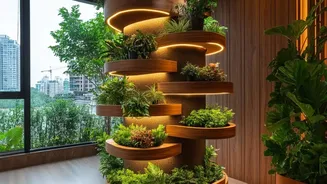
Proper setup is key to making artificial lights work for a vertical garden. One of the main challenges is ensuring light reaches the bottom rows of plants, which can be shaded by the top tiers. For this reason, mounting long, vertical light bars along the sides of your garden is often more effective than a single overhead light. The lights need to be close enough to be effective. For LEDs, a distance of 6 to 12 inches from the plants is a good starting point. Most plants need a period of darkness to rest, so aim for a cycle of 12–16 hours of light per day for vegetables and flowering plants, and 10–12 hours for foliage plants. Using a simple plug–in timer automates this process, ensuring your plants get consistent light every day. Look for lights that are dimmable or have different settings (like 'vegetative' and 'bloom') to further customize the light for different plant types and growth stages.