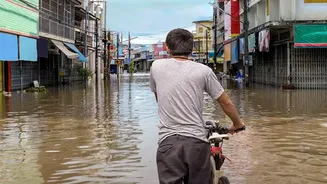




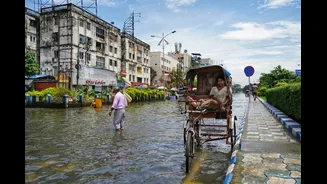
Every monsoon, images of submerged cars and flooded homes in major Indian cities become alarmingly common. But this isn't just about heavy rain. It's a man-made crisis, rooted in the rapid disappearance of the one thing meant to protect us: urban lakes.
Our Cities' Vanishing Sponges
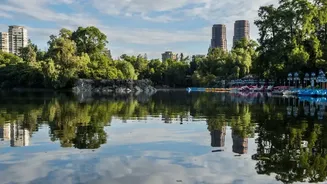
Historically, Indian cities were often built around an intricate network of lakes, tanks, and other water bodies. These weren't just for aesthetic appeal or water supply; they were essential pieces of natural infrastructure. Lakes and wetlands act as natural sponges. During heavy rainfall, they absorb and store vast amounts of excess water, releasing it slowly into the ground or downstream channels. This critical function significantly reduces the volume and speed of runoff, naturally mitigating the risk of floods. This system of interconnected water bodies historically ensured that even intense monsoon downpours could be managed, with excess water flowing from one lake to the next in a cascading system that prevented any single area from being overwhelmed. This natural flood-defence mechanism was the silent guardian of urban settlements for centuries.
Paving Over Our Defences
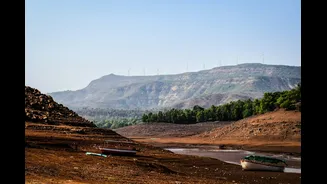
The story of India's rapid urbanisation is also the story of its vanishing water bodies. In the race for development, lakes and wetlands have been systematically treated as dispensable land. Unplanned expansion, illegal construction, and official de-notification of lakes for real estate projects have led to their widespread encroachment. Bengaluru, once celebrated as the 'City of Lakes' with over 260 water bodies, has seen that number plummet. Studies indicate the city lost nearly 79% of its water bodies and 88% of its green cover over four decades, while its paved, impervious surfaces grew by over 1000%. When a lake is filled in and built upon, its ability to act as a sponge is permanently lost. The soil is replaced with concrete and asphalt, which cannot absorb water. This process, repeated across a city, fundamentally alters its hydrology.
A Recipe for Urban Deluge
The connection between encroached lakes and urban floods is direct and devastating. An increase in impervious surfaces like roads and buildings means that rainwater, instead of seeping into the ground, flows rapidly over the surface. This sudden, high volume of runoff overwhelms outdated and poorly maintained stormwater drainage systems, which were never designed to handle such a load. With the natural holding pens—the lakes and wetlands—gone, the water has nowhere to go. It backs up into streets, residential areas, and low-lying regions, many of which are, ironically, former lakebeds or floodplains themselves. In Bengaluru, areas built on former lakebeds or with blocked interconnecting channels are now documented as habitual flood zones. The result is that even moderate rainfall can now cause severe waterlogging that was once rare.
The Lessons of Bengaluru and Chennai
The consequences of this planning failure are starkly visible in cities like Bengaluru and Chennai. Bengaluru's tech corridors, built on or near encroached lake areas and valley zones, have been repeatedly inundated, causing massive economic disruption. The infamous 2015 Chennai floods were severely exacerbated by the degradation of the Pallikaranai marshland, a vital wetland that had been systematically encroached upon for decades. Once spanning thousands of hectares, the marsh's capacity to absorb floodwater was drastically reduced by construction and road development, contributing to the deluge that crippled the city. Studies revealed that hundreds of water bodies in the Pallikaranai catchment area had completely disappeared due to encroachment. These events are not simply 'natural disasters'; they are predictable outcomes of destroying a city's natural flood defences.