



A Threat from 150 Million Kilometres Away
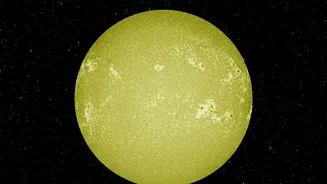
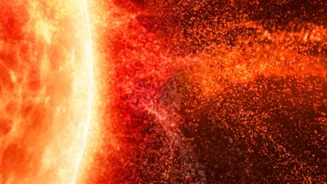
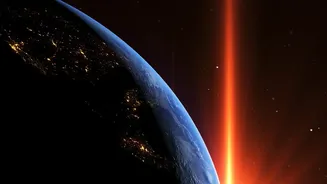
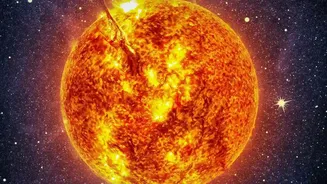
The sun isn't just a benign source of light and heat; it's a volatile star that periodically releases massive amounts of energy and charged particles in events called Coronal Mass Ejections (CMEs). When a CME is aimed at Earth, this stream of solar wind
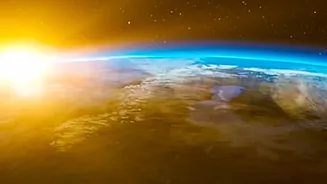
travels across space and slams into our planet's magnetic field. This interaction can trigger a geomagnetic storm, a major disturbance of Earth's magnetosphere that can have serious consequences on the ground. While these storms can produce beautiful auroras far from the poles, they also pose a hidden danger to the long-distance conductor systems that form the backbone of modern society.
The Grid's Invisible Enemy
The primary threat to power lines isn't the solar particles themselves, but what they induce on the ground. A geomagnetic storm causes rapid fluctuations in Earth's magnetic field, which in turn generates powerful, low-frequency electrical currents in the ground. These are called Geomagnetically Induced Currents, or GICs. Power grids, with their long transmission lines and grounded equipment, provide an easy path for these currents to flow. When GICs in excess of 100 amperes surge into high-voltage transformers, they can cause the transformer's magnetic core to saturate. This leads to overheating, increased power consumption, and the creation of disruptive harmonics that can destabilise the entire grid. In a worst-case scenario, this can damage or destroy transformers—which are difficult and time-consuming to replace—leading to cascading failures and widespread, long-lasting blackouts. The 1989 Quebec blackout, which left millions without power for nine hours, was caused by just such an event.
Our Eyes on the Sun
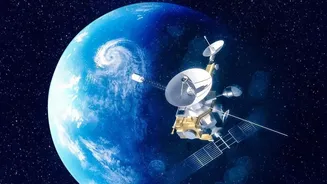
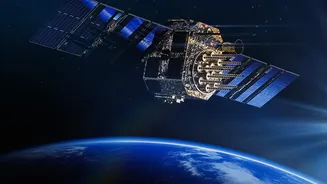
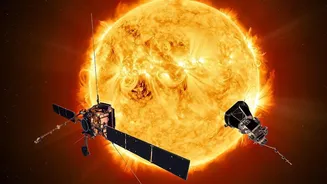
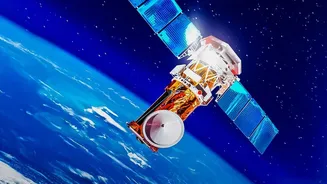
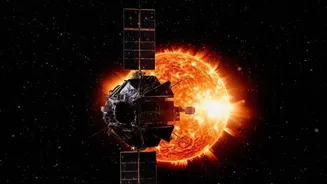
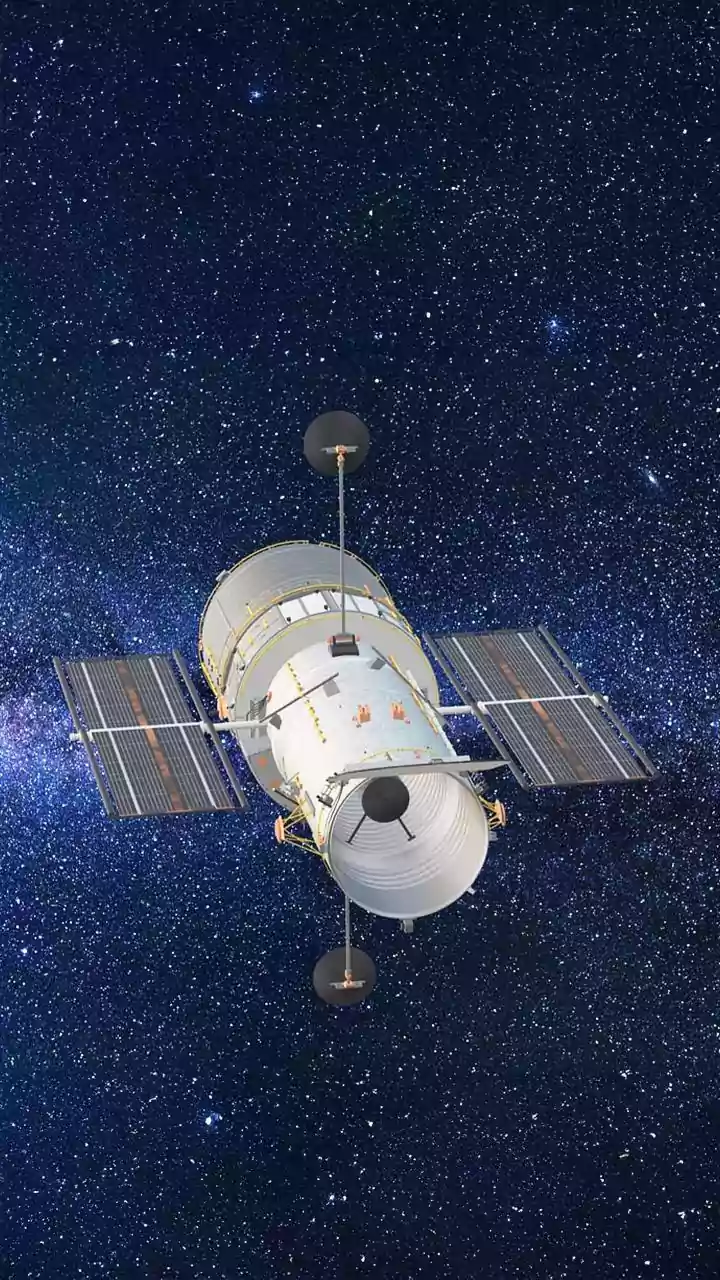
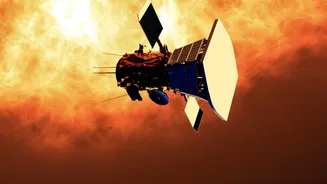
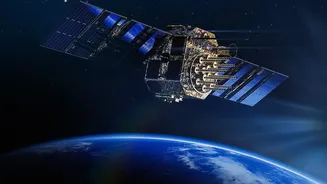
Because the stakes are so high, a global network of sentinels keeps a constant watch on the Sun. Space agencies like NASA and the European Space Agency (ESA), along with national organisations like the USA's National Oceanic and Atmospheric Administration (NOAA), operate a fleet of satellites to monitor solar activity. Spacecraft like the Deep Space Climate Observatory (DSCOVR), located at a gravitationally stable point 1.5 million kilometres from Earth, act as an early-warning system. It directly samples the solar wind, giving forecasters crucial data about the speed, density, and magnetic orientation of an approaching CME, providing up to an hour's notice before it hits Earth. India has significantly bolstered these global efforts with its Aditya-L1 mission. Also positioned at the L1 point, Aditya-L1 uses its suite of instruments to observe the Sun's corona and track CMEs as they erupt, adding vital data for improving space weather prediction models. This is complemented by ground-based observatories that monitor Earth's magnetic field directly.
From Alert to Action
An early warning is only useful if it leads to action. When forecasters at centers like NOAA's Space Weather Prediction Center (SWPC) issue a geomagnetic storm alert, it triggers a well-defined set of procedures for power grid operators. Based on the storm's predicted severity (rated on a G1 to G5 scale), operators can take preemptive measures to make the grid more resilient. These actions include cancelling non-critical maintenance, bringing standby generation online to increase power reserves, and reducing the load on particularly vulnerable high-voltage transmission lines. In some cases, operators may choose to proactively disconnect specific transformers or reroute power flow to avoid the worst effects of the GICs. These operational adjustments are designed to absorb the electrical jolt from the storm without causing catastrophic equipment failure or system collapse.