



More Than Just Adornment
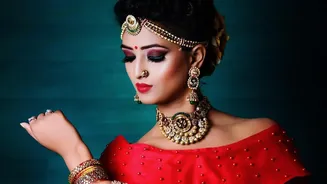
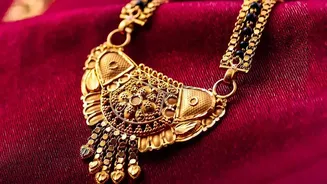
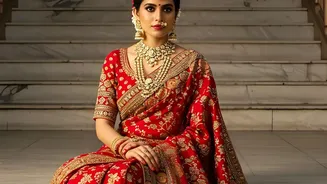
Traditional Indian jewellery is far more than just an accessory; it's a language of cultural identity, symbolism, and history. Each piece tells a story, whether it’s a temple necklace from Tamil Nadu or a bridal set from Rajasthan. These crafts are living
legacies, refined over centuries in royal courts and bustling bazaars, representing a deep connection to heritage. Unlike mass-produced items, handcrafted jewellery carries the soul of its maker and the cultural memory of a region, making its preservation a vital task.
Meenakari: Painting with Fire
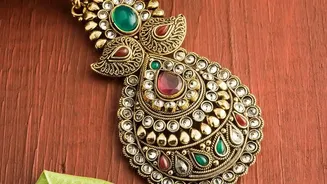
One of the most vibrant traditions is Meenakari, the art of enamelling metal. Originating in Persia and perfected in Jaipur, Rajasthan, this technique involves engraving intricate designs onto gold or silver and filling the grooves with coloured glass powder. The piece is then fired, melting the glass to fuse it with the metal in a burst of brilliant, smooth colour. This meticulous process, often practiced by families for generations, turns a simple metal surface into a canvas for stunning floral and geometric patterns that are synonymous with festive and bridal wear.
Thewa: Gold and Glass Poetry
From Pratapgarh in Rajasthan comes Thewa, a rare and secretive craft practiced by a select few families. The technique involves fusing an intricately hand-carved sheet of 23-karat gold onto coloured glass. The name itself comes from a local word meaning 'to embed'. The process creates a mesmerising effect, with detailed motifs depicting historical or mythological scenes seeming to float within the glass. The skills for Thewa are passed down from father to son, its guarded secrets ensuring the art form remains exclusive and precious.
Tarakasi: Weaving Silver Lace
In Cuttack, Odisha—known as India's Silver City—artisans practice Tarakasi, or silver filigree. This delicate art involves twisting fine threads of silver into intricate, lace-like patterns. For over 500 years, craftspeople have been shaping these slender wires by hand, creating everything from jewellery to decorative idols. Each curve and loop is a testament to immense patience and precision, turning solid metal into something that appears light, airy, and breathtakingly complex. The craft is deeply woven into Odia traditions, especially for weddings and religious ceremonies.
The Fight for Survival
Despite their rich history, these crafts face serious threats. Artisans struggle with inconsistent income, competition from cheaper, machine-made imitations, and rising raw material costs. For example, the community of Tarakasi artisans in Cuttack has shrunk dramatically due to these pressures. Furthermore, there is a declining interest among younger generations, who often seek more stable and lucrative professions, leading to a break in the generational chain of knowledge transfer. Without a clear path to profitability and market access, these skills risk fading into obscurity.
A Modern Renaissance
Thankfully, a multi-pronged effort is underway to preserve these traditions. The Geographical Indication (GI) tag offers legal protection, certifying a product's origin and quality, which helps artisans command better prices and assures buyers of authenticity. Government schemes like 'One District One Product' and the PM Vishwakarma Yojana provide financial aid, training, and marketing platforms. Simultaneously, a new generation of designers is collaborating with master artisans, blending traditional techniques with contemporary aesthetics to create pieces that appeal to a modern global audience and keep the heritage alive and relevant.