


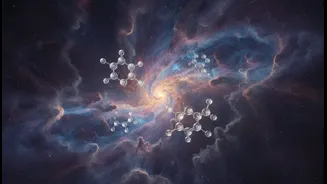


The Cosmic Recipe for Life
For decades, scientists have operated on a fascinating premise: the building blocks of life on Earth didn't originate here. Instead, they were likely forged in the vast, cold expanses of space and delivered to our young planet billions of years ago. This
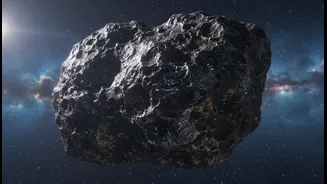
theory, known as panspermia or chemical evolution, suggests that the journey from simple stardust to complex life is a cosmic one. We’ve found these vital organic molecules, like amino acids, in meteorites that have crash-landed on Earth, and telescopes have spotted them in giant clouds of gas and dust floating between stars. But there has always been a missing link in the story: could these ingredients survive the chaotic and violent process of planet formation? Or were they only delivered later by comets and asteroids? Understanding this is key to figuring out if life is a rare accident or a common outcome in the universe.
A Chemical Clue in Orion
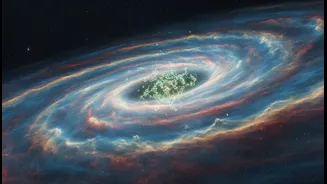
Astronomers have found a crucial new piece to this puzzle 1,300 light-years away in the constellation of Orion. Using the Atacama Large Millimeter/submillimeter Array (ALMA), a powerful network of radio telescopes, they peered into the swirling disk of gas and dust surrounding a young star named V883 Orionis. This type of structure, called a protoplanetary disk, is a planetary nursery—the very place where new worlds are born. Inside this disk, they made a tentative but profound detection: the chemical signatures of complex organic molecules, including ethylene glycol and glycolonitrile. These aren't just random chemicals; they are considered direct precursors to the molecules that form the cornerstones of life as we know it. Glycolonitrile, for example, is linked to the formation of amino acids, the building blocks of proteins.
Why This Discovery Changes Everything
Finding these specific molecules in a protoplanetary disk is a game-changer. Previously, scientists weren't sure if these complex compounds could exist and persist in the environment where planets are actively forming. The discovery at V883 Orionis suggests that they can. It implies that when planets like Earth form, they might do so with a built-in starter kit of life's essential ingredients. Instead of waiting for a chance delivery by a passing comet, the raw materials could be baked in from the very beginning. This dramatically increases the odds that planets forming in other star systems could have the same head start that Earth did. It shifts the narrative from life's ingredients being a late-stage addition to being part of the fundamental recipe of planet formation itself.
A Stroke of Cosmic Luck
Detecting these molecules was only possible because of a stroke of cosmic luck. Normally, in the freezing temperatures of a protoplanetary disk, these compounds are frozen solid onto dust grains, making them invisible to radio telescopes. However, V883 Orionis is currently having a rare outburst, a sort of stellar temper tantrum, where it has become dramatically hotter and brighter. This heat warmed up its surrounding disk, causing the frozen organic molecules to turn into gas. In this gaseous state, the molecules emitted faint radio waves at specific frequencies that ALMA could detect, like a unique chemical fingerprint. This rare event gave astronomers a temporary window into the disk's hidden chemical factory.
The Search Continues
This discovery is not the final answer, but a thrilling new chapter in our origin story. It powerfully complements other recent findings, such as the confirmation of all the nucleobases for DNA and RNA in samples from the asteroid Ryugu. Powerful new tools like the James Webb Space Telescope are also finding a surprising abundance of organic molecules in some of the most extreme and distant environments in the universe. Each discovery is another piece of the puzzle, suggesting that the chemical conditions necessary for life are not a special feature of our solar system but are widespread throughout the cosmos. The hunt is now on to find more of these planetary nurseries and see just how common these life-giving ingredients truly are.